Gamescape
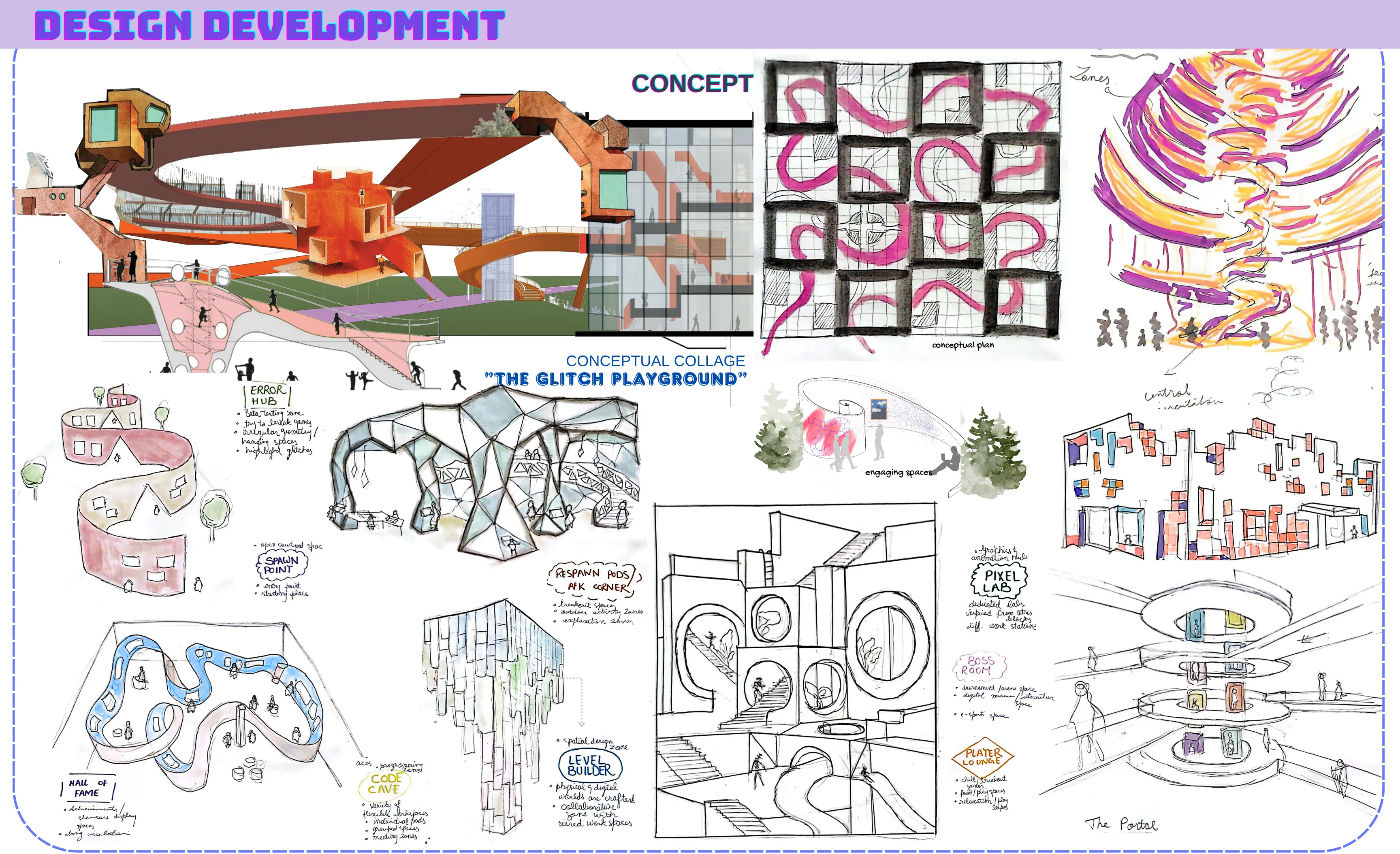
Inspired by the spatial dynamics and layered complexity of game worlds, a “Glitch Playground” creates a platform for game developers, creators and enthusiasts.
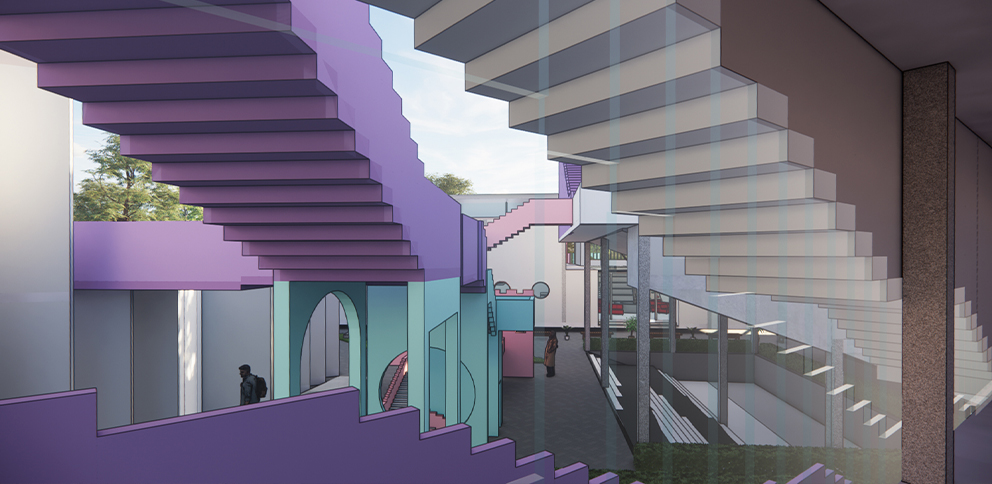
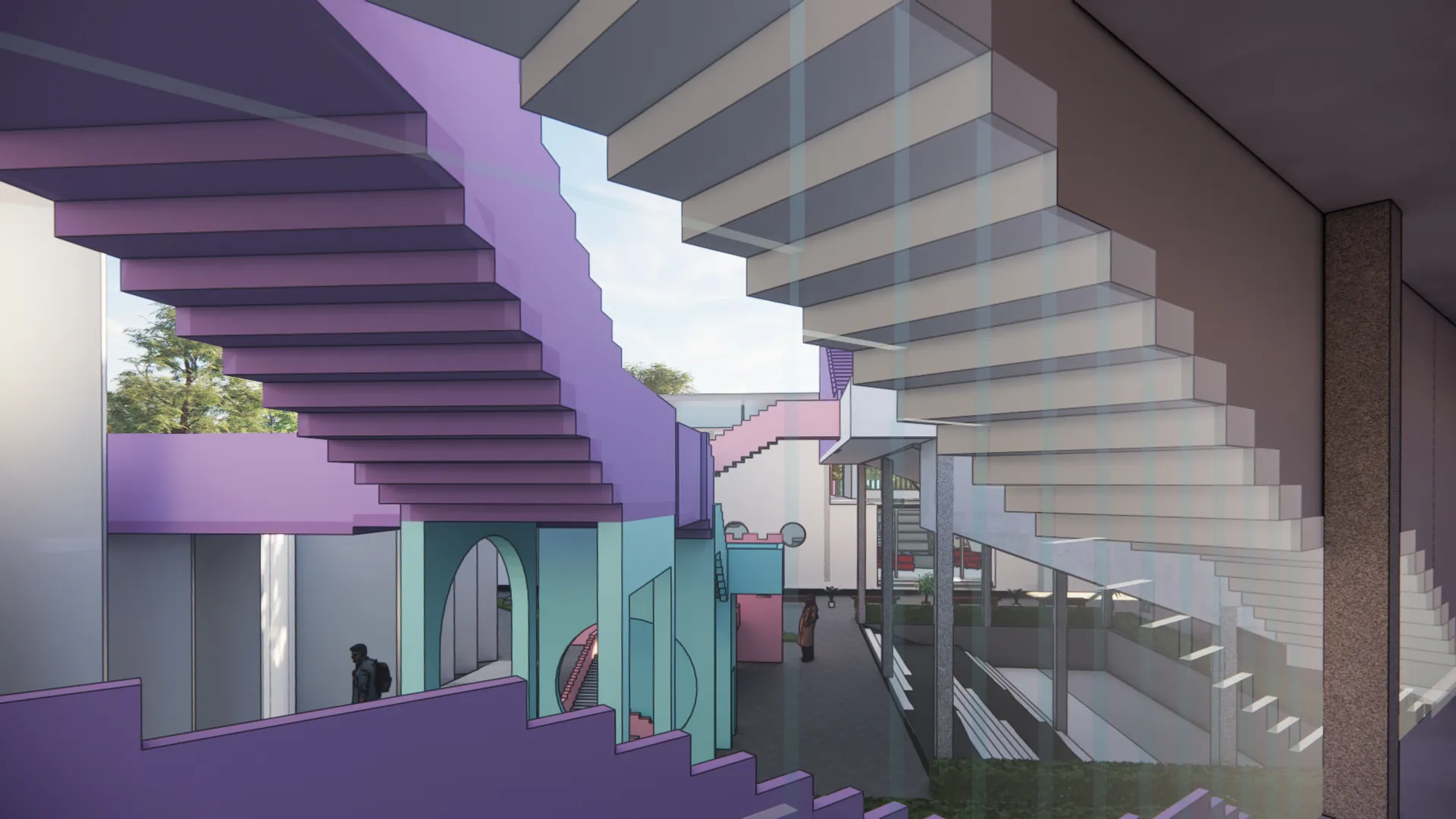
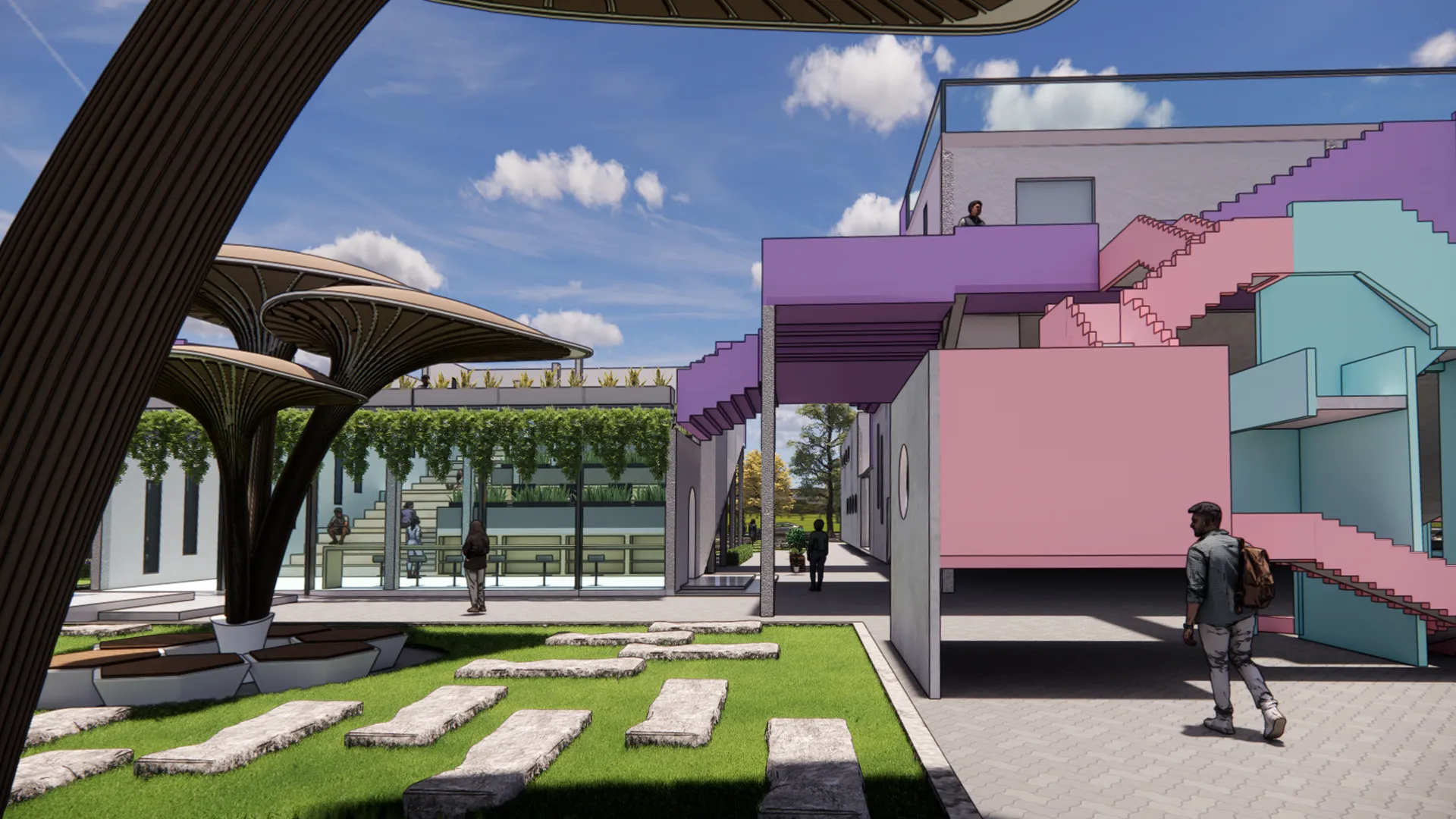
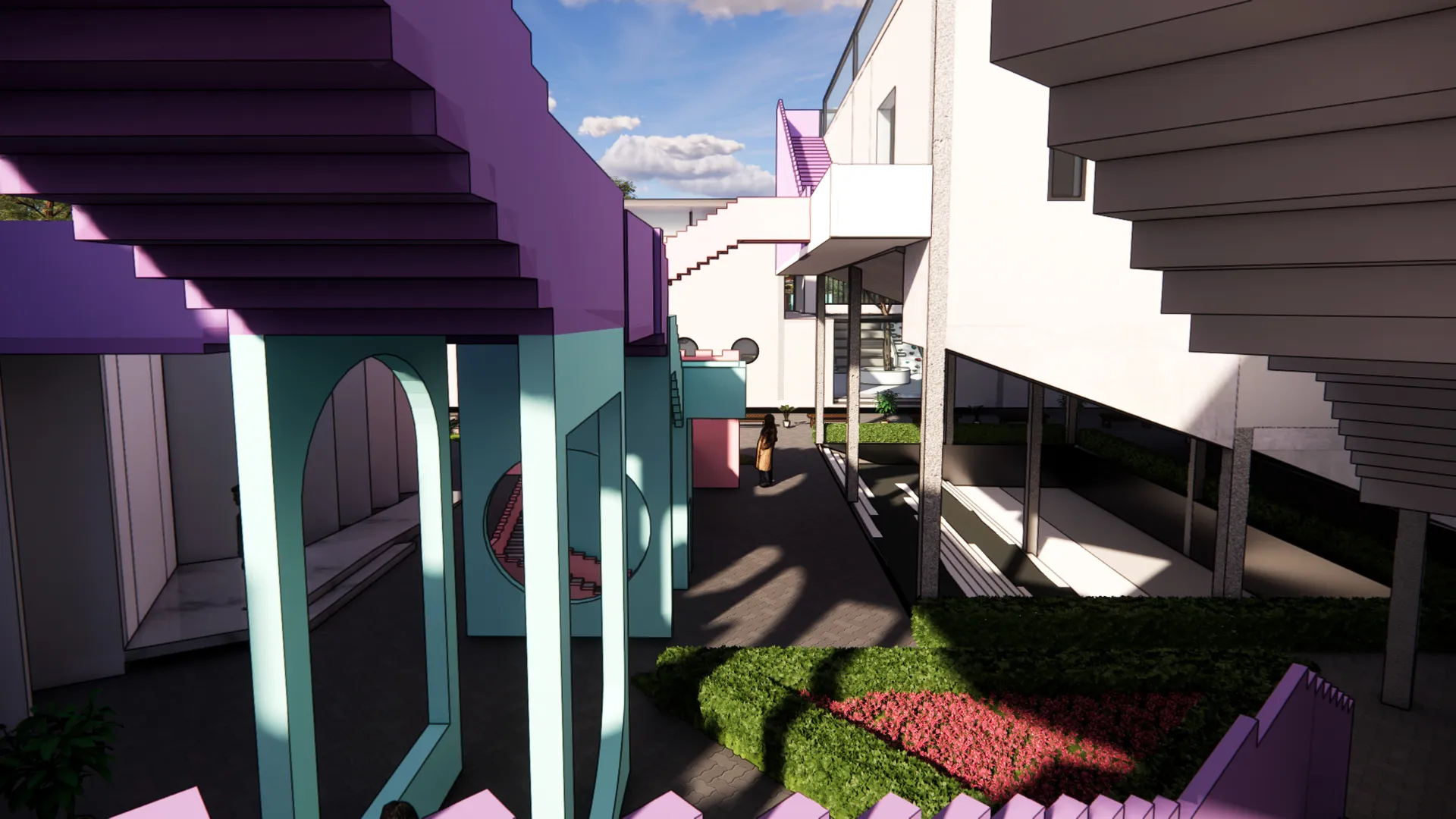
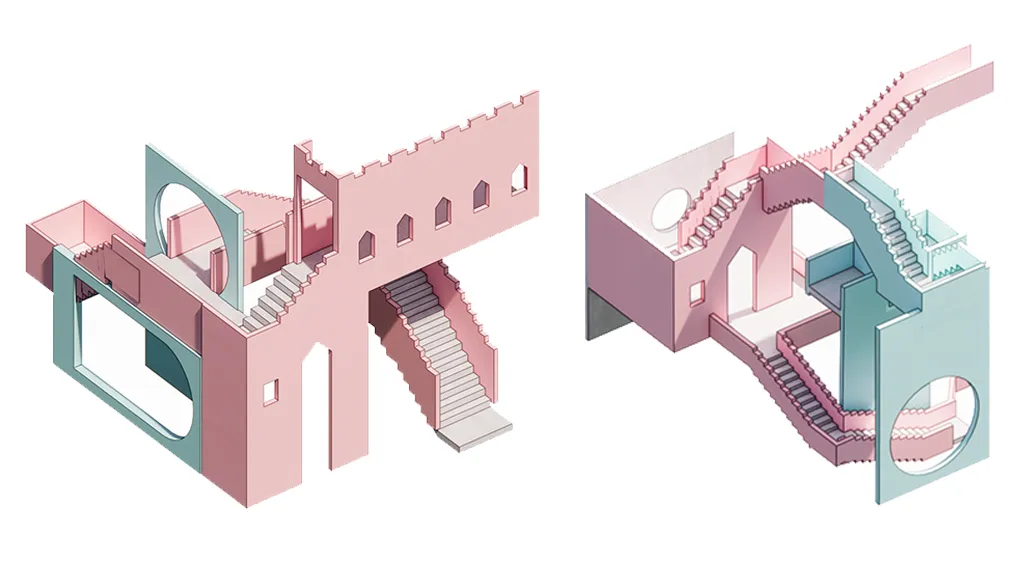
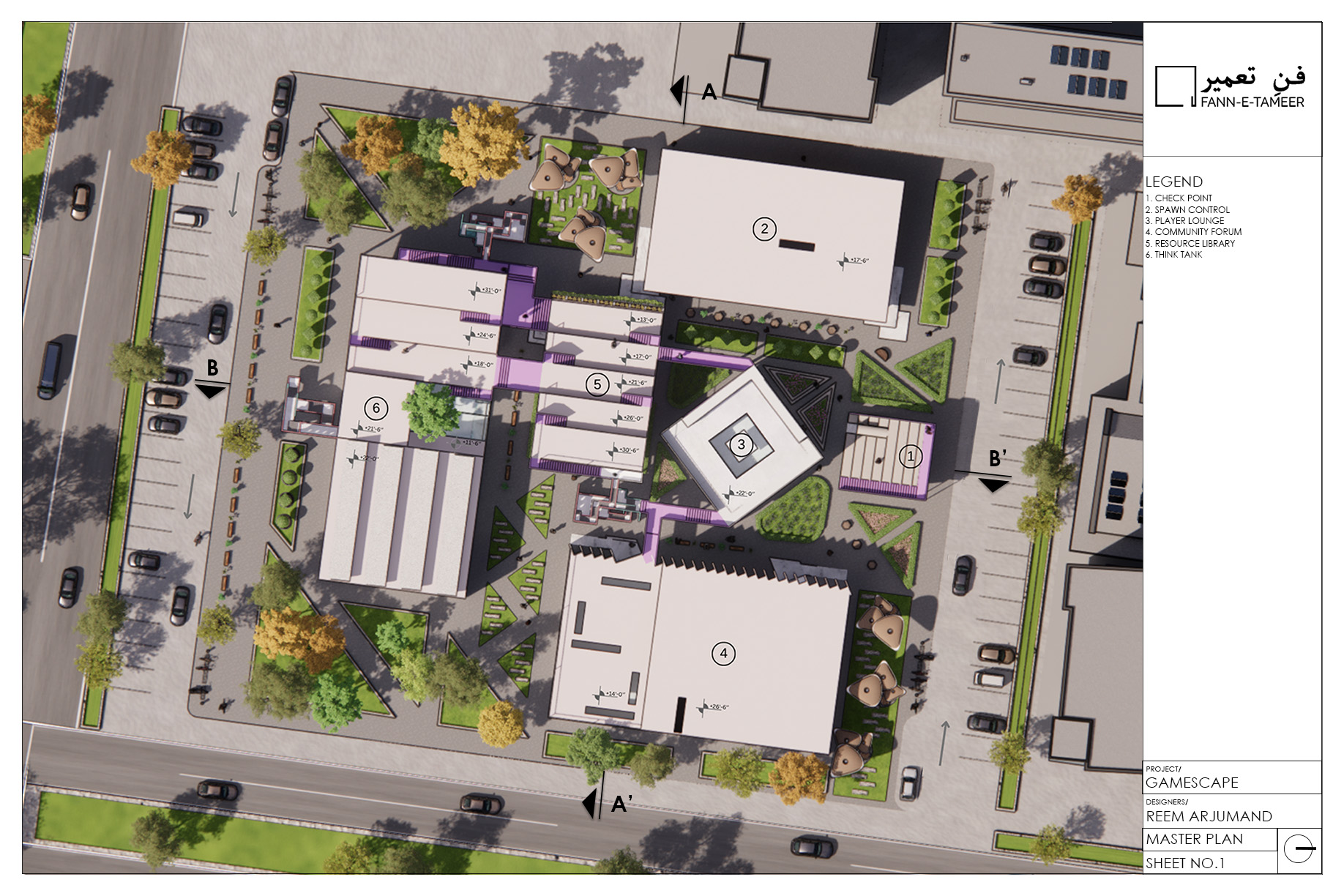
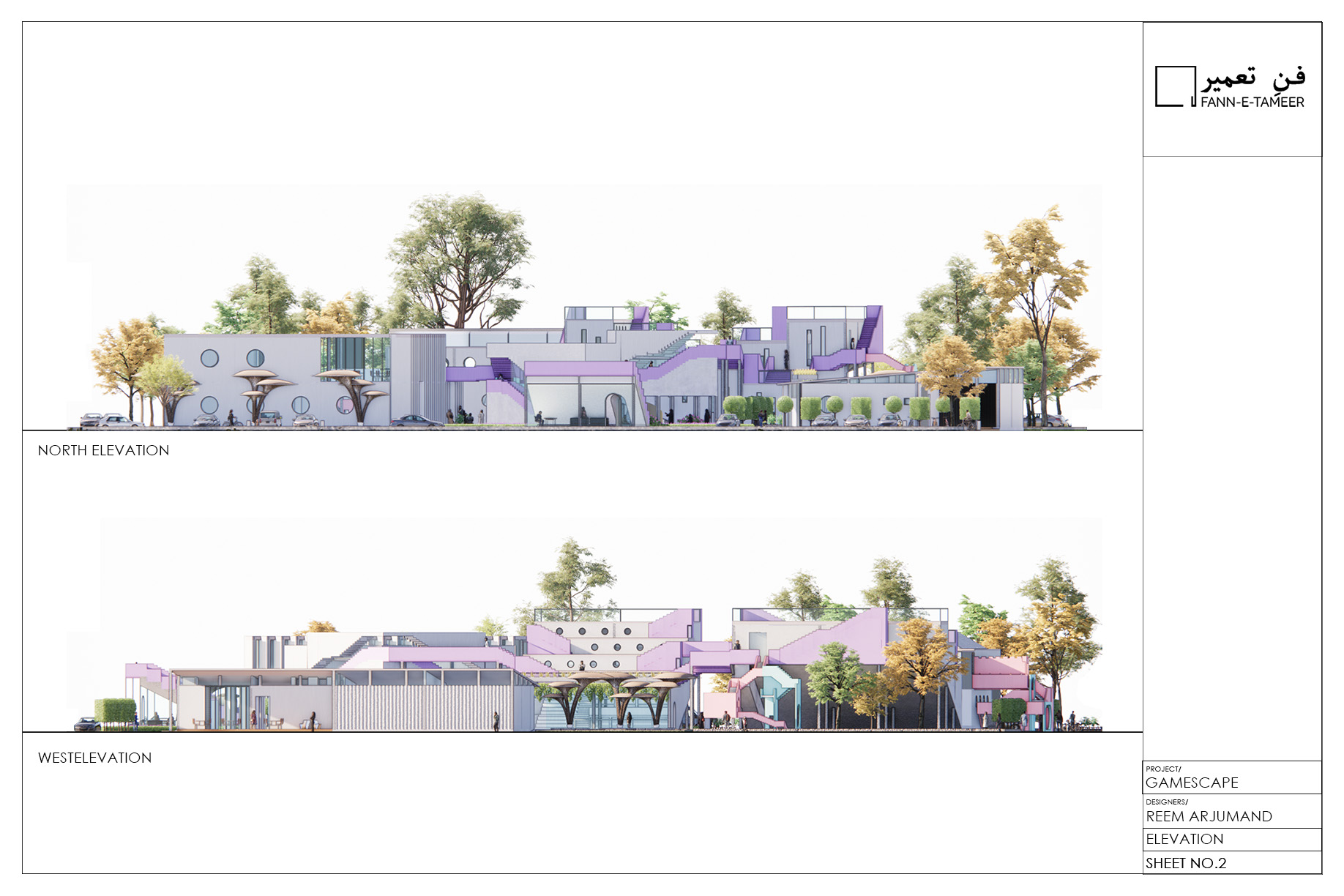
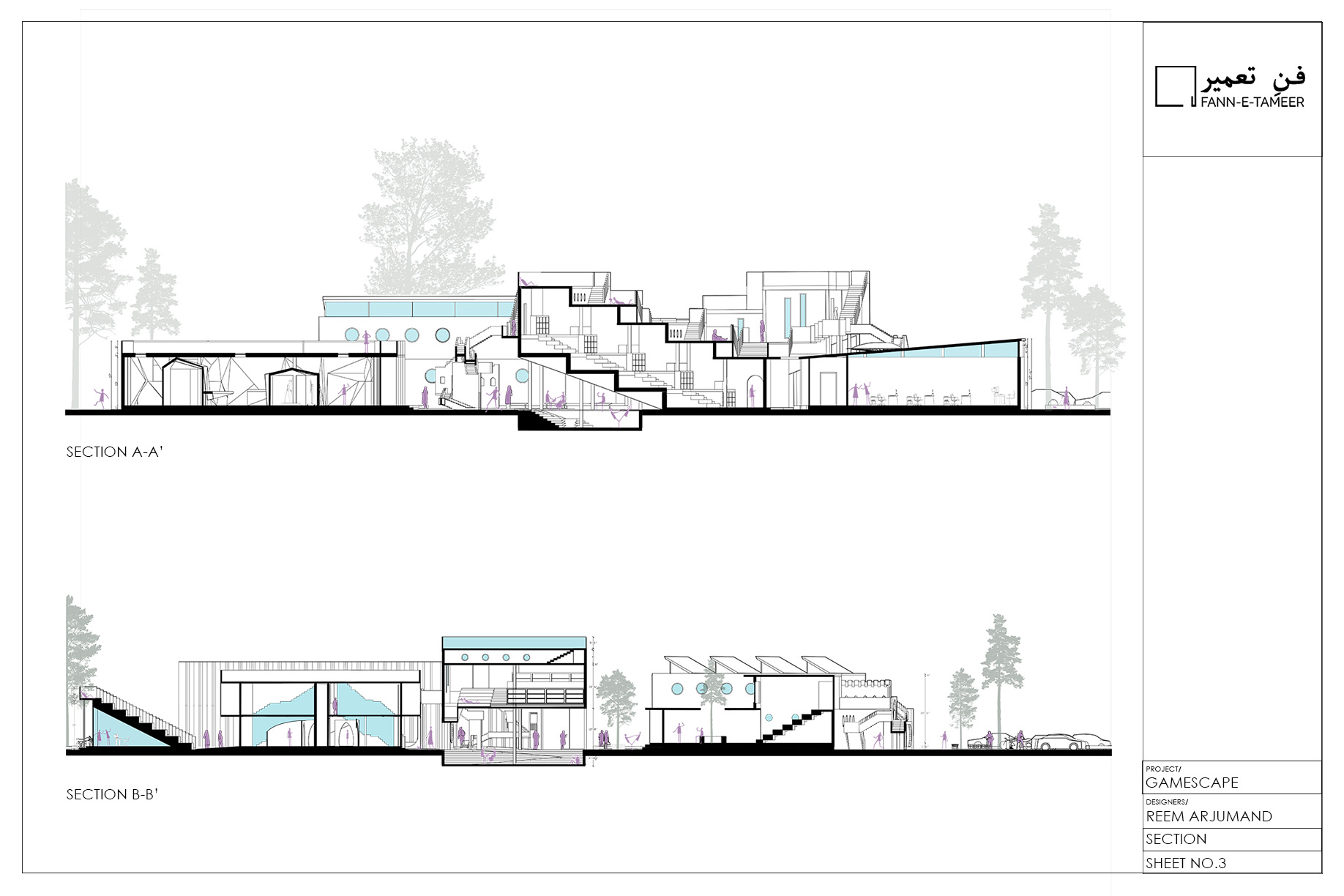
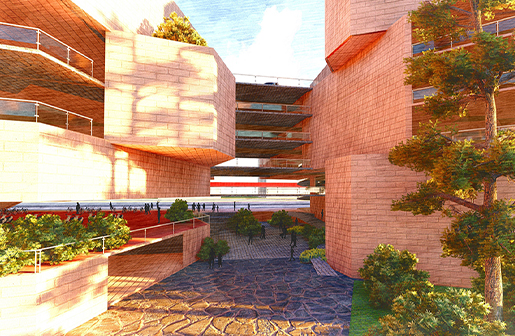
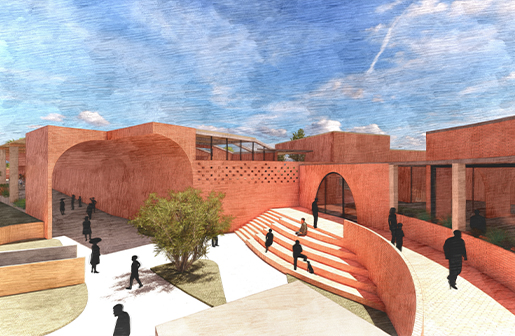
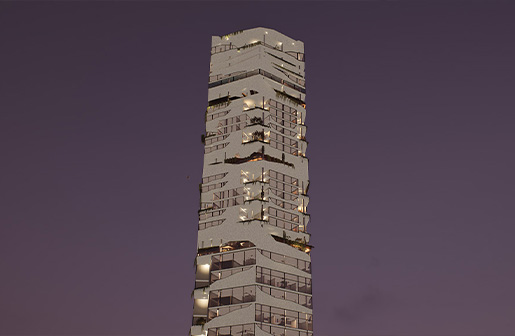
Gamescape examines the role of architecture in bridging gaps within Pakistan’s rapidly growing gaming industry by creating a platform that brings together game developers, creators, enthusiasts, and the general public. Reem Arjumand’s proposed design introduces a "glitch playground" concept, inspired by the spatial dynamics and layered complexity of game worlds. Situated in I8 Markaz, the playful and fragmented nature of the "Glitch Playground" is expressed through layered spaces, unconventional forms, and vibrant materials. The design fosters creativity by embracing the trial-and-error process intrinsic to game development, providing an inspiring setting for developers, creators, and the public to collaborate, innovate, and engage. By incorporating beta-testing zones and public interaction spaces, the project aims to demystify the gaming development process, foster direct user feedback, and celebrate local achievements. The architecture embodies layered circulation, stepped forms, and playful materiality, encouraging users to explore, engage, and interact within the space. The spatial programming is arranged to follow a gradient from public to private zones, ensuring intuitive navigation and spatial comfort.
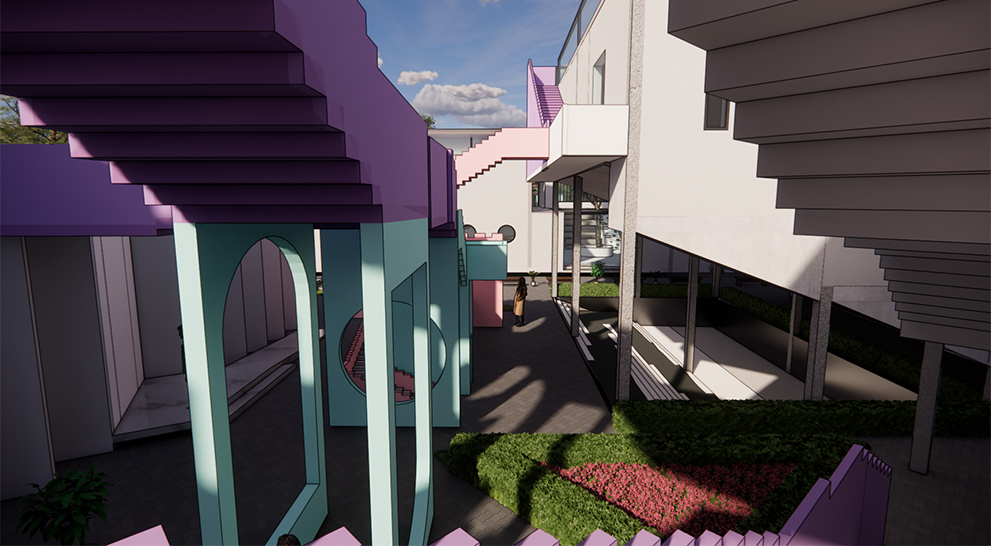
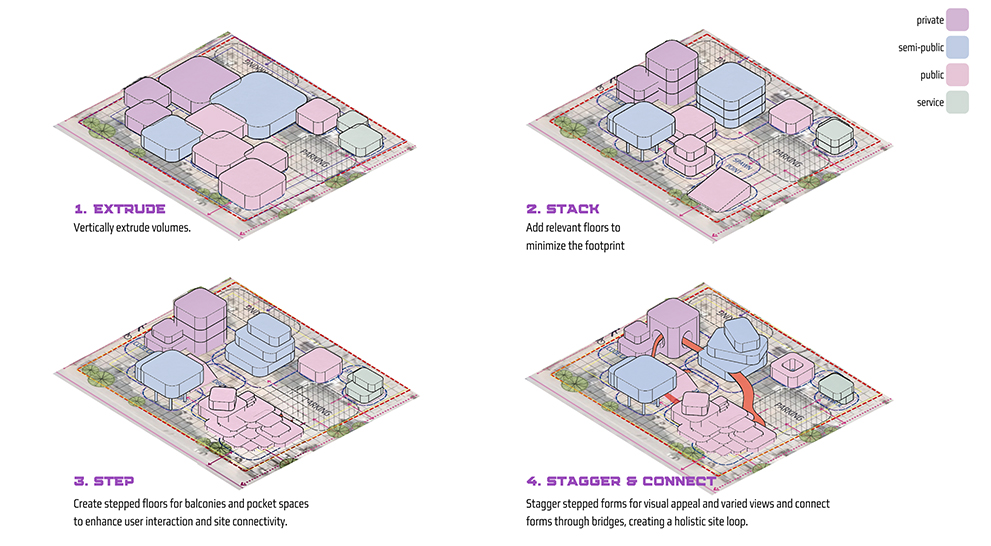
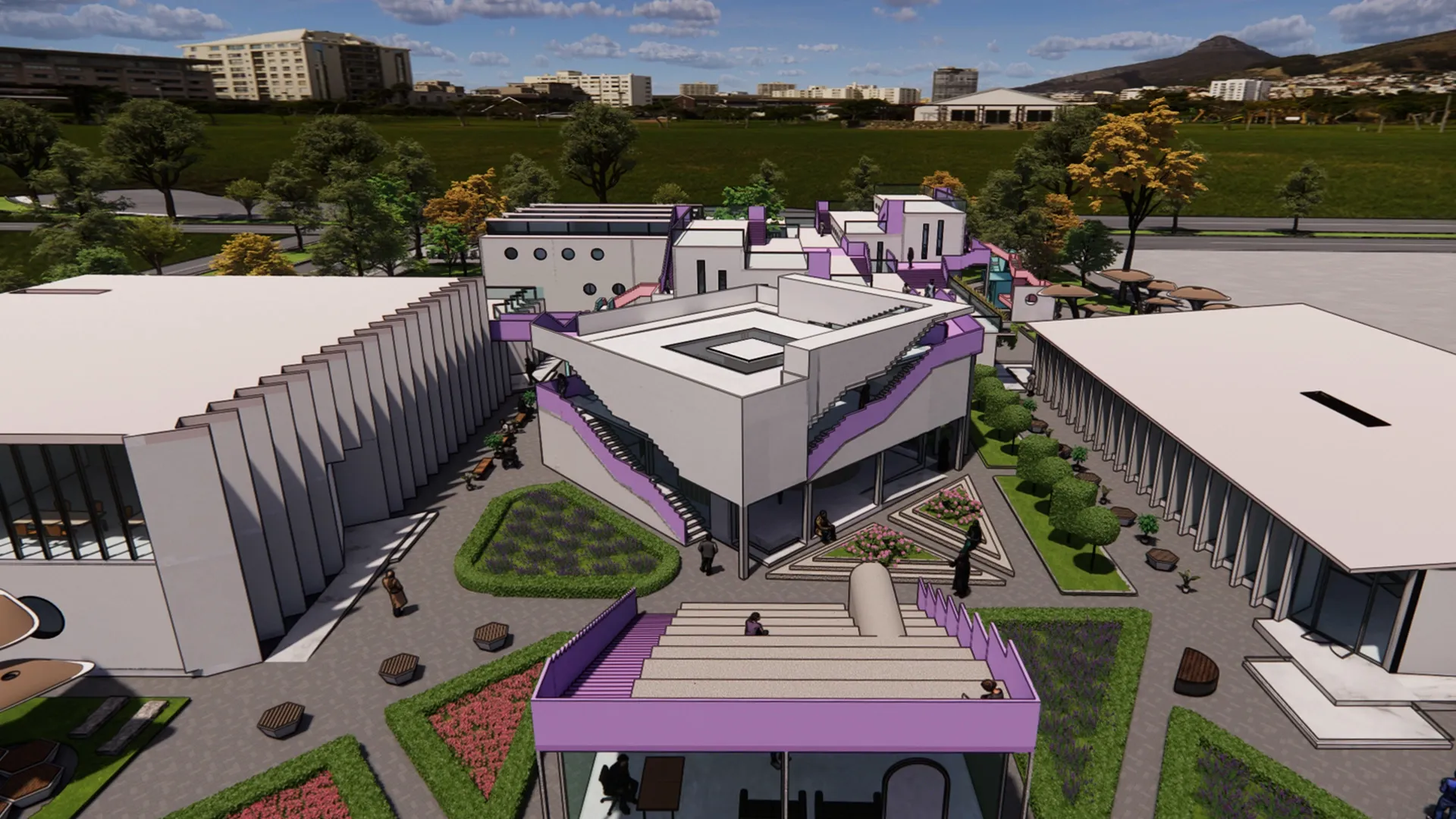
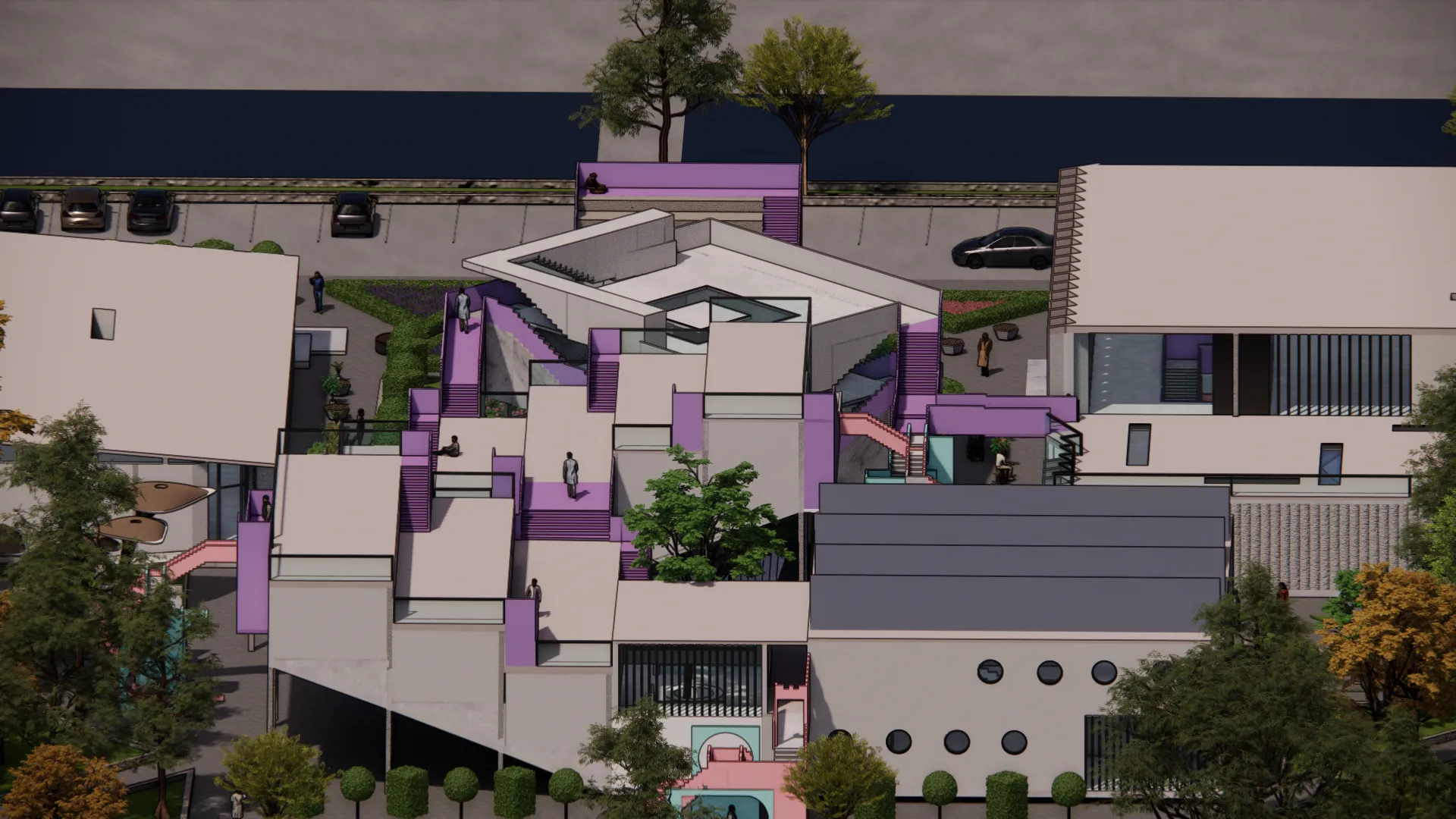
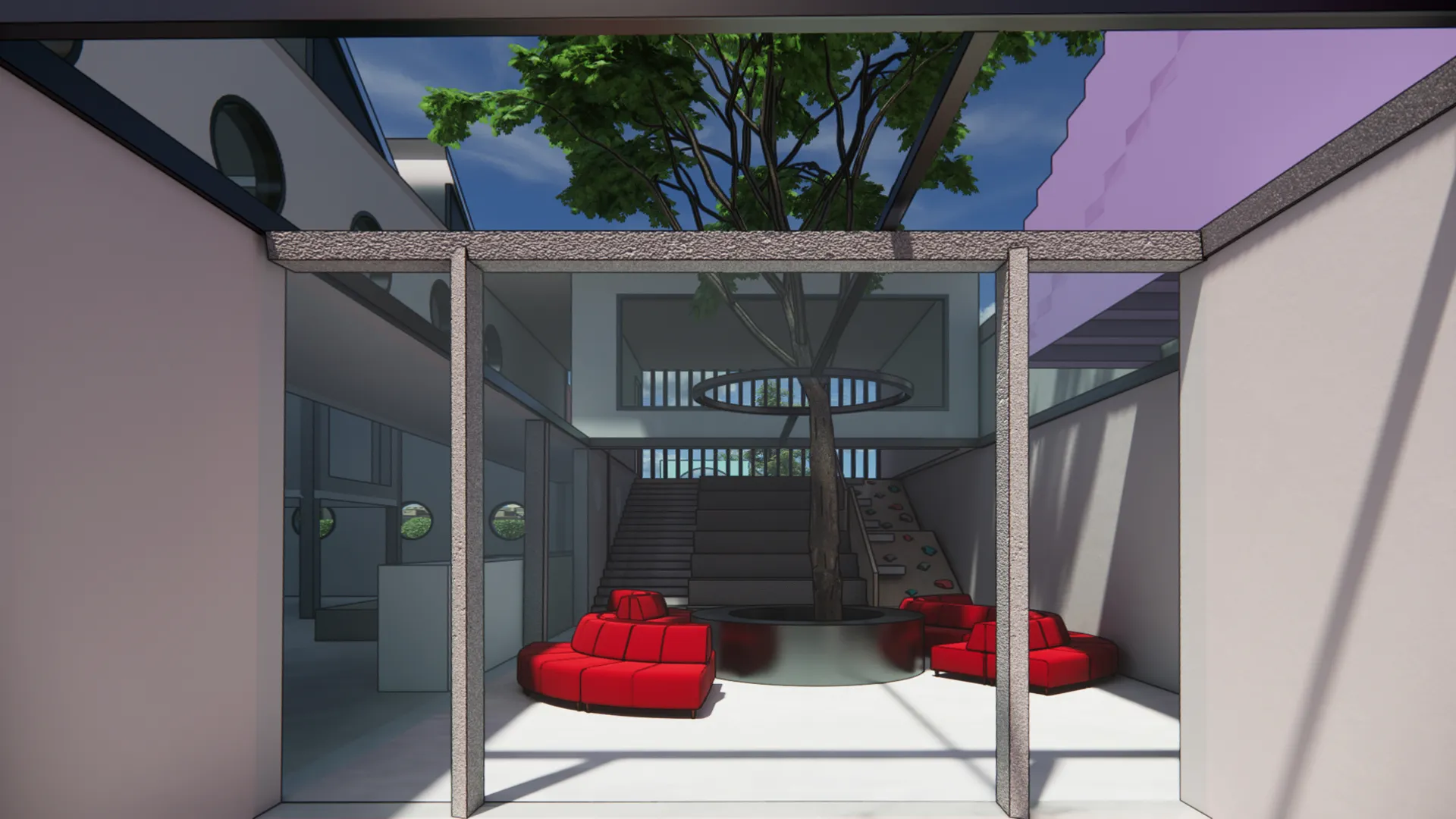
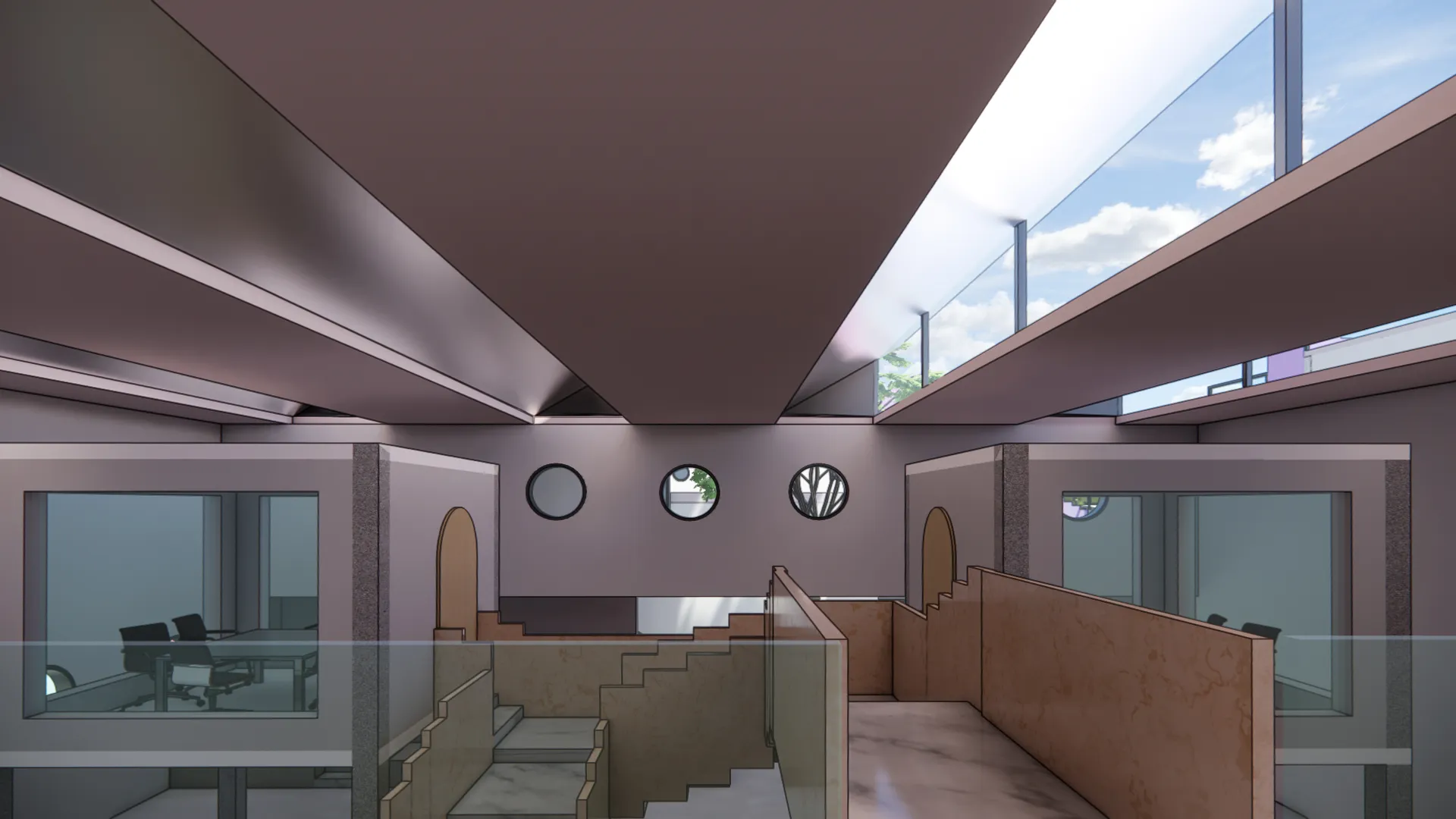
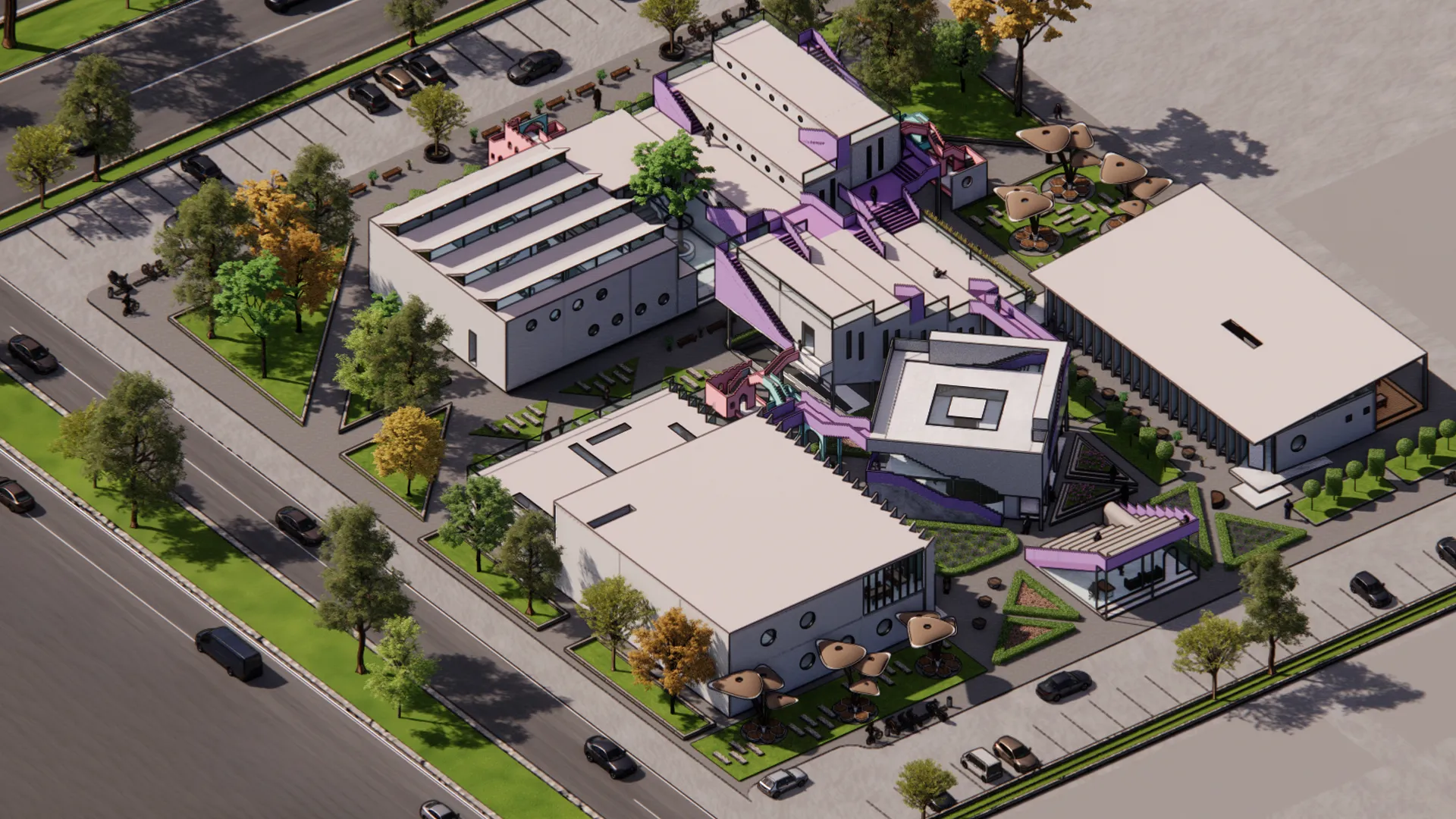
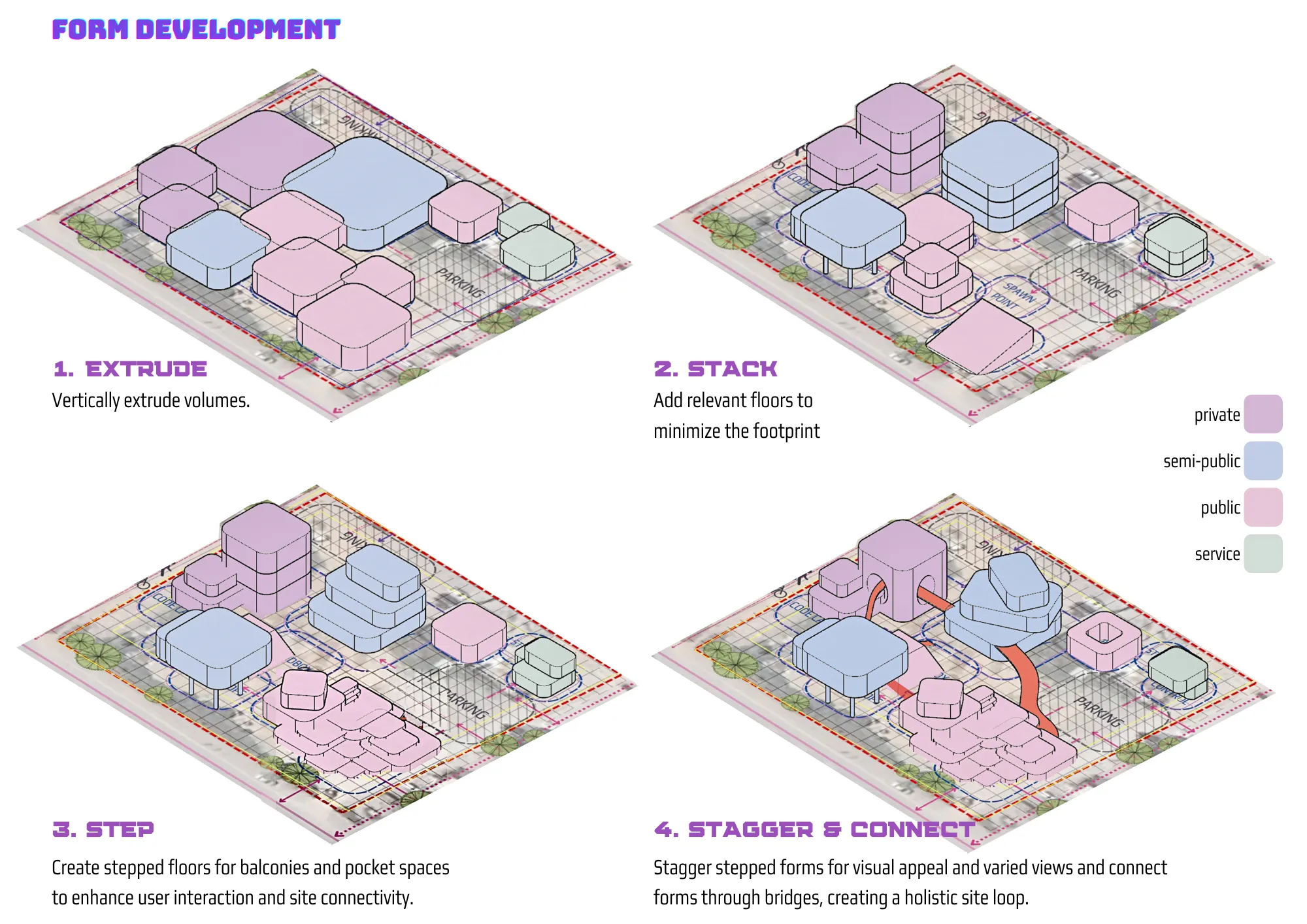
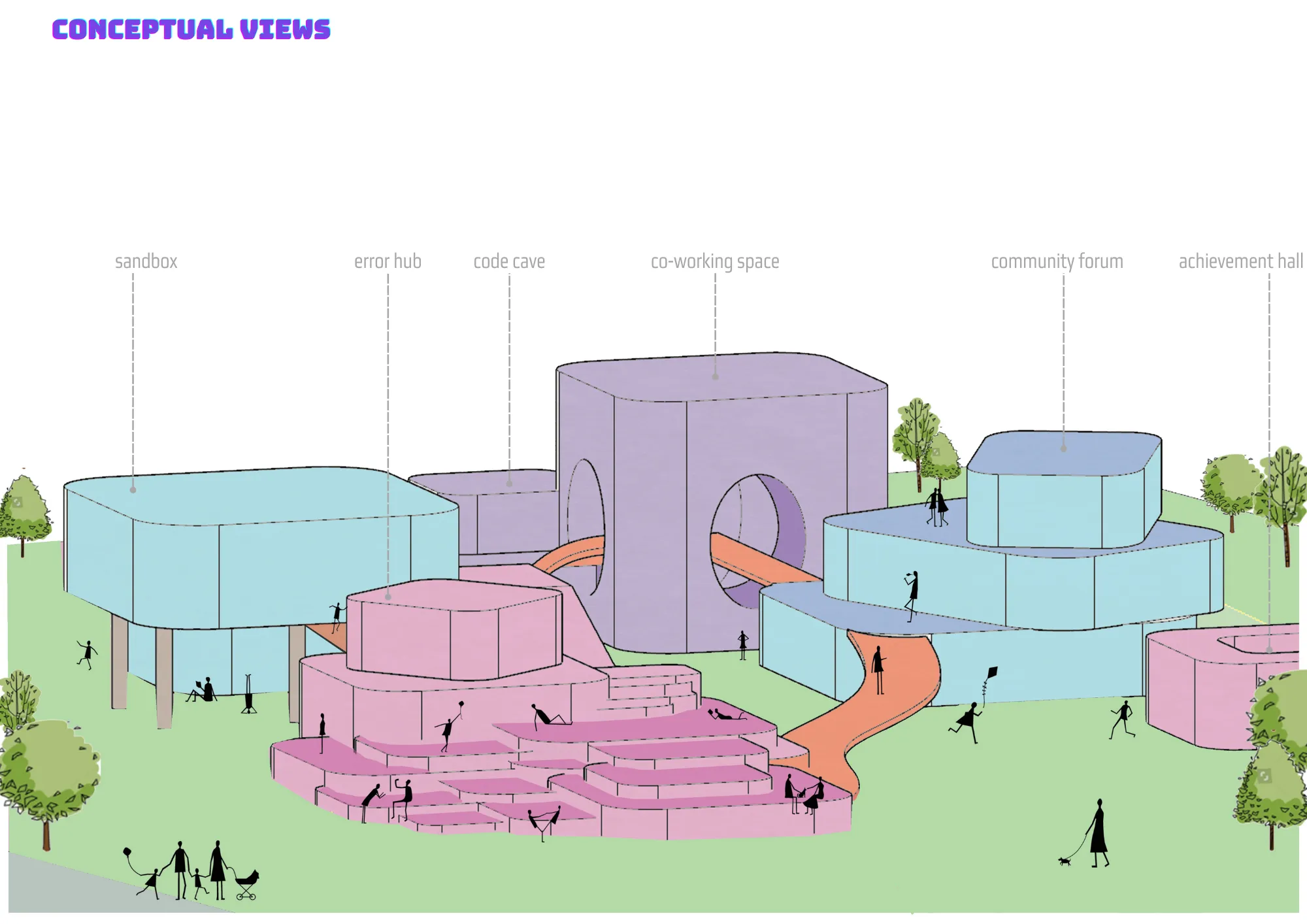
The massing is designed to create an introverted form, with buildings oriented inward around the central Player Lounge to enhance connectivity, allow visual bridges, and encourage movement. Inspired by a game factory, the layout offers multiple paths and entry points, letting users "respawn" and explore like in a game world. The Player Lounge serves as a portal, connecting users to various spaces, while stepped terraces support recreation and interaction. In focus and learning spaces, indirect sources of light, such as seesaw skylights and angled louvres, are used to maintain attention, while in public and social spaces, direct openings are preferred to invite activity and openness. The overall form acts as a playful, climbable landscape, reinforcing the thesis intent of architecture as an interactive playground for creativity and collaboration.