Capital Institute of Liberal Arts
A forward-thinking academic campus in Islamabad integrating sustainability, creativity, and cultural expression, fostering an inclusive environment for learning and the arts.
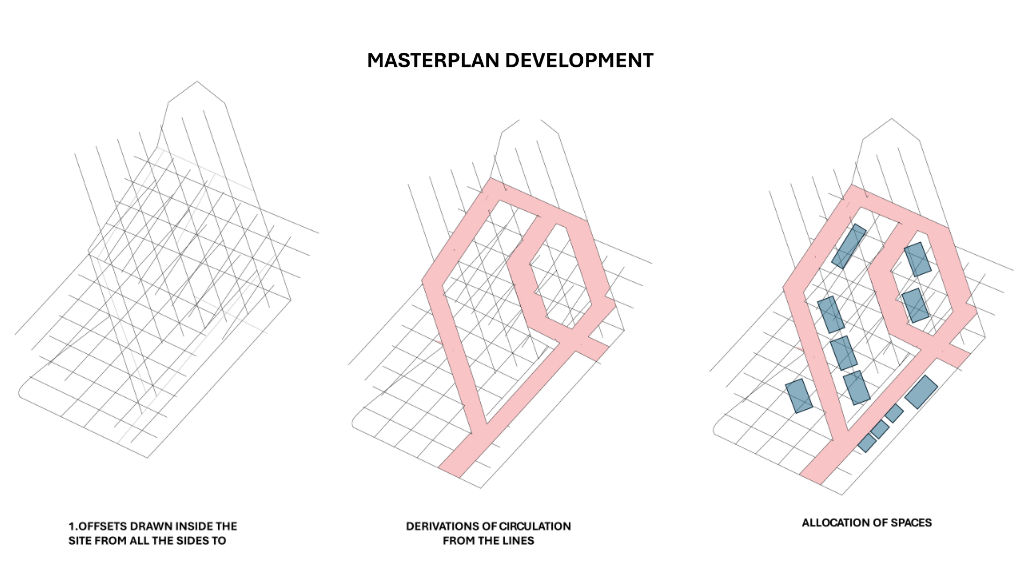
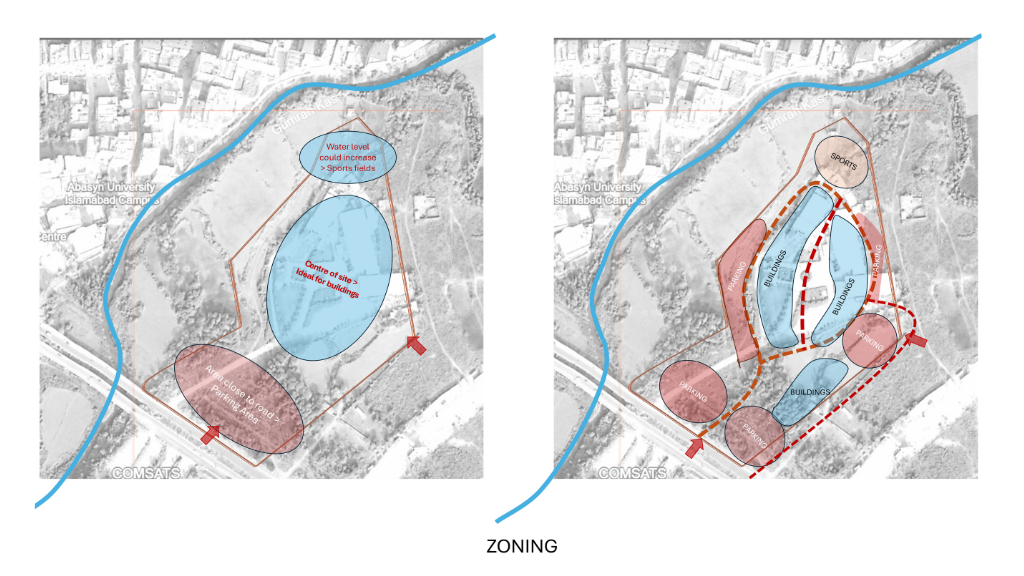
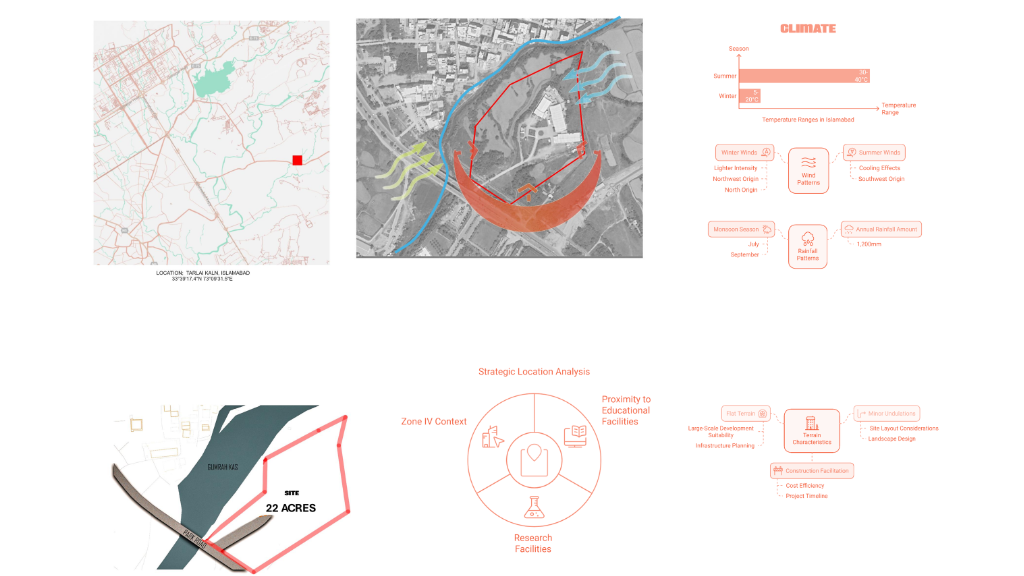
The Capital Institute of Liberal Arts is envisioned as a forward-thinking academic campus that integrates creativity, inclusivity, and critical thinking. Spanning 22 acres, masterplan emphasizes spatial harmony through thoughtful zoning, sustainable design, and user-centred planning. The campus layout adopts a responsive edge-offset strategy, maintaining setbacks along the site boundaries to ensure better light, air movement, safety, and spatial comfort. Faculty blocks are arranged around a central academic core, with each block fronted by generous green zones that serve as outdoor classrooms, gathering spaces, and climate moderators. All parking facilities are placed behind the buildings, out of sight from primary pathways, to preserve the visual clarity of the green public foregrounds. Sports and recreational facilities are positioned toward the topmost edge of the site — separated from academic zones to reduce noise. To manage circulation, the design includes two dedicated entrances — one for buses and the other for cars. The site frontage, where construction is restricted, is smartly repurposed as bike and vehicle parking, keeping the inner campus pedestrian-friendly and Green-focused.
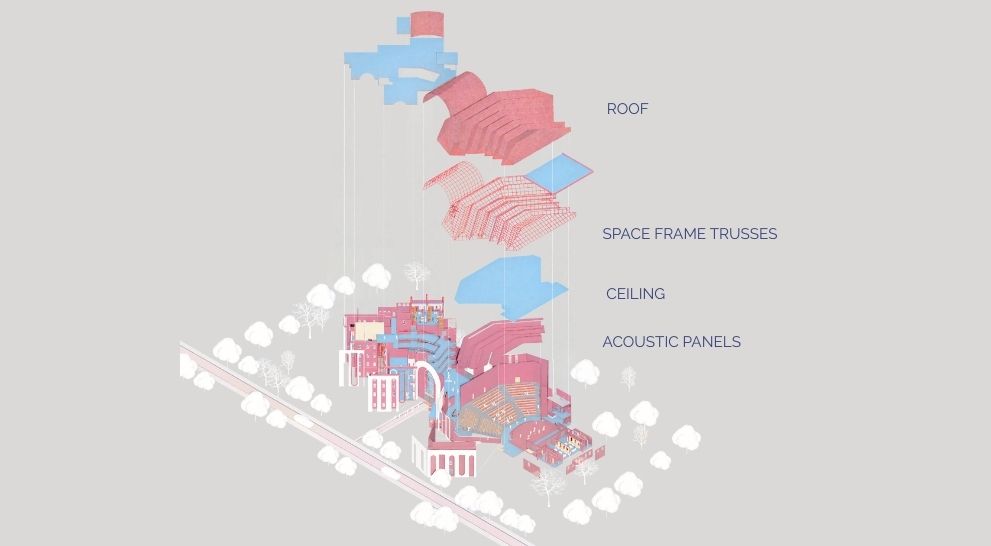
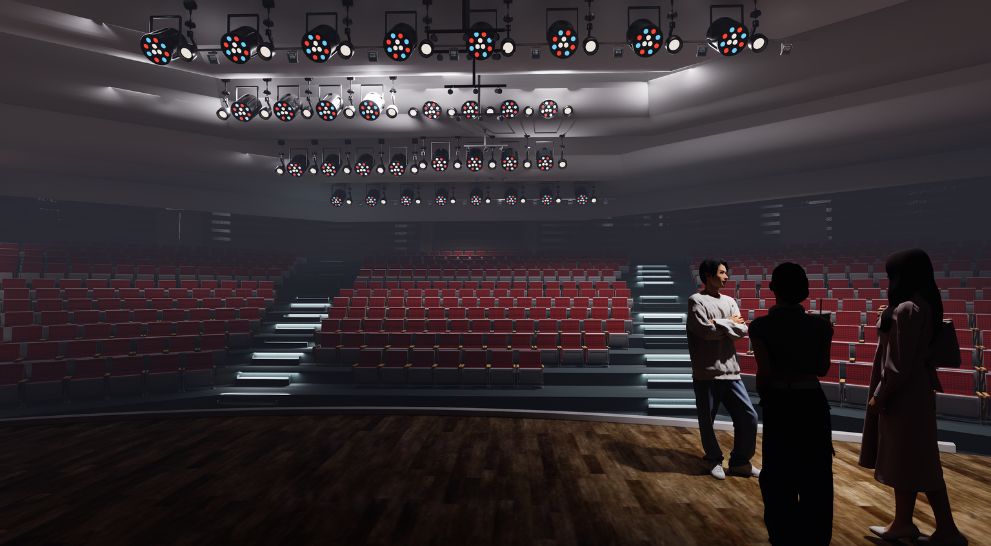
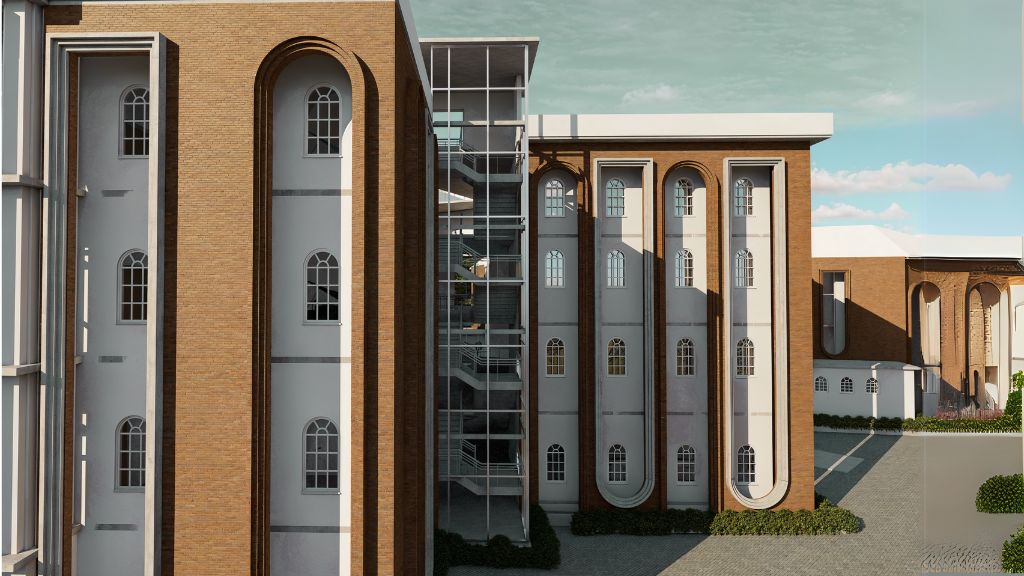
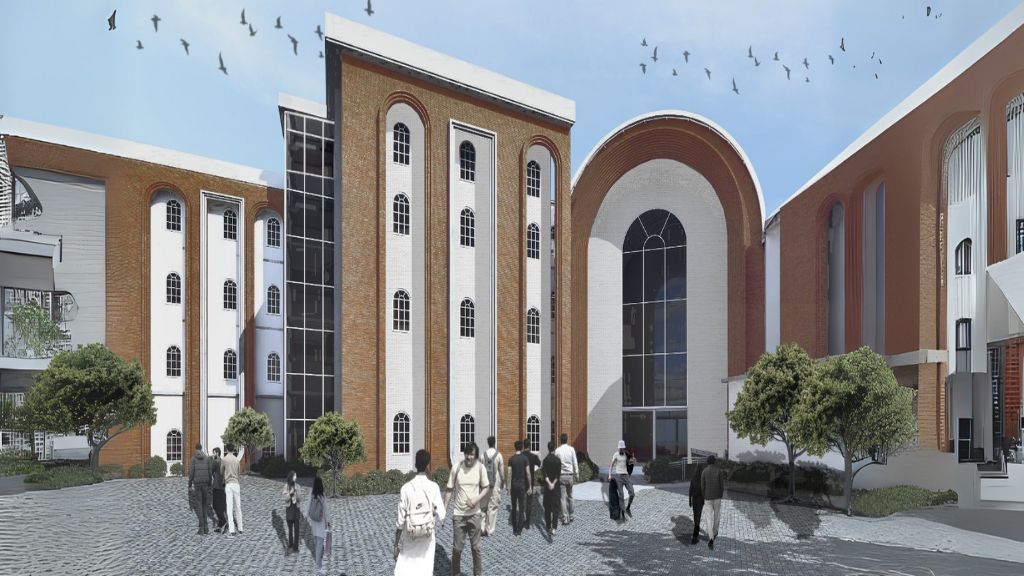
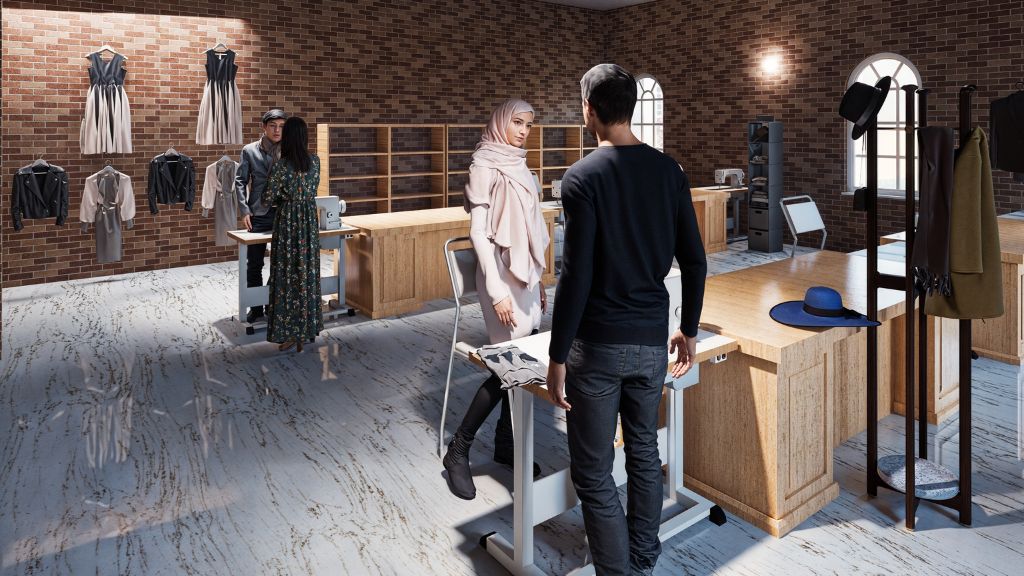
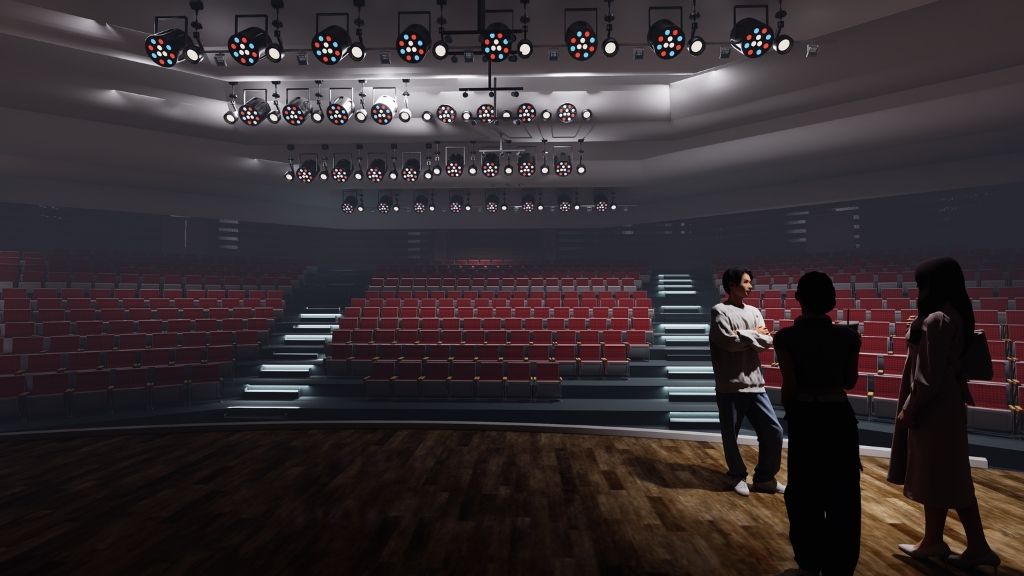
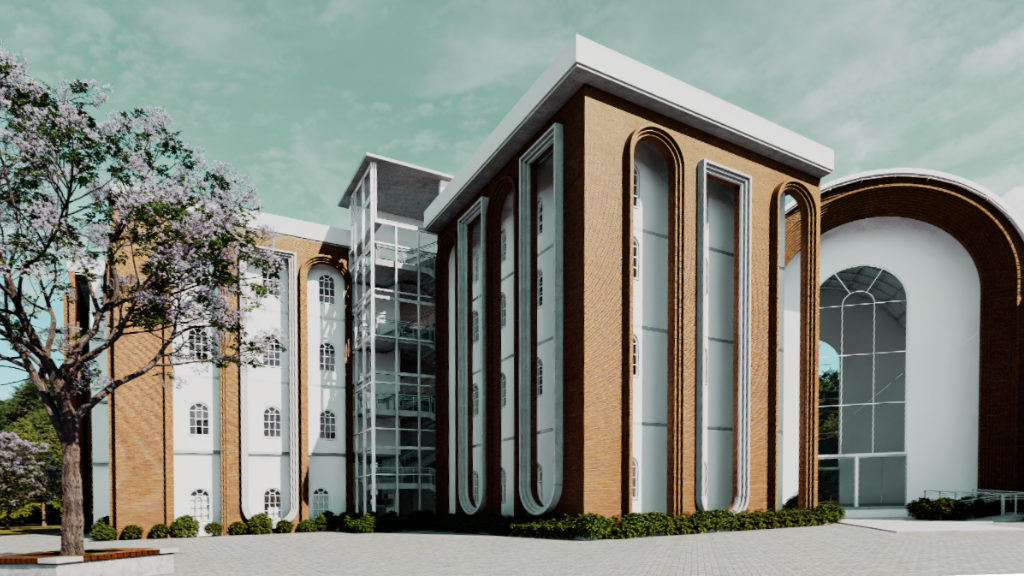
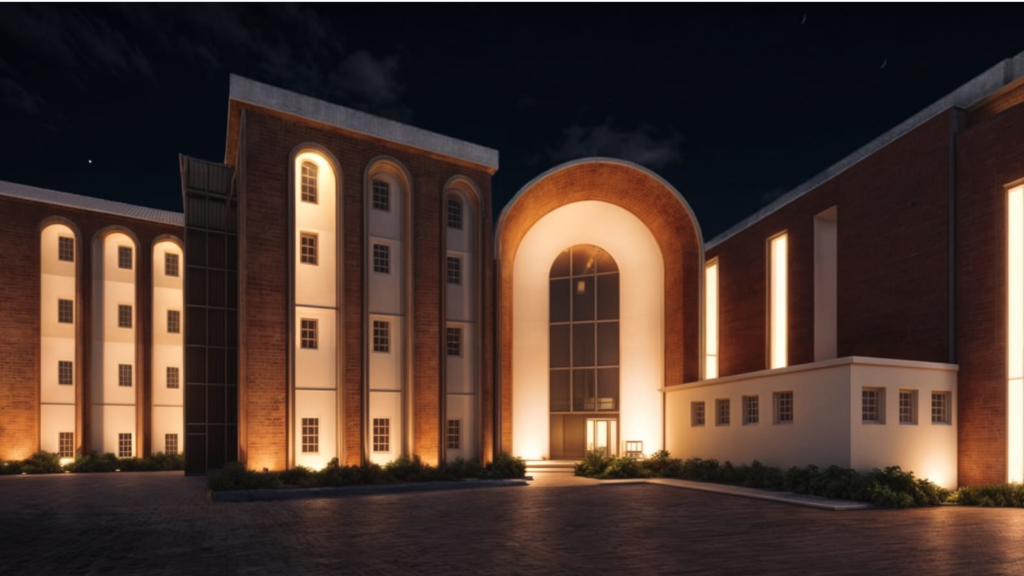
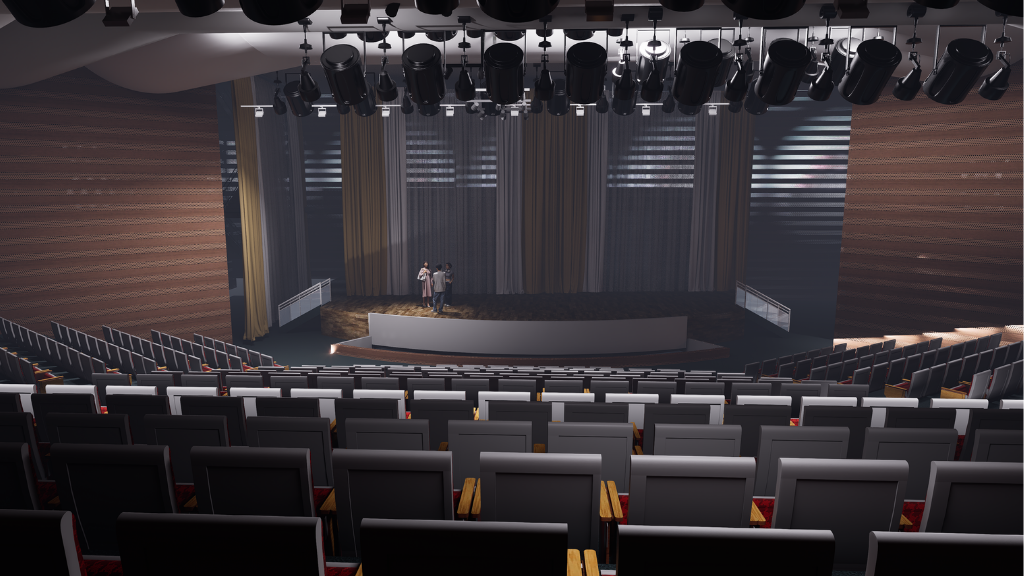
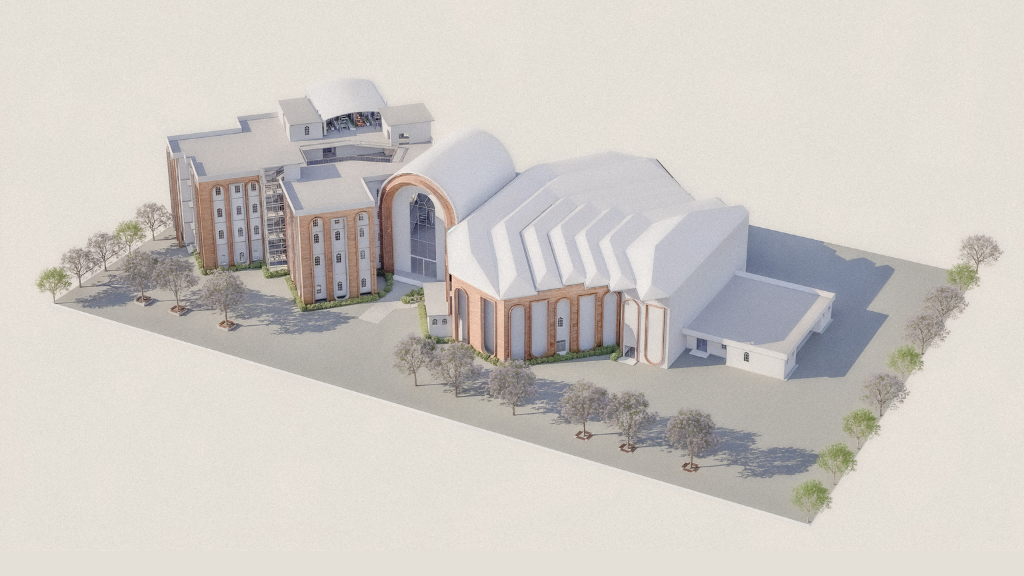
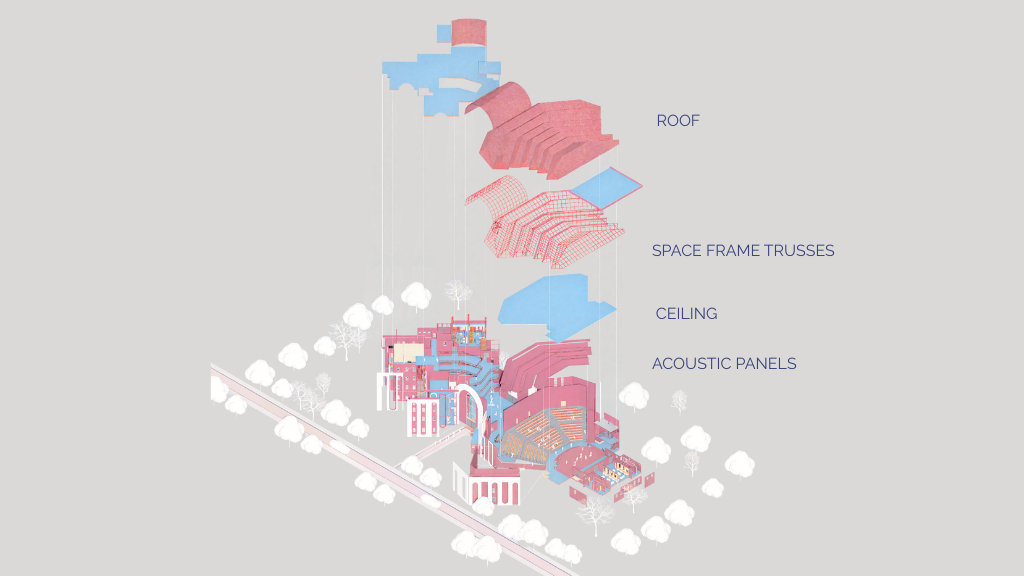
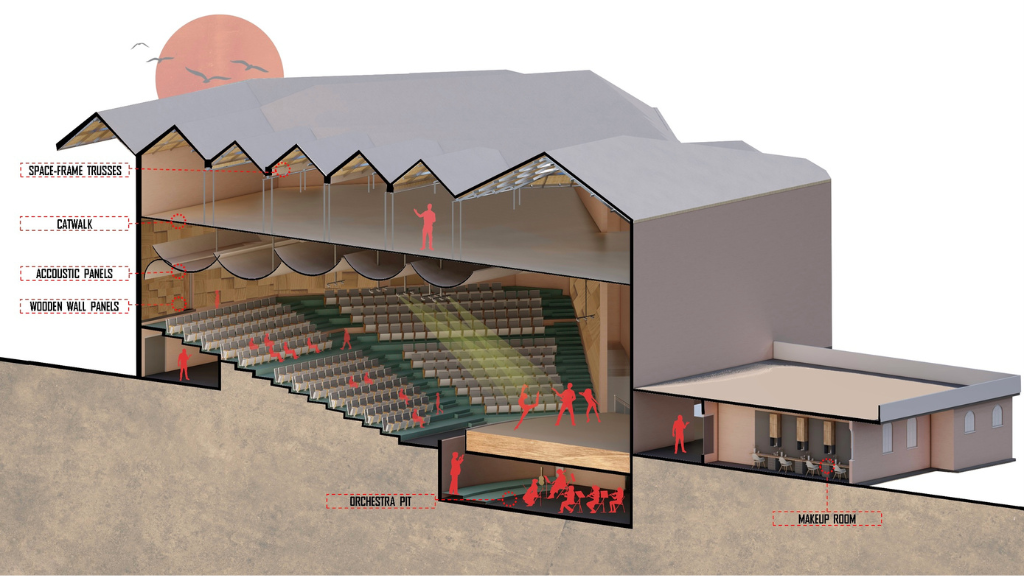
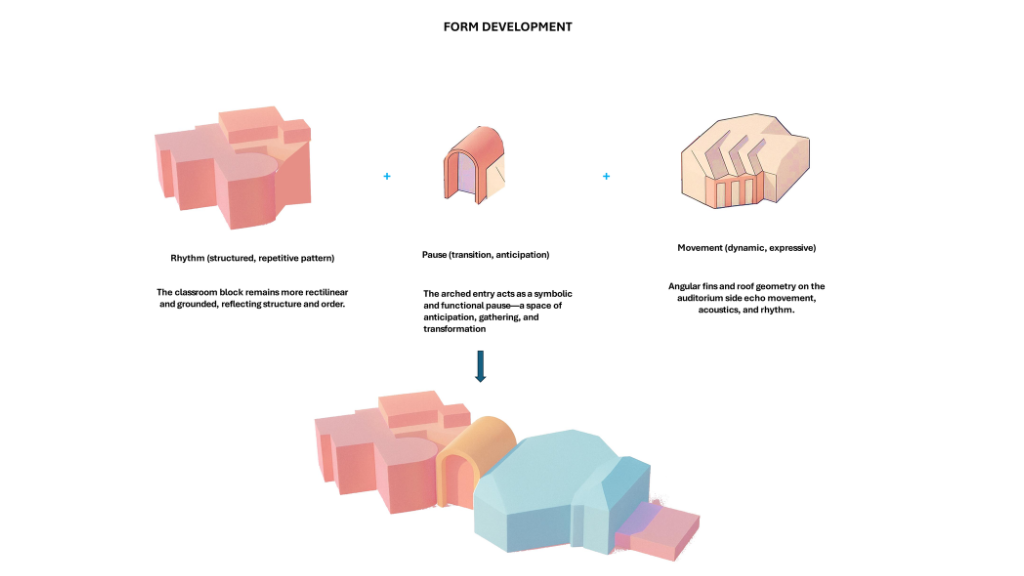
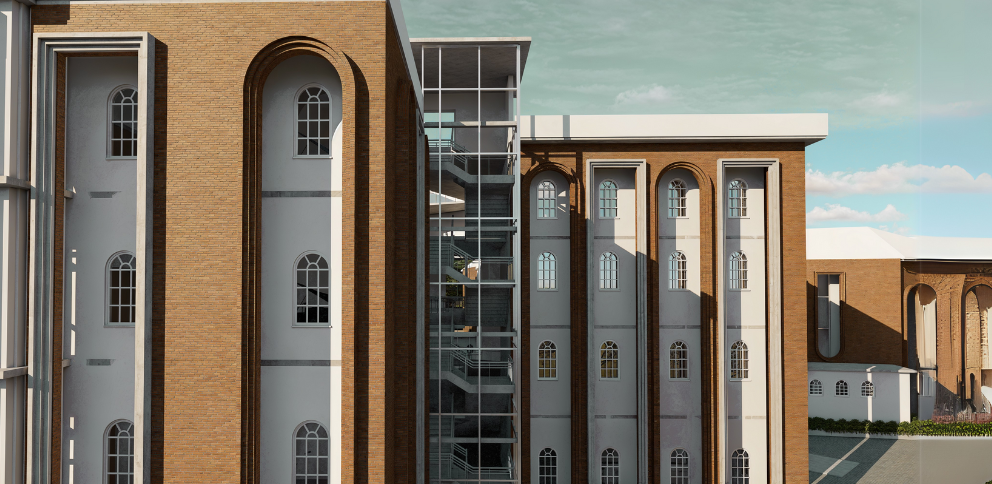
Serving as the cultural heart of the campus, the Faculty of Performing Arts is designed to reflect the interplay between structure and expression. The programmatic zoning contrasts the classroom block — a grounded, linear form representing academic discipline — with the auditorium wing, a dynamic, volumetric form symbolizing artistic freedom. A grand arched entrance acts as a symbolic threshold, establishing hierarchy and rhythm in the facade, and creating a moment of transition between learning and performance. The form evolves further with angular fins and expressive rooflines that emphasize movement, acoustics, and rhythm, while material unity (red brick and soft render) ensures visual cohesion across diverse volumes. The design integrates passive climate strategies, shaded walkways, rooftop gardens, and solar-responsive facades. Informal performance spaces such as rooftop terraces and courtyards support a vibrant, student-centered environment rooted in artistic exploration and community engagement.