Whimsy in Architecture
A whimsical school design inspired by Bernard Tschumi, reimagining education through playful architecture, interactive spaces, and adaptable, experience-driven learning environments.
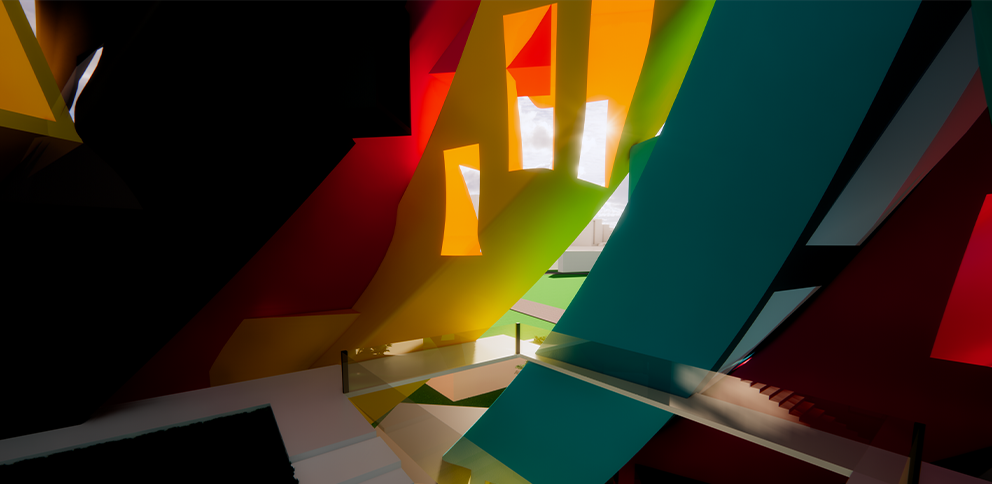
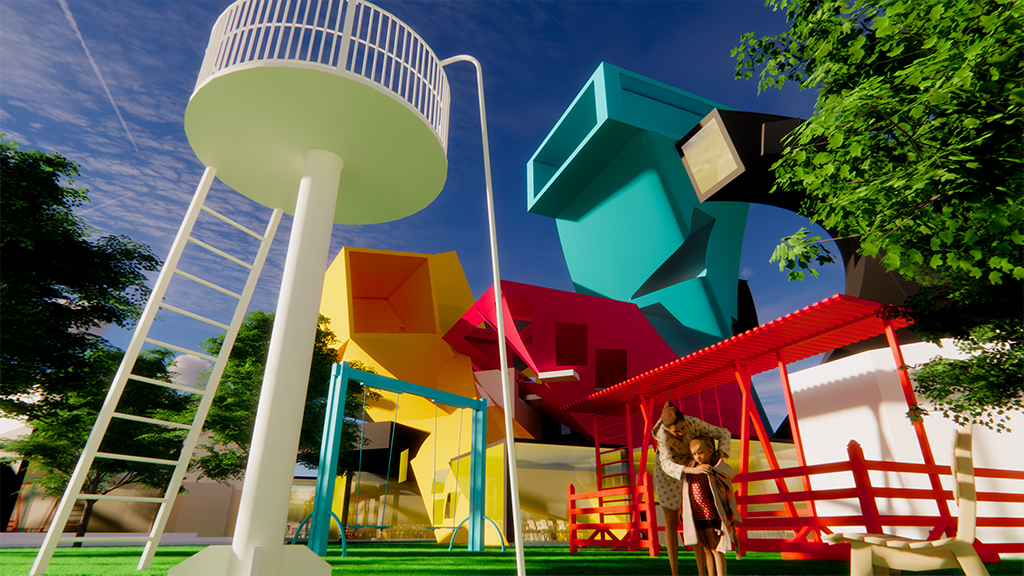
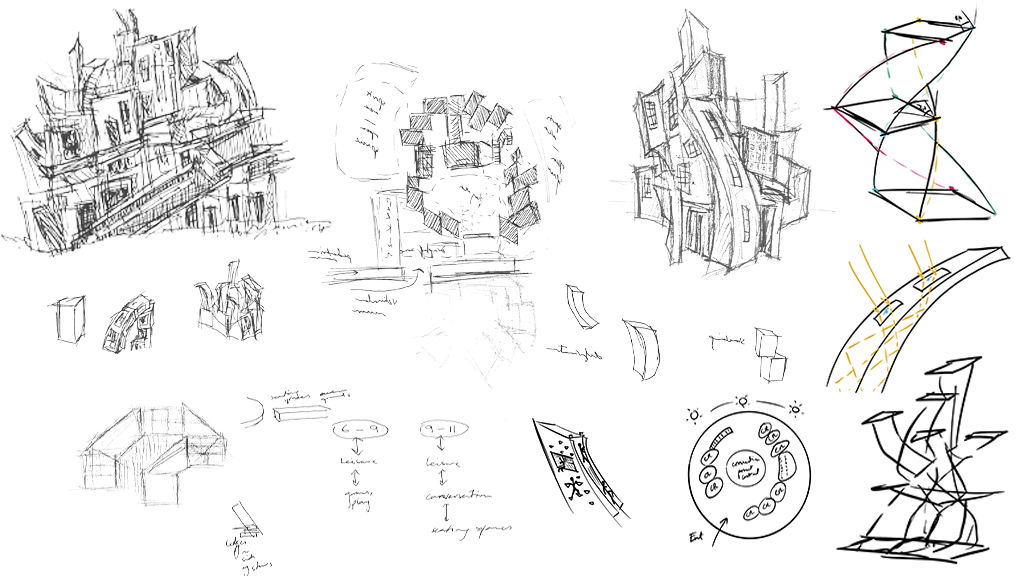
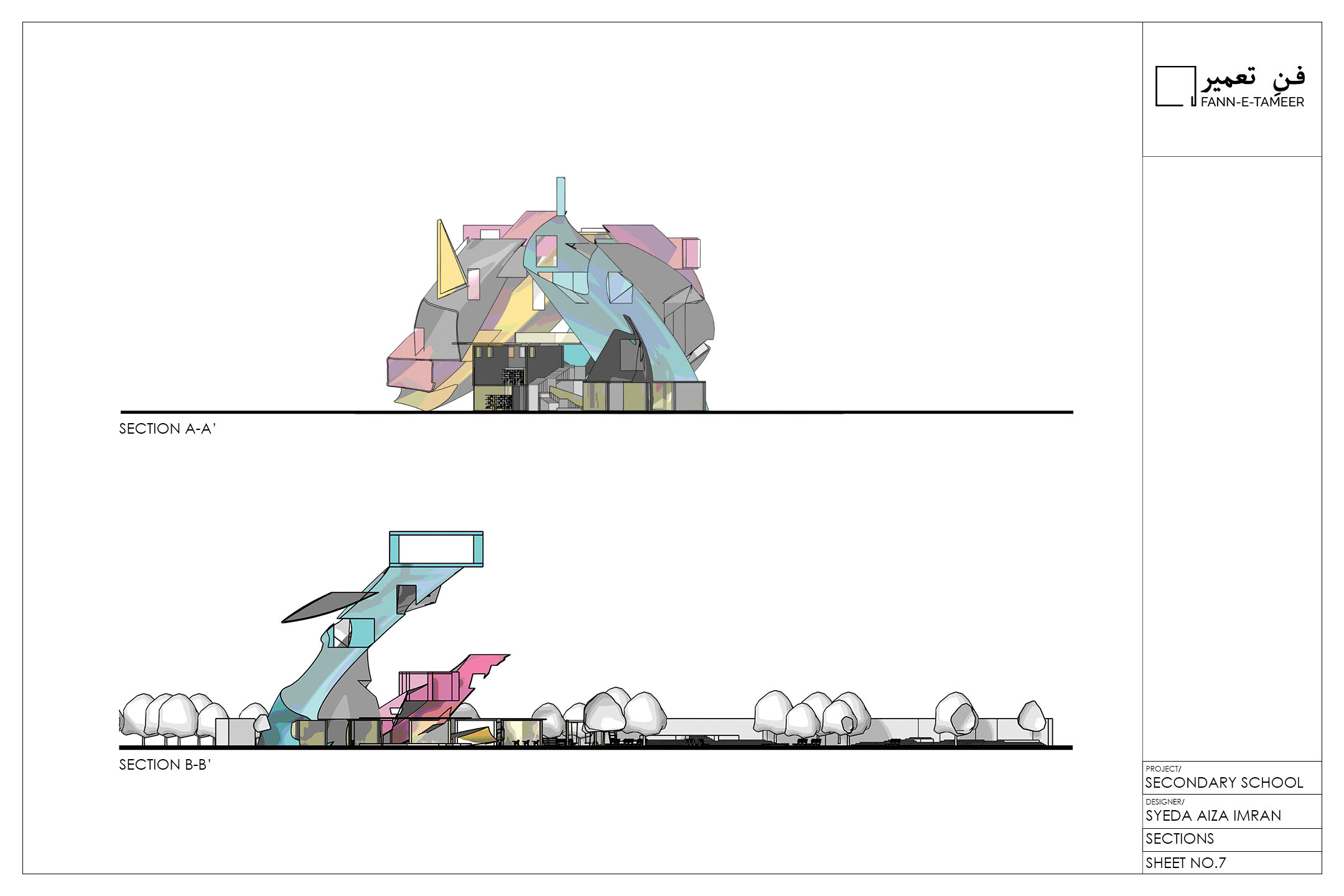
Bernard Tschumi was an architect known for his deconstructivist and postmodern design style. He rejected the idea of architecture as purely aesthetic and believed it should engage with social, cultural, and political contexts. Tschumi drew inspiration from cinematography, incorporating concepts such as sequencing and framing into his designs. His design philosophy revolved around creating architecture that went beyond functionality and aesthetics, aiming to provoke thought and stimulate experiences. Tschumi’s work pushed the boundaries of conventional design practices, offering new perspectives on the role and impact of architecture in our lives. The idea behind this school design came from personal experiences with schools, how they can be under-stimulating, monotonous, and adversely affect one’s creativity and imagination. Taking his philosophy as inspiration, a design for a school was created based on the concept: Whimsy in Architecture. Using the ideas of events and follies, an interactive space was created that encouraged engagement and activity, creating a set of spaces that functioned as a deconstructed playground.
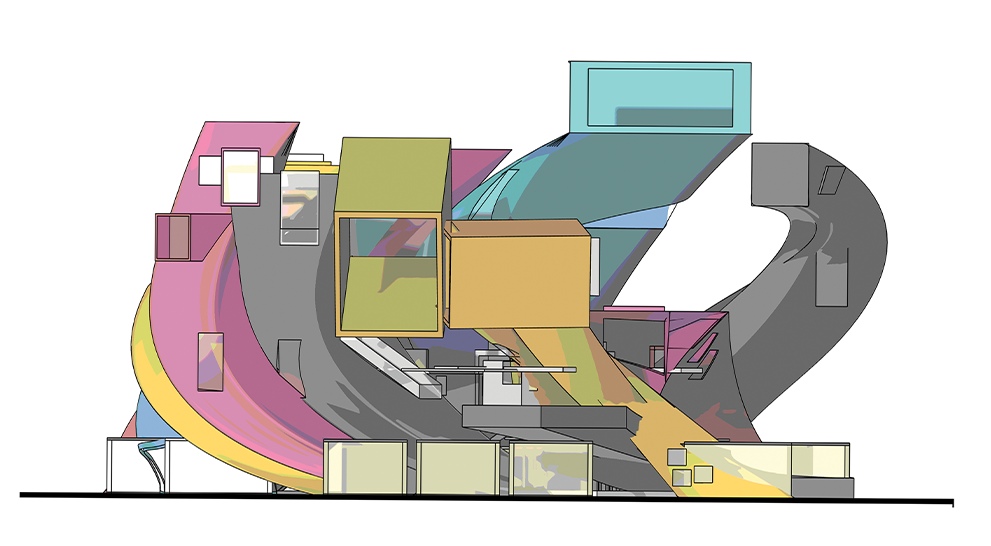
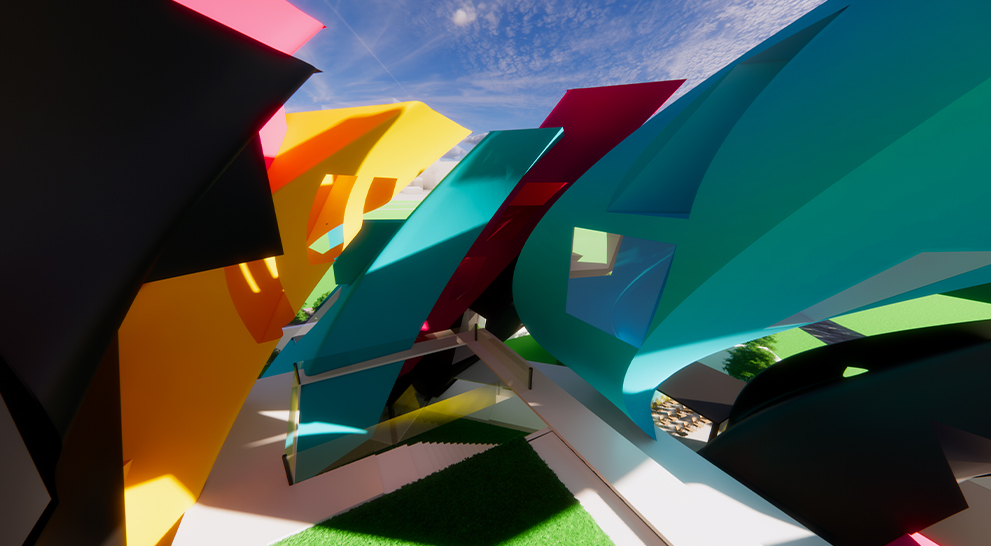
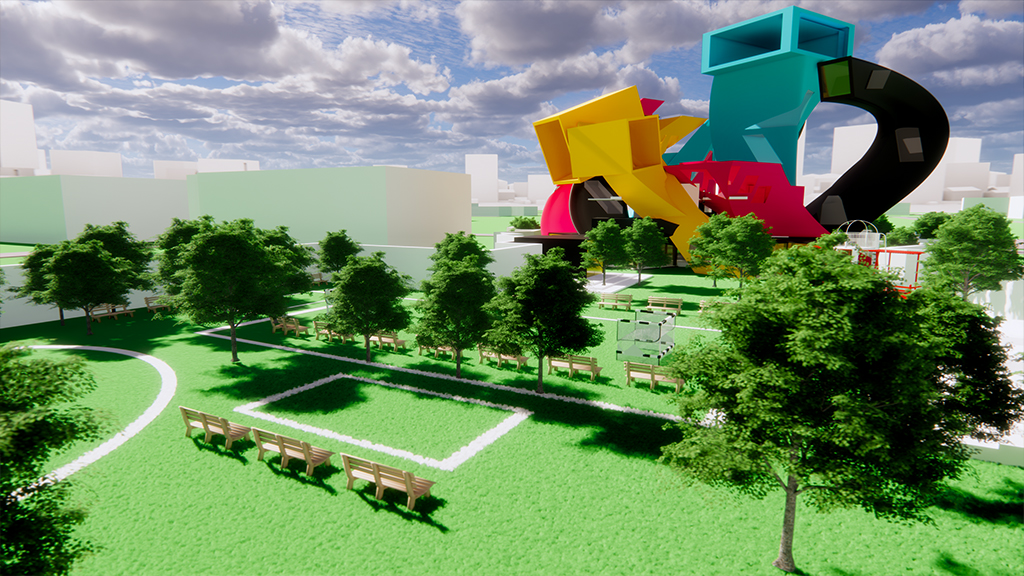
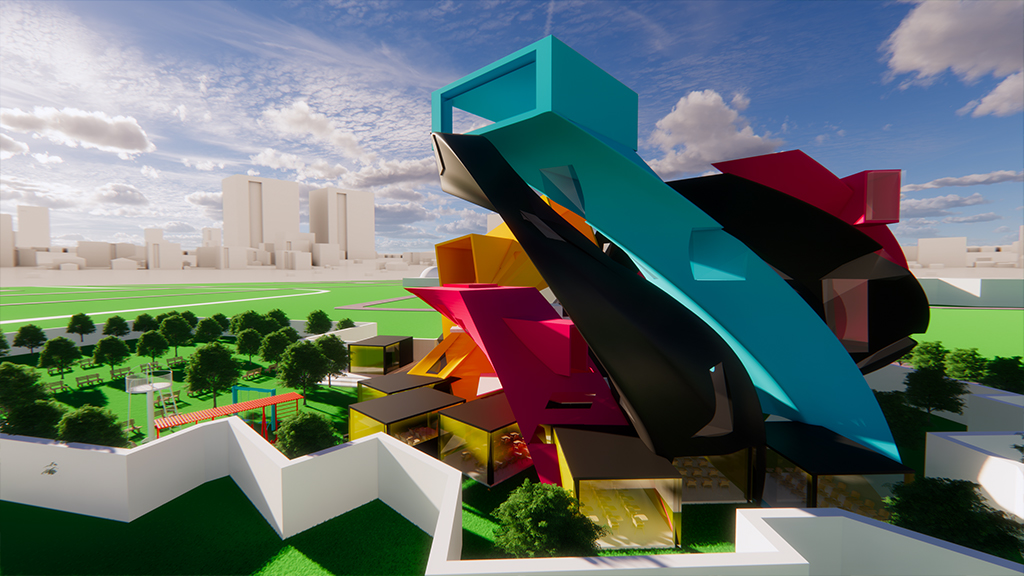
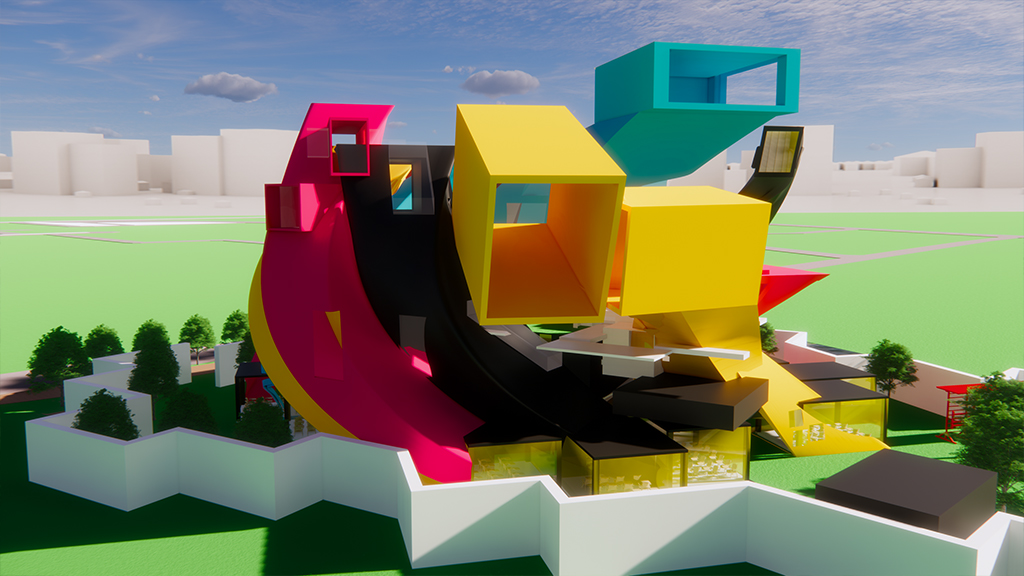
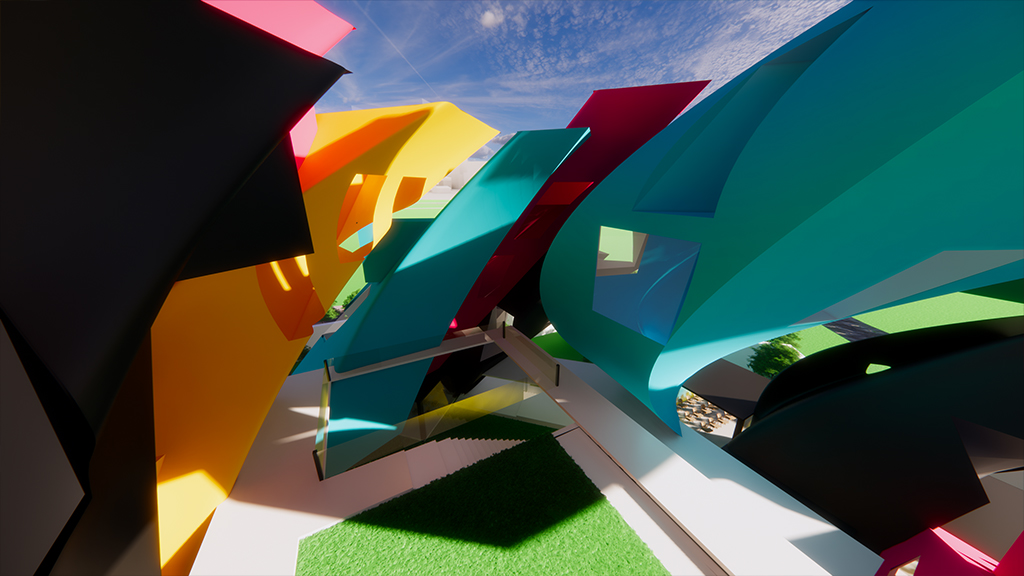
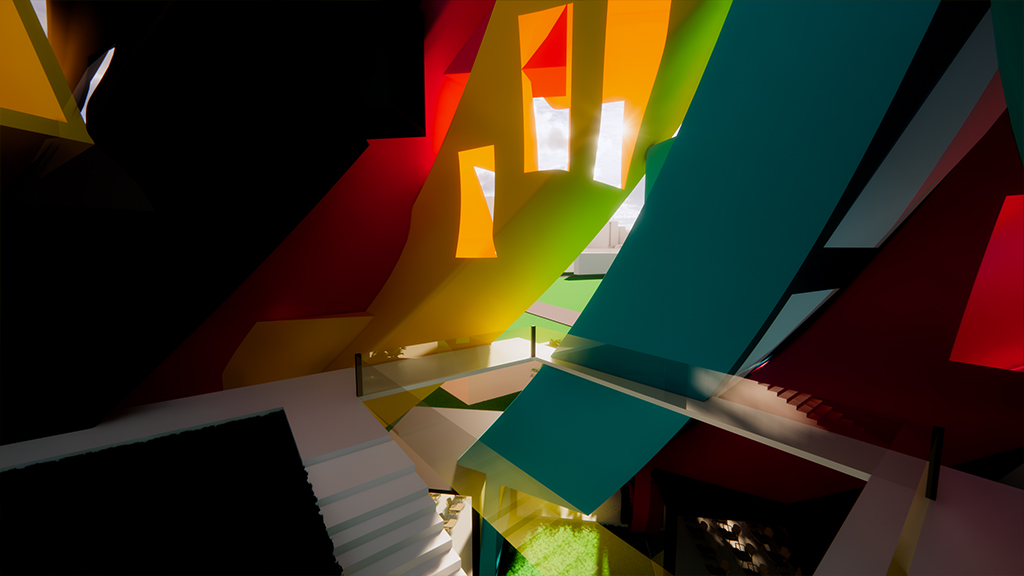
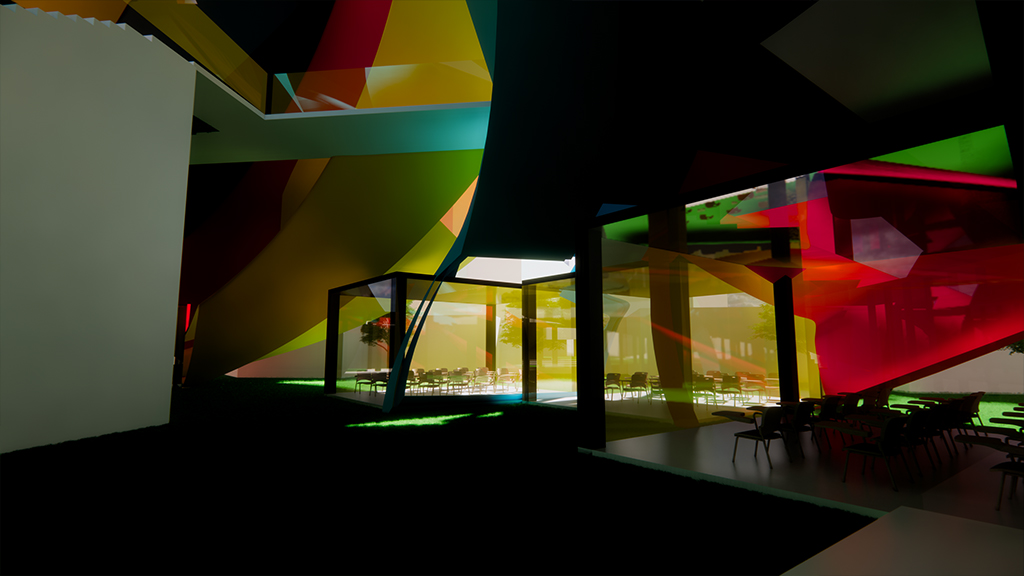
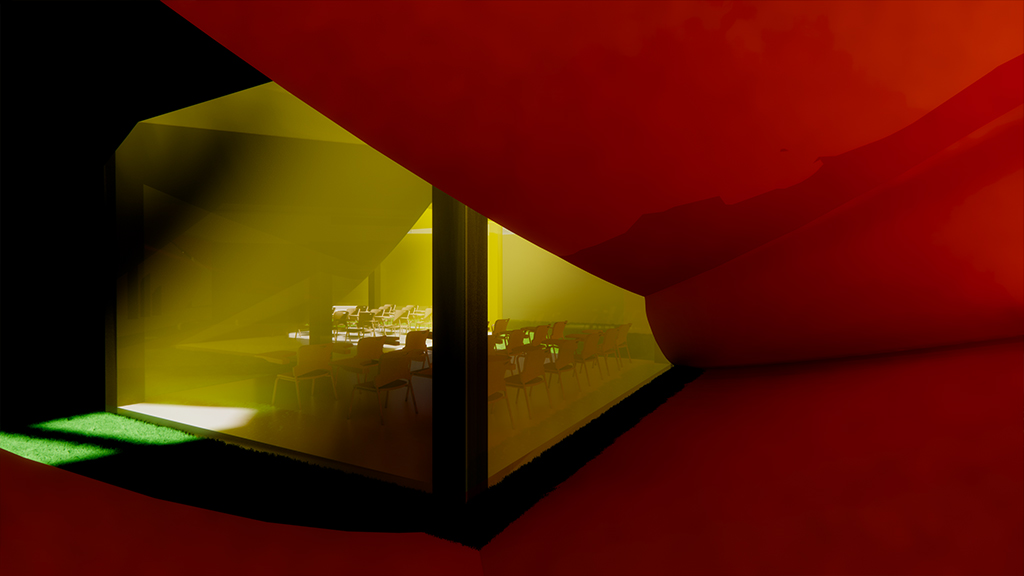
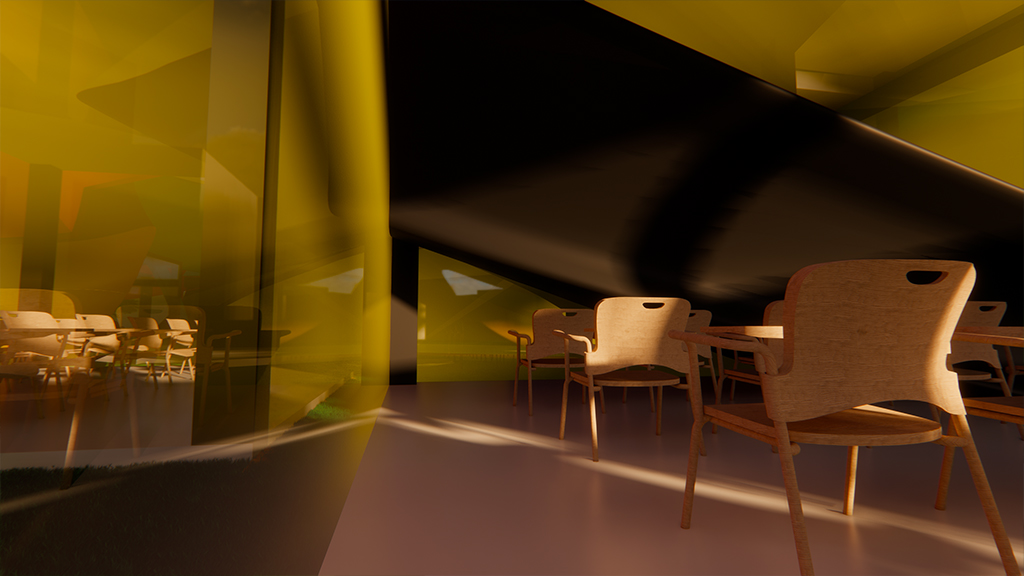
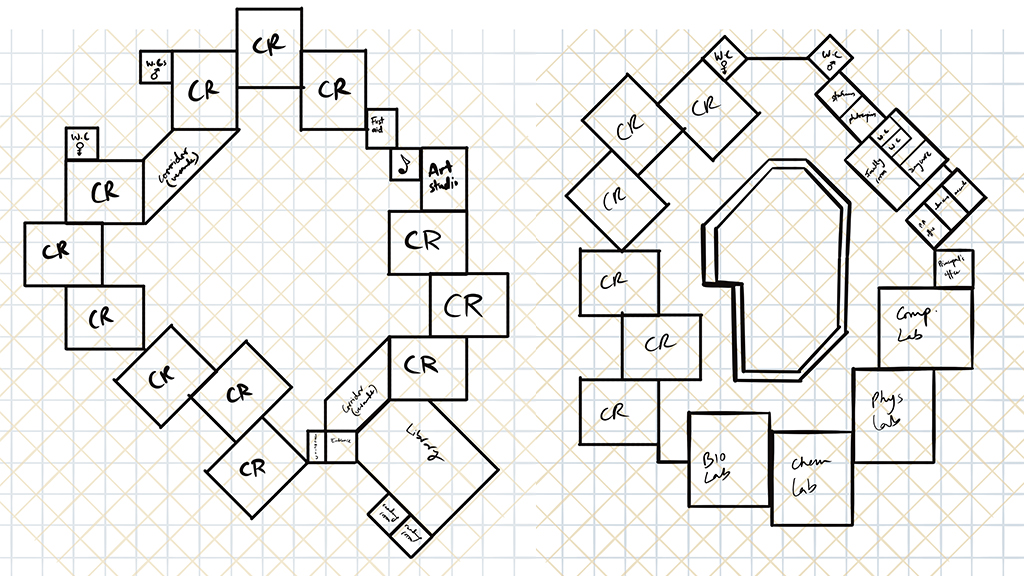
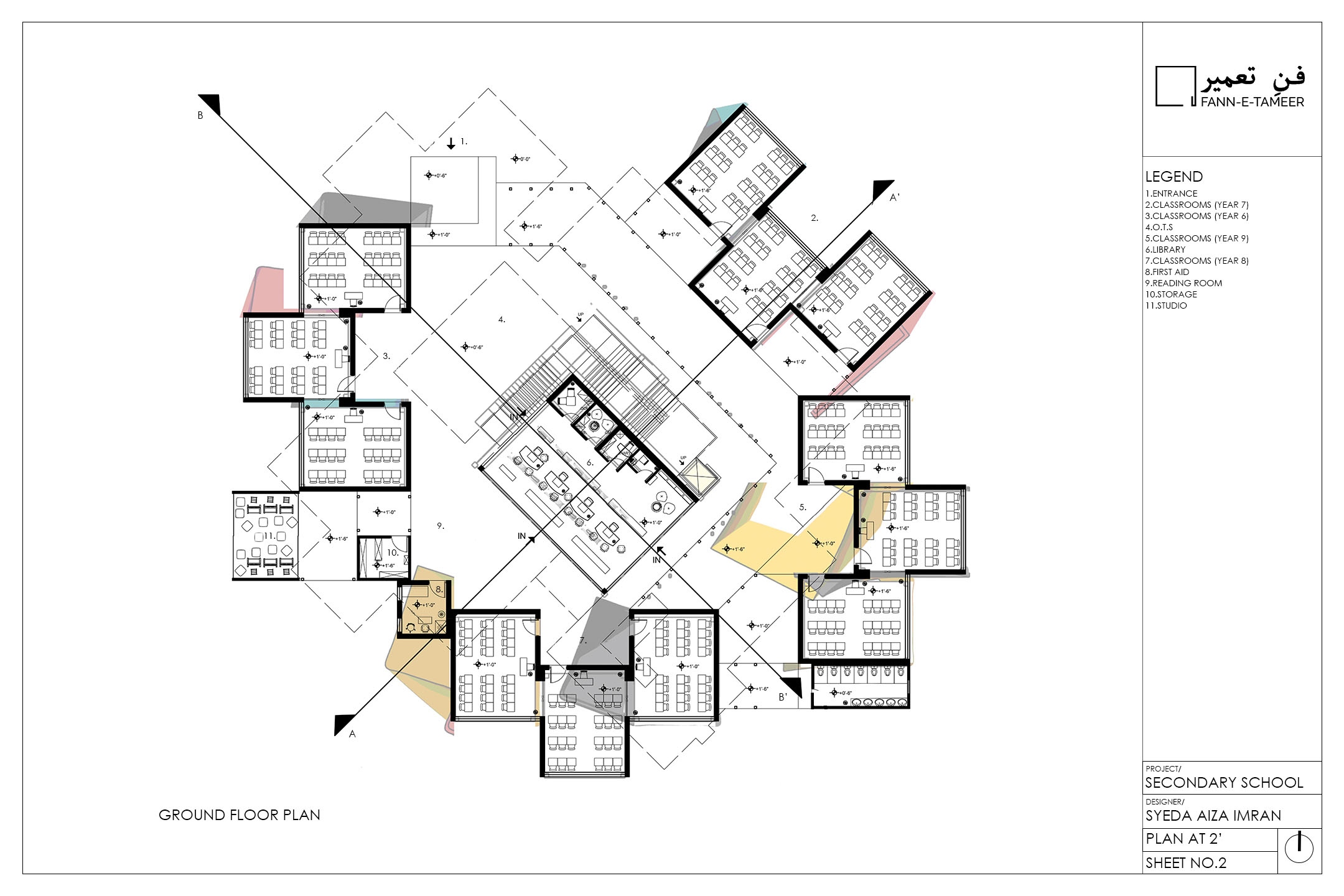
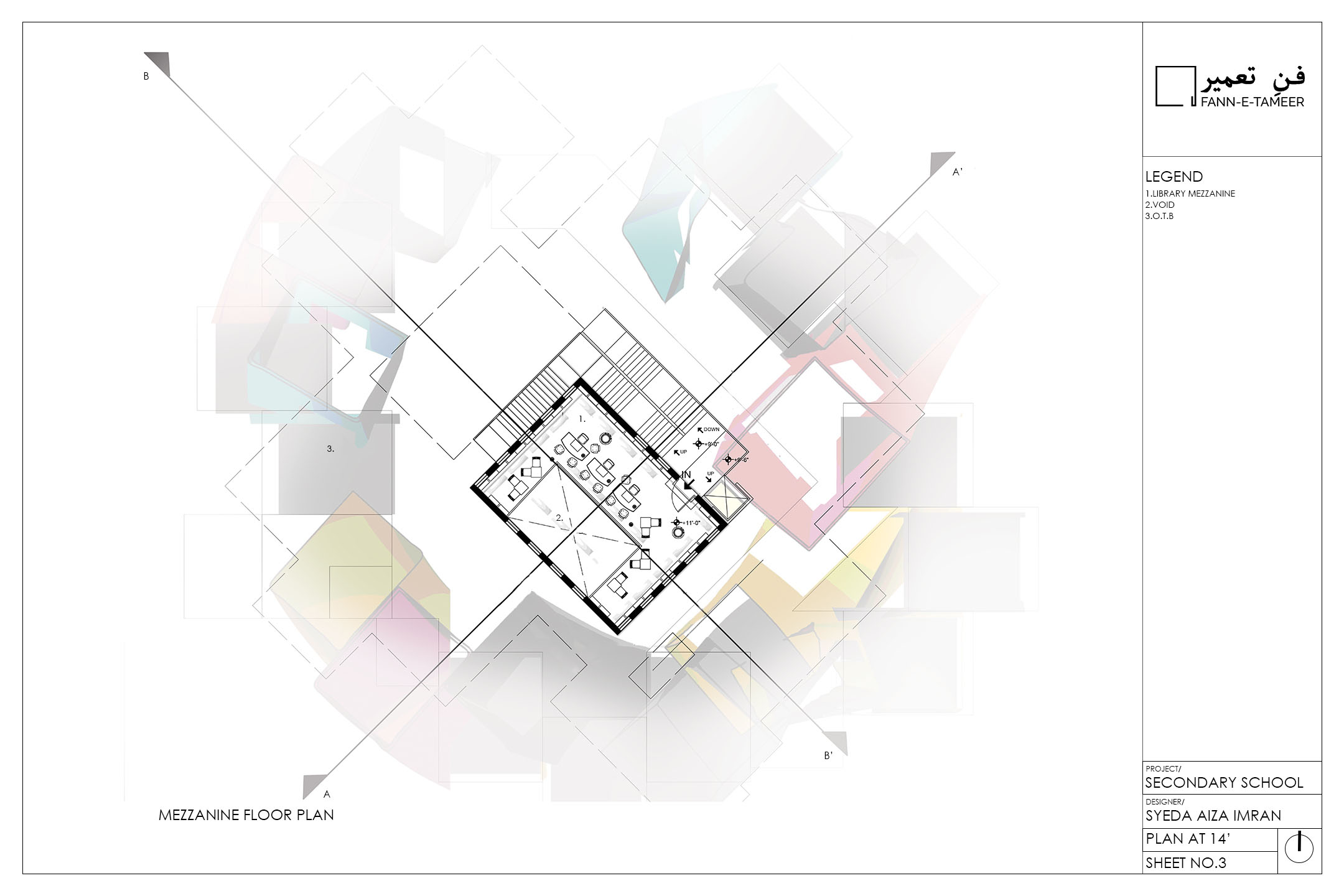
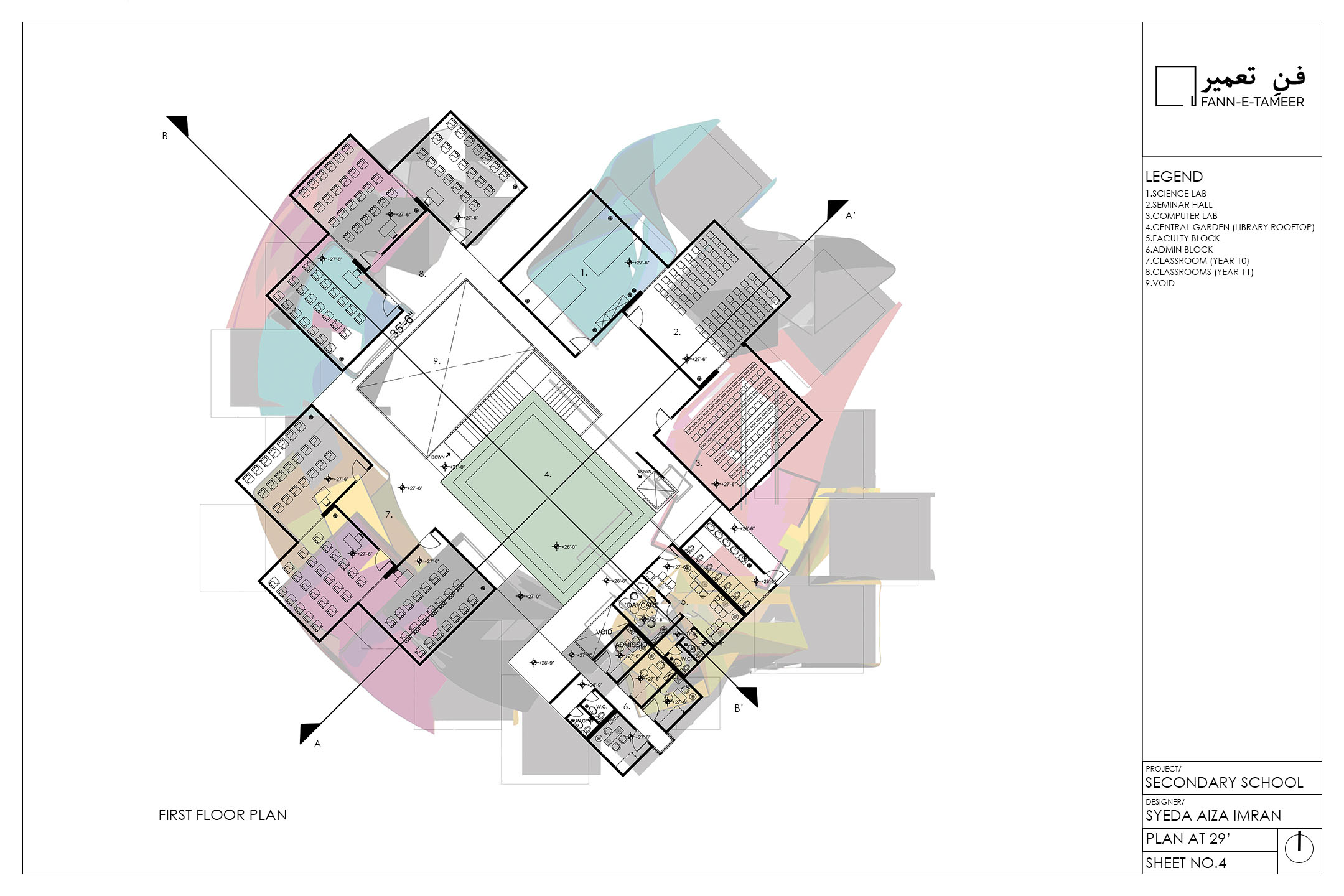
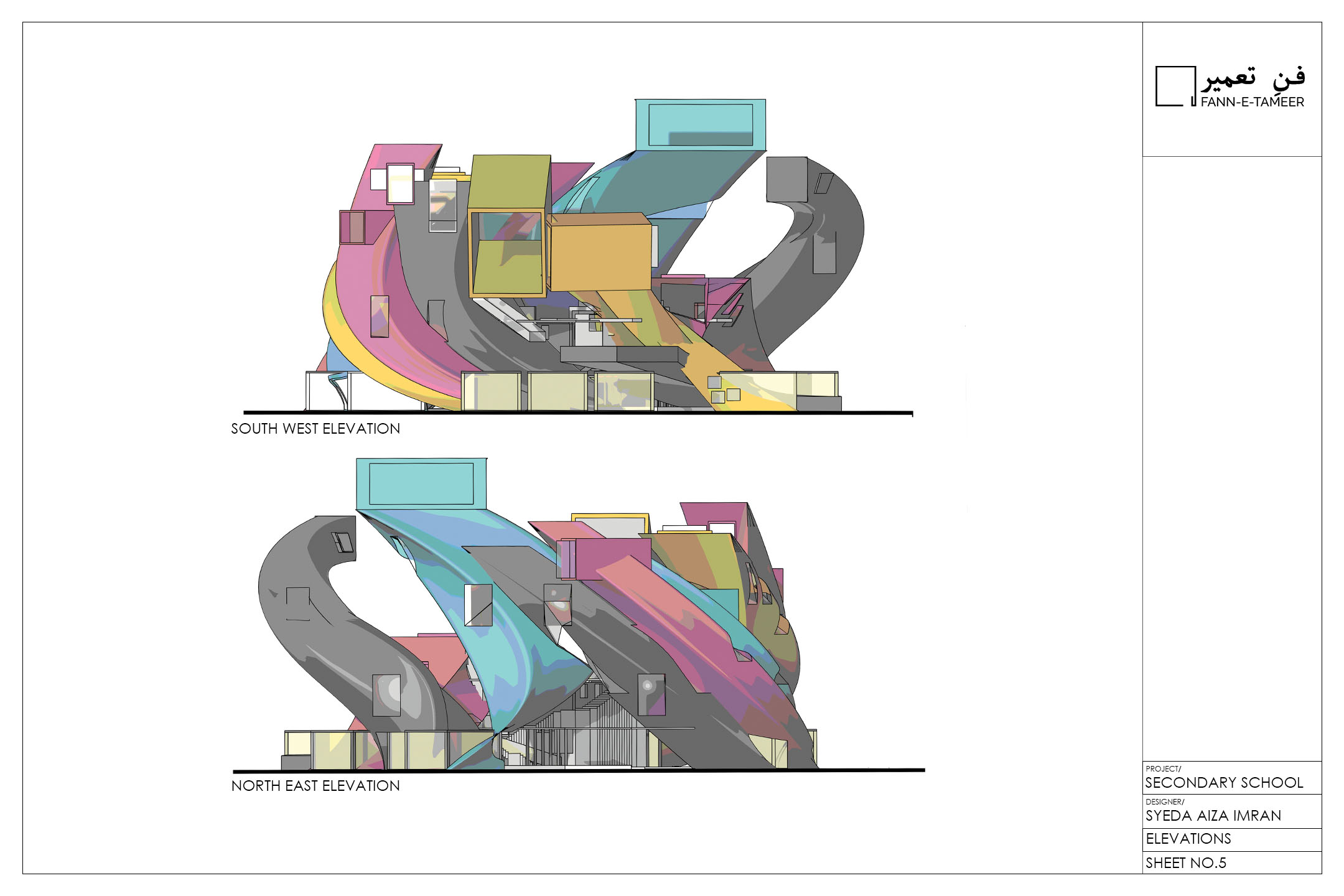
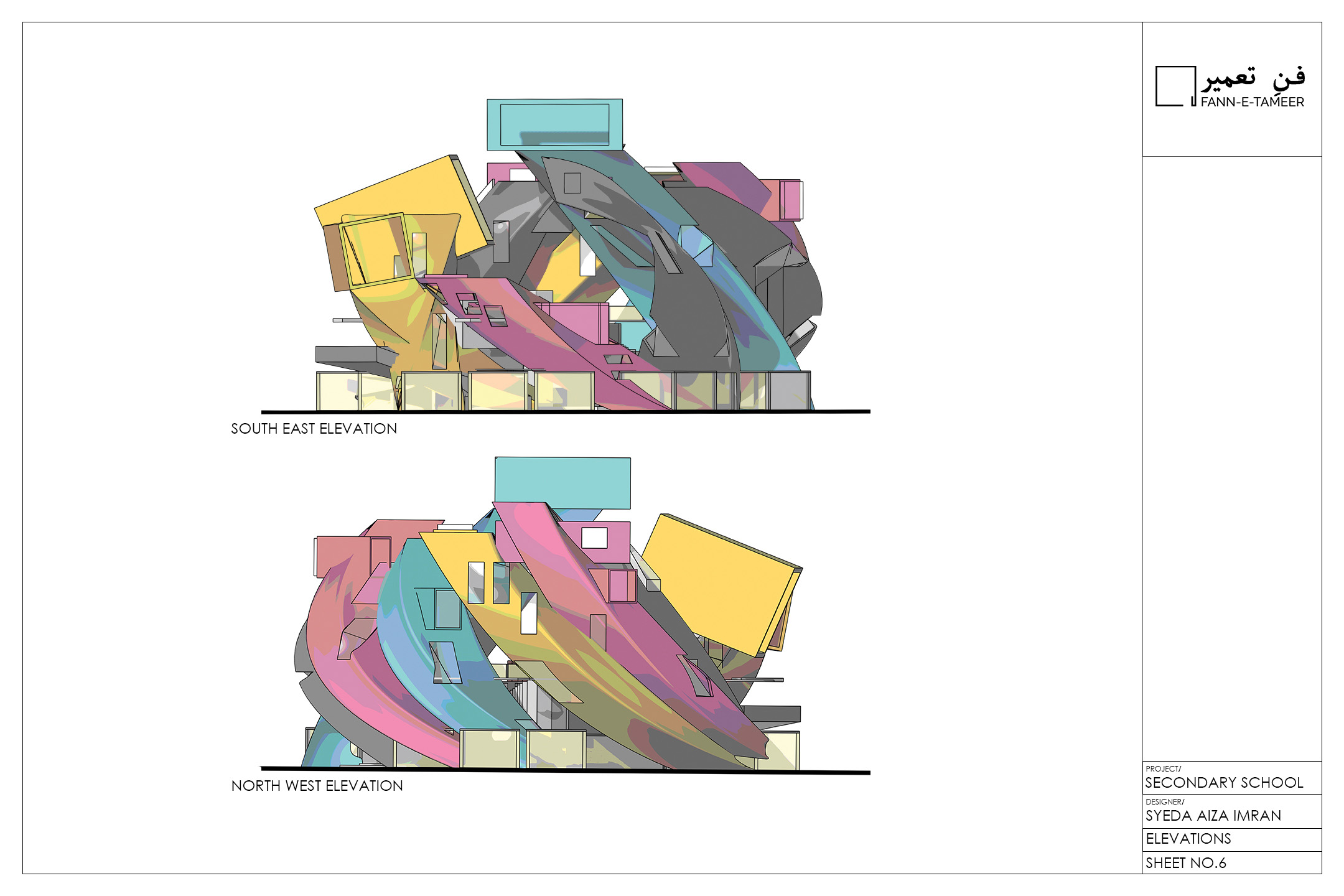
The school is formed following three distinct plans – the ground floor plan, the first-floor plan, and the roof plan. These plans all follow the same basic units consisting of three groups of three connected rectangles, which are rotated at consistent angles. Curving lines are drawn between the corresponding points after rotation, this results in a “twisting” of the structure, morphing the cuboid’s form. Fenestrations along the turning walls of the building allow in light, which then reflects off the glossed interiors to allow for diffused ambient lighting to light the classrooms. Keeping in line with the ideas of whimsy and a deconstructed playground, the building uses a combination of primary and accent colors to prevent overstimulation via color. This childish whimsy is catered to in every aspect of the interactive space, with the building creating spaces which are used as climbing walls and slides, multiple vantage points and seating spaces, and carefully orchestrated points of movement.
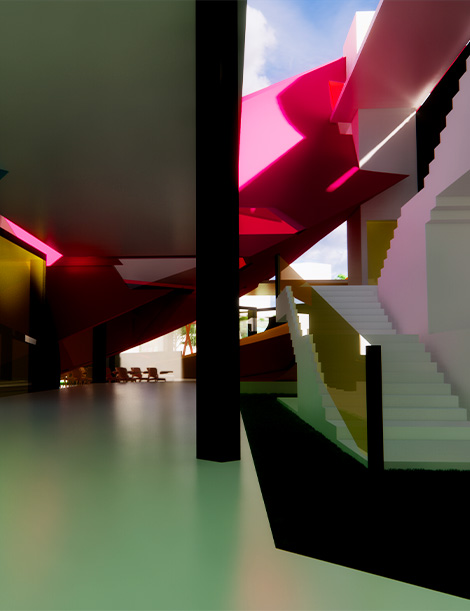
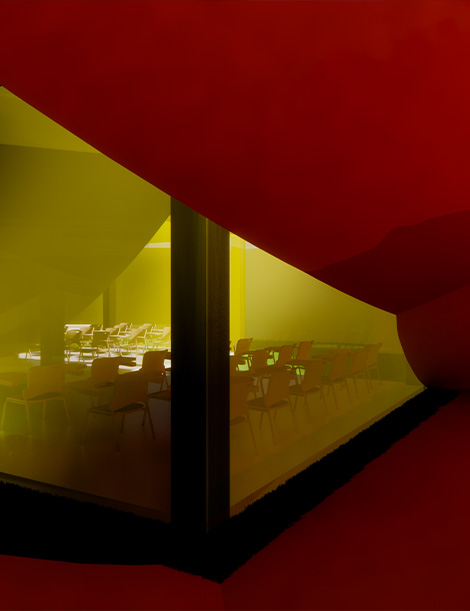
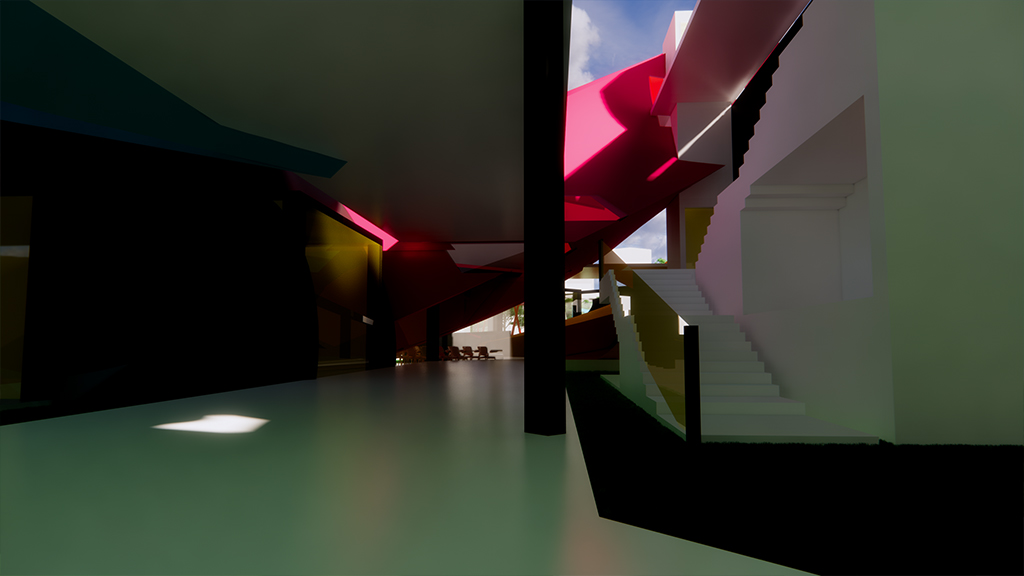
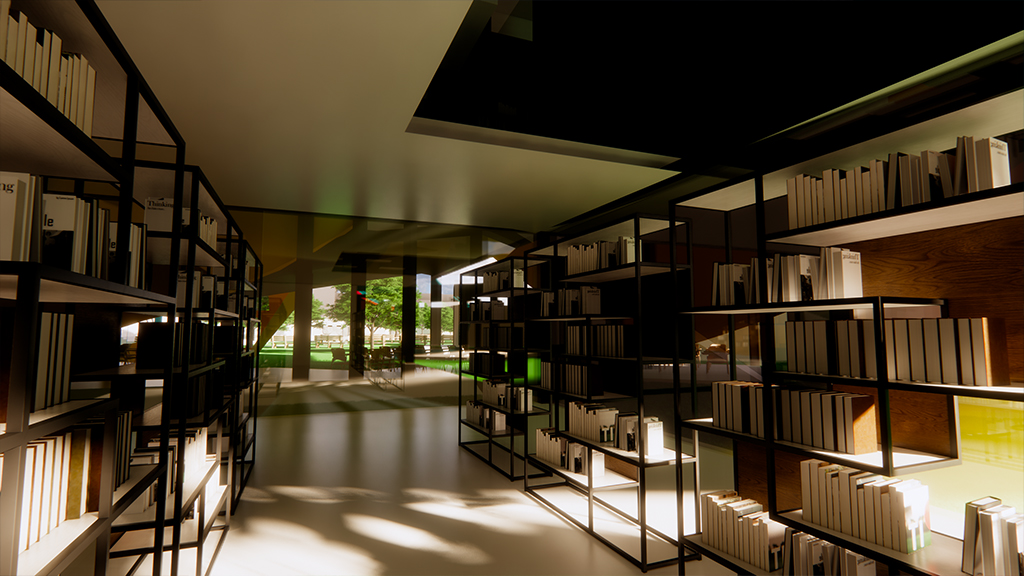
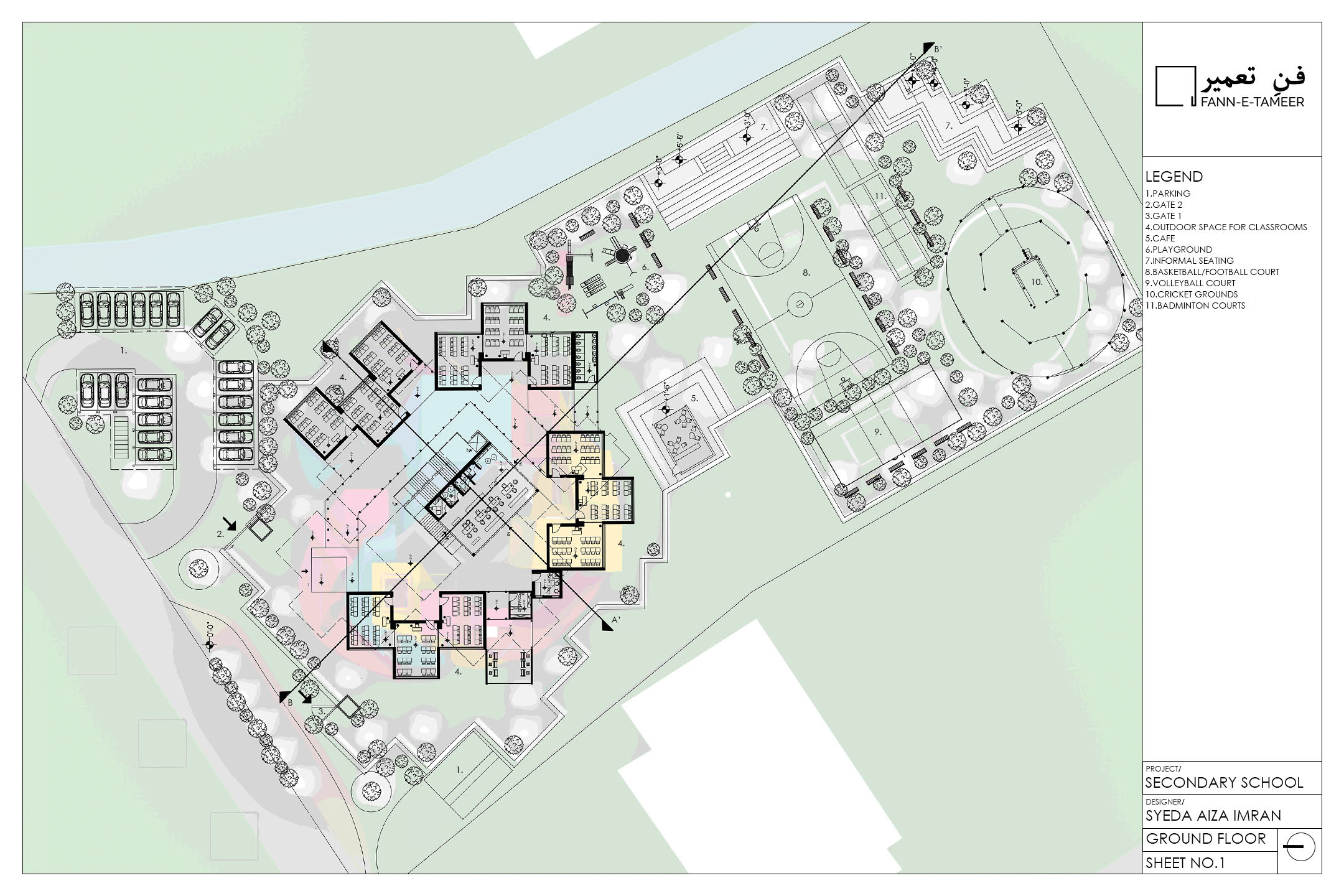
To maintain a balance according to the students’ needs at each grade level, the classes were divided into two groups, with the more advanced grades being situated at the higher level to separate the space from excess noise and distractions and allow for better concentration. A central library space was also provided at the heart of the school, with the ground floor catering to more general and fictional topics and the mezzanine level focusing more on higher level study topics. The space also allows for adaptability in its usage, with movable screens between classrooms allowing for a merger of spaces if so desired, multiple points of interest serving as follies to be adapted by the users, and the interiors of the classrooms having space along the curved walls to allow for usage as desired, such as a space to hang props to aid in lessons or activities. This adaptability also carries over to the masterplan, which allows the freedom to adapt the different zones to whichever social activity is taking place.
Contact Designers || Portfolio
You Might Find These Interesting
 DESIGNED BY: Iftikhar Ahmad
Capital Institute of Liberal Arts
Park Road, Islamabad, Pakistan