Anarchic Systems
A decentralized artist residency in Mallahi Tola disrupts hierarchies, reactivates abandoned spaces, and fosters self-organizing, creative exchange through modular, adaptive design.
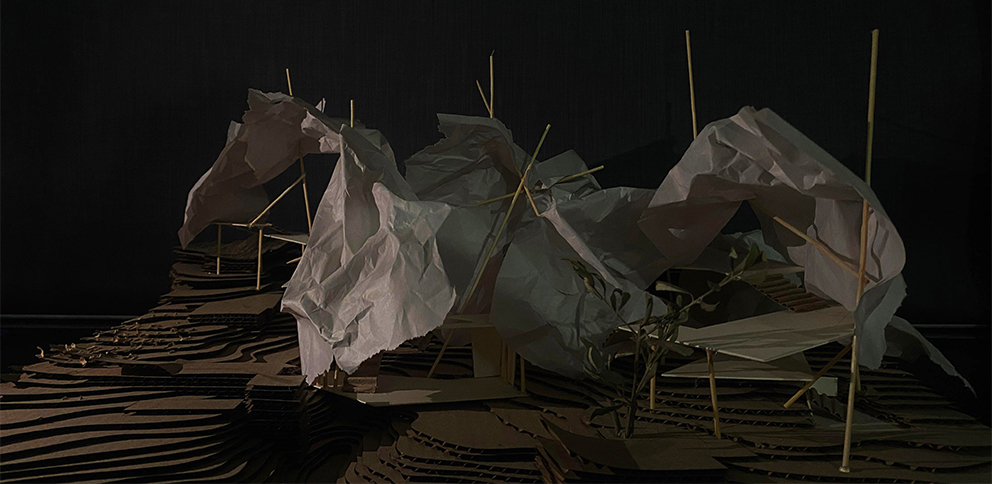
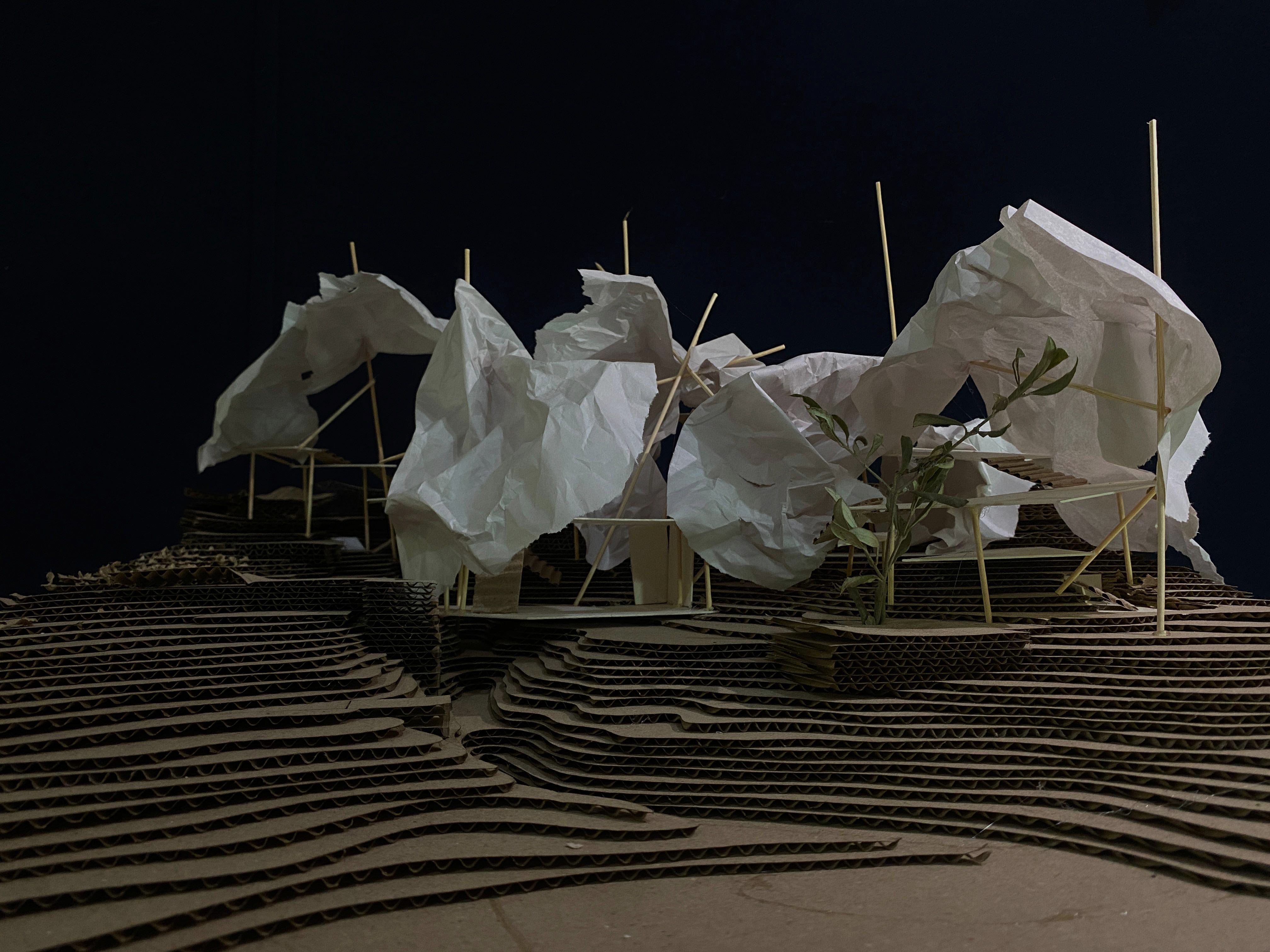
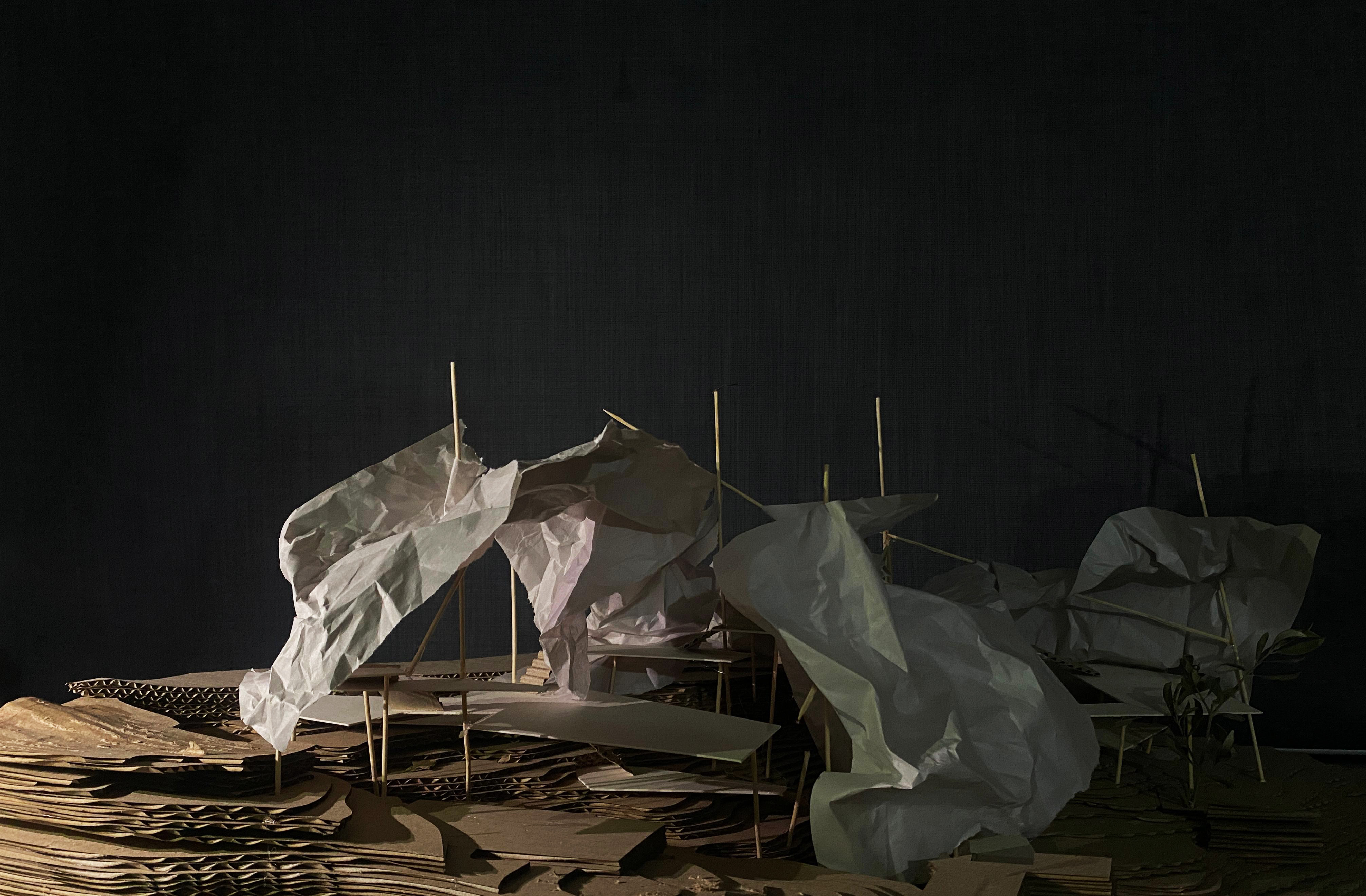
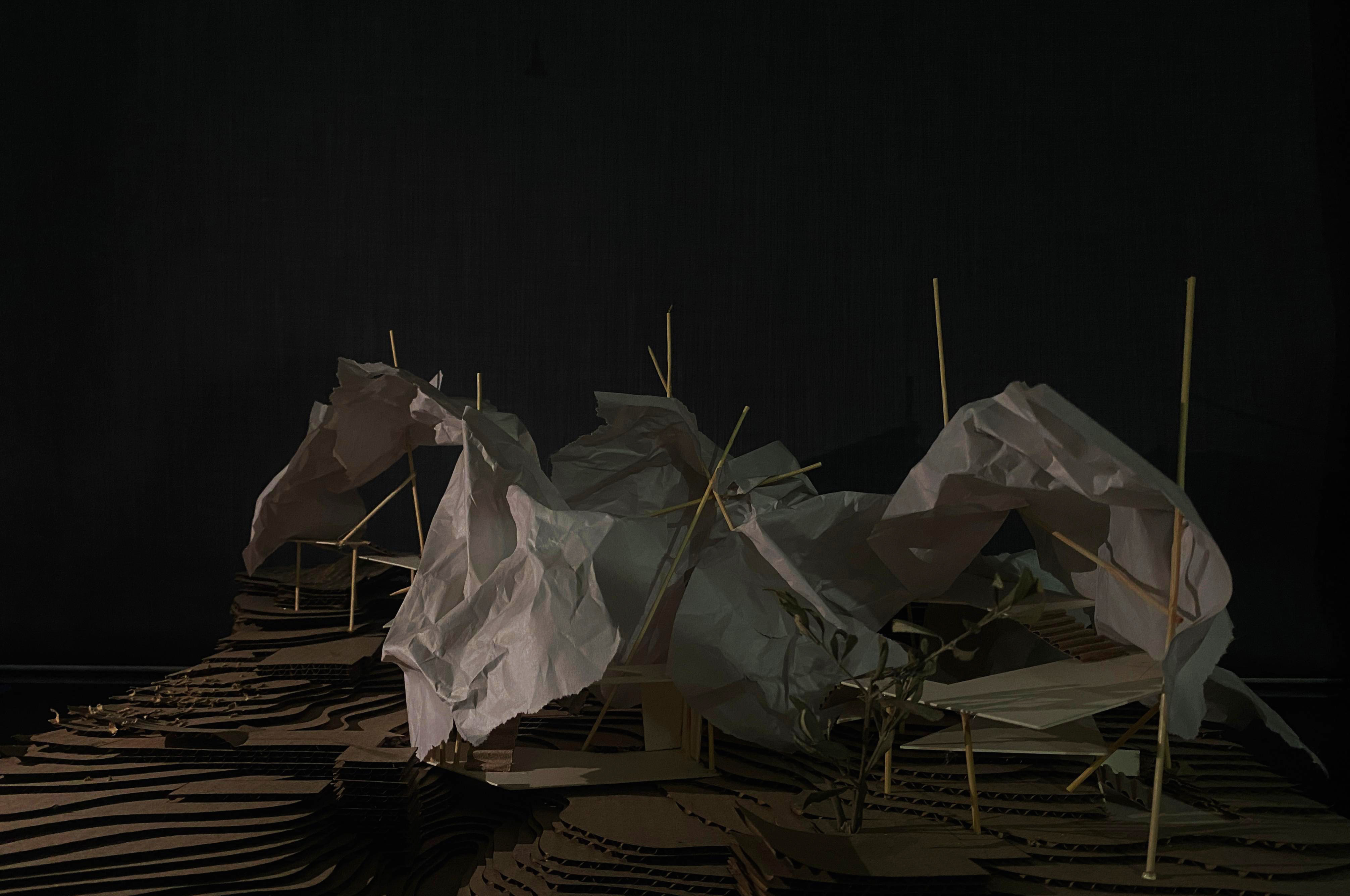
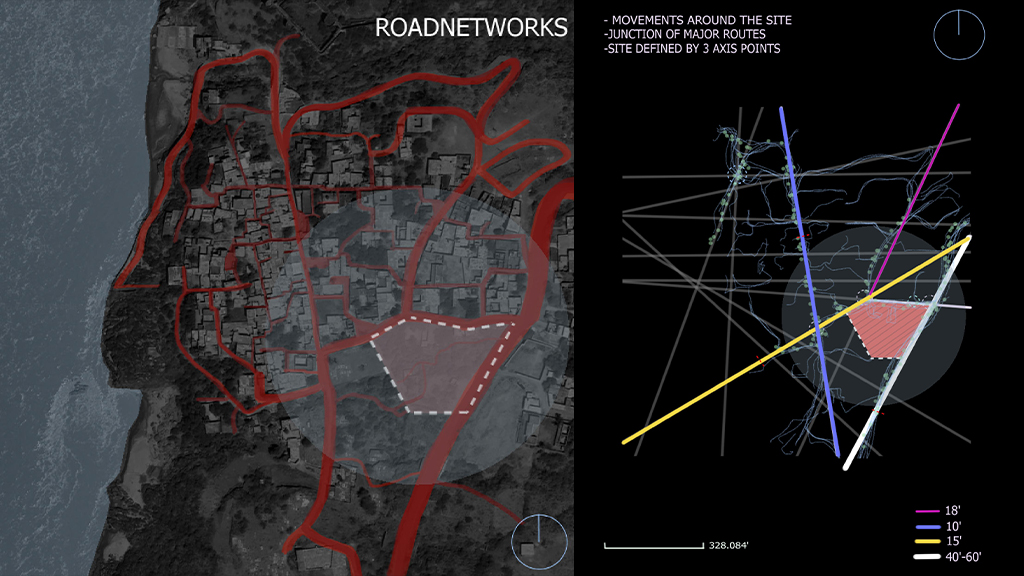
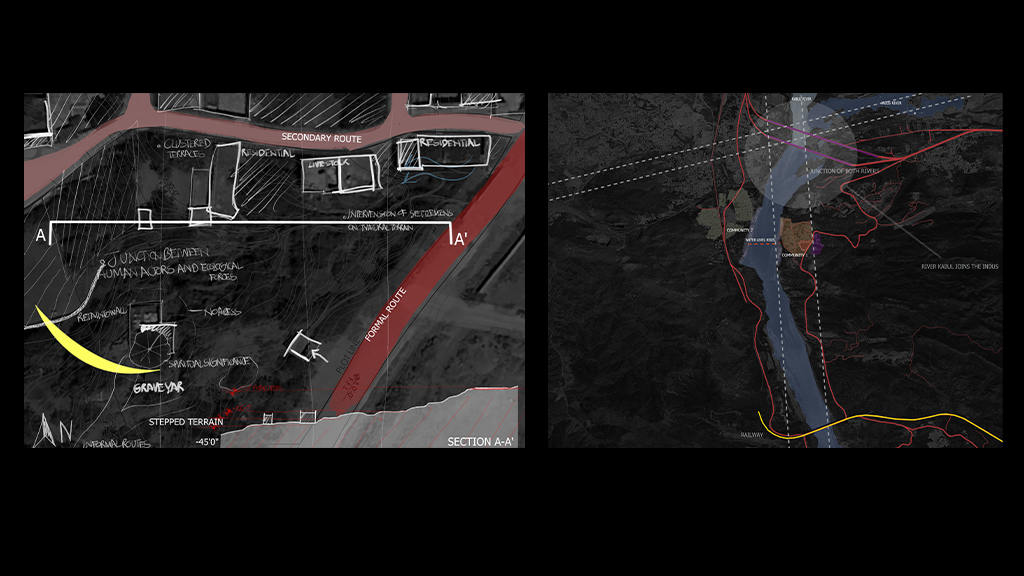
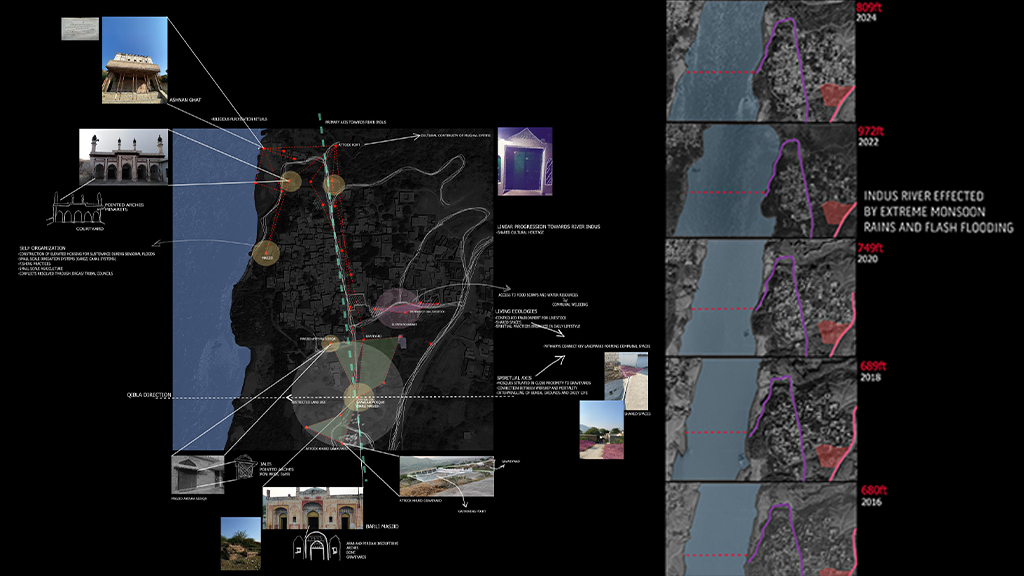
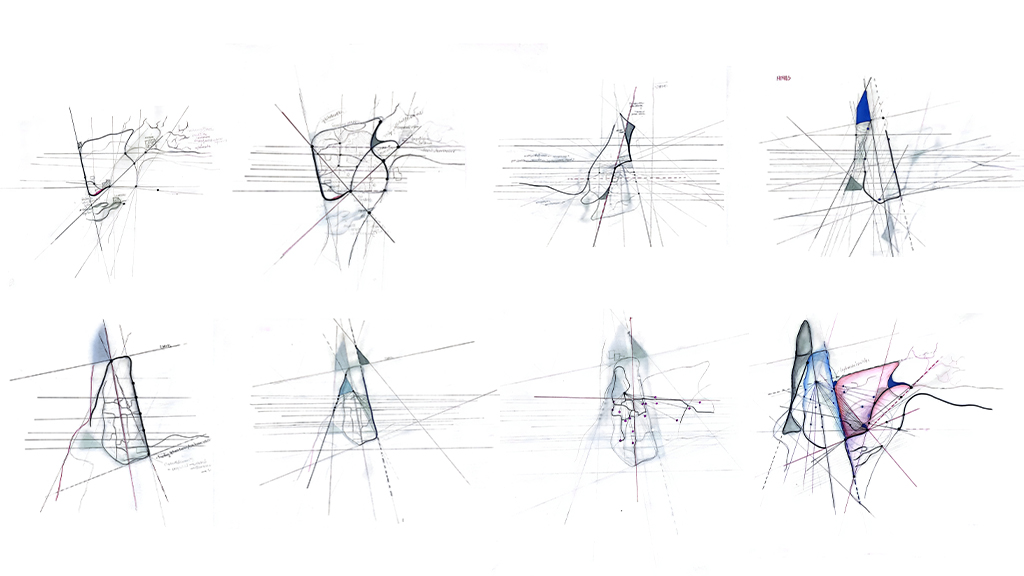
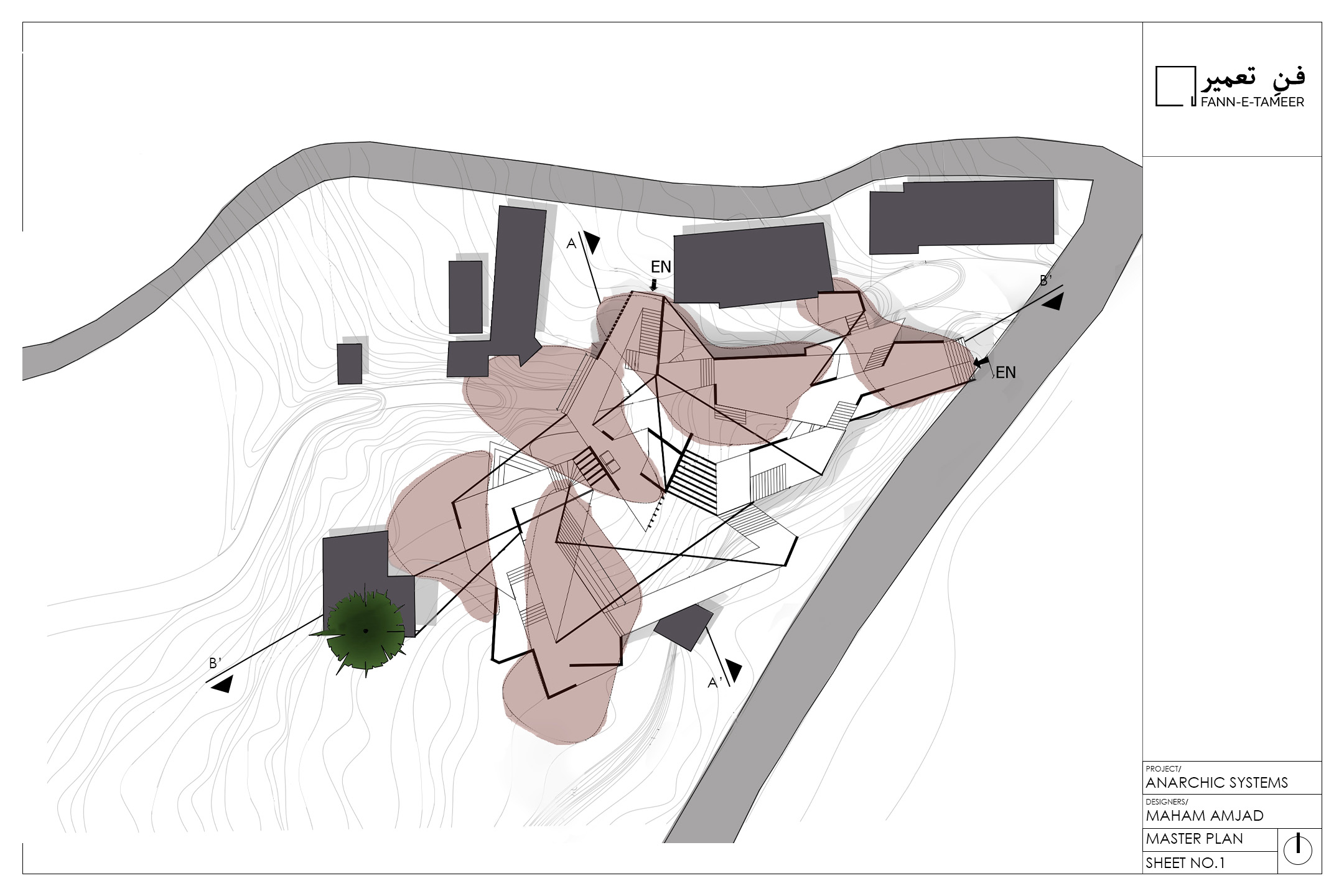
Space is a dynamic entity, shaped by both tangible and intangible forces. It reflects its past, evolves in the present, and facilitates interaction. Designed by Maham Amjad, this project explores an anarchic system—one that rejects imposed hierarchy in favor of self-organization. The intervention, a decentralized artist residency, acts as an "alien entity," disrupting existing social ecologies and introducing new spatial complexities. The site, a small village known as Mallahi Tola, is home to approximately 60 families and dates back to the era of Akbar the Great. Nestled beside the River Indus and adjacent to Attock Fort, the village holds a layered history. Its diverse community—Sawals, Awans, Hindus, and Syeds—has shaped its cultural fabric. The spatial patterns of the settlement emerge through road networks, communal spaces, and abandoned structures, reflecting past migrations and cultural shifts.
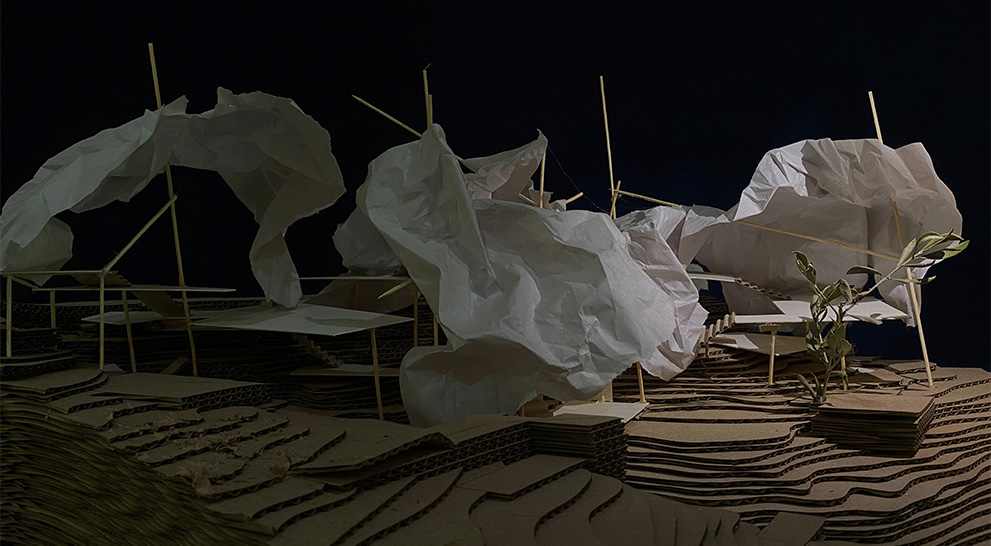
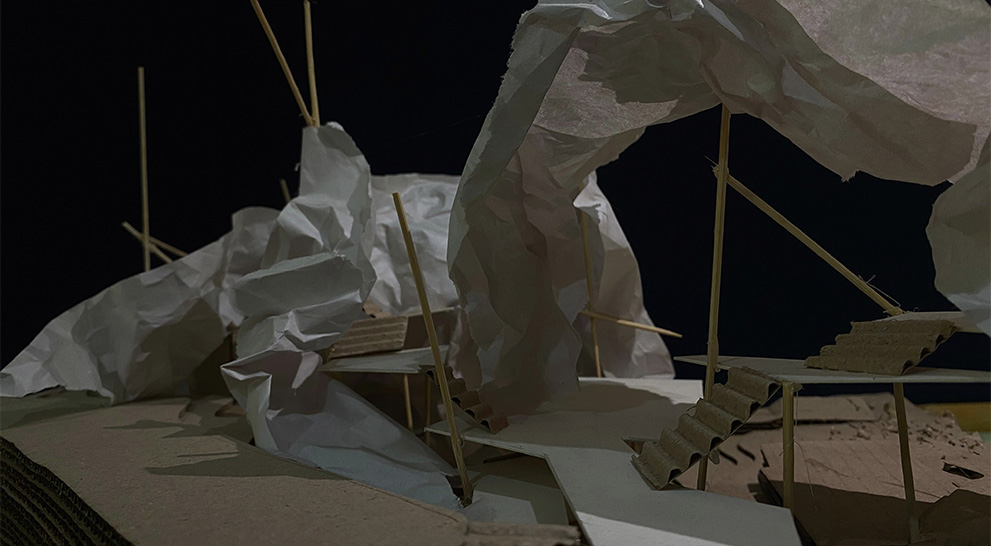
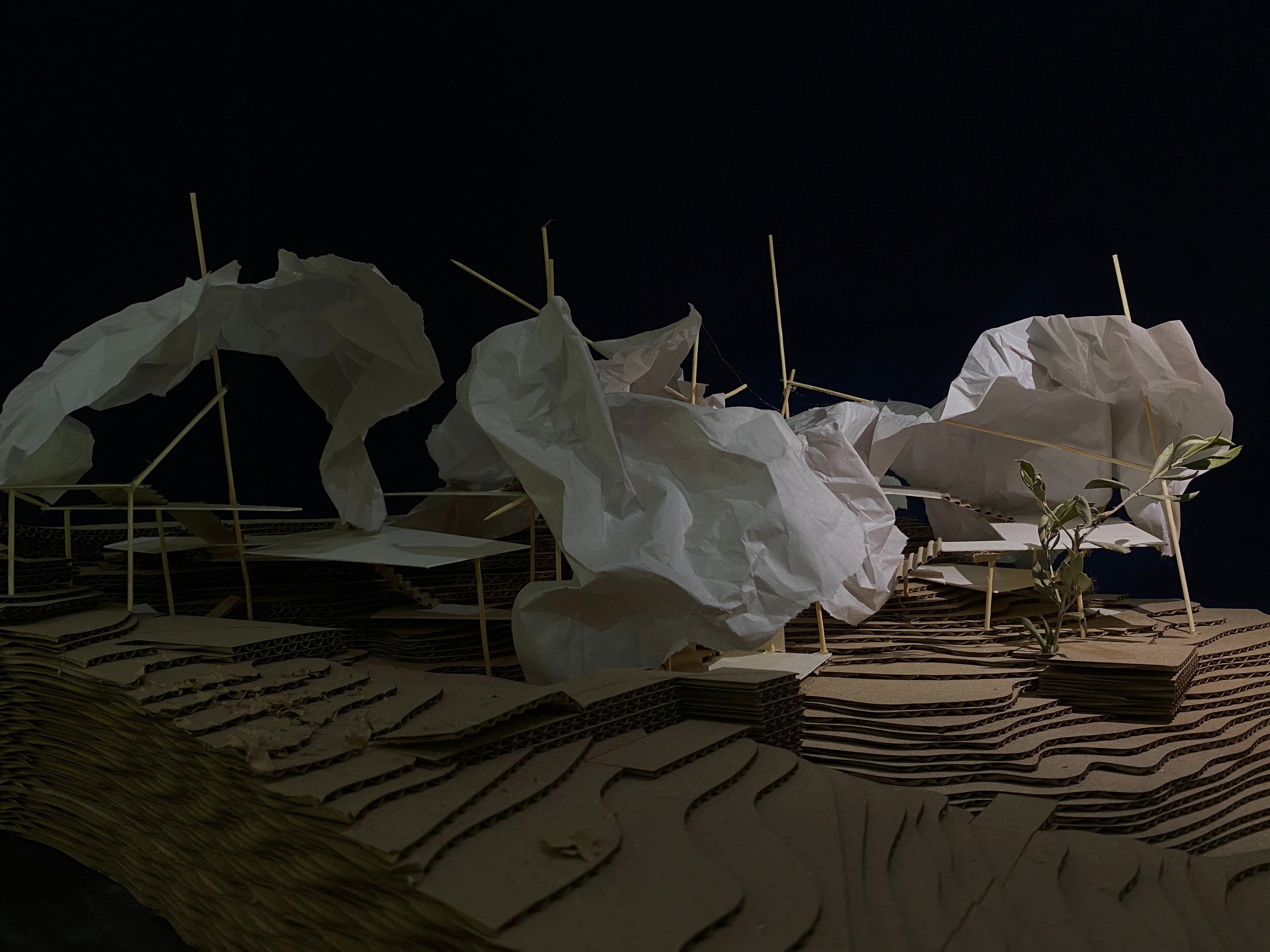
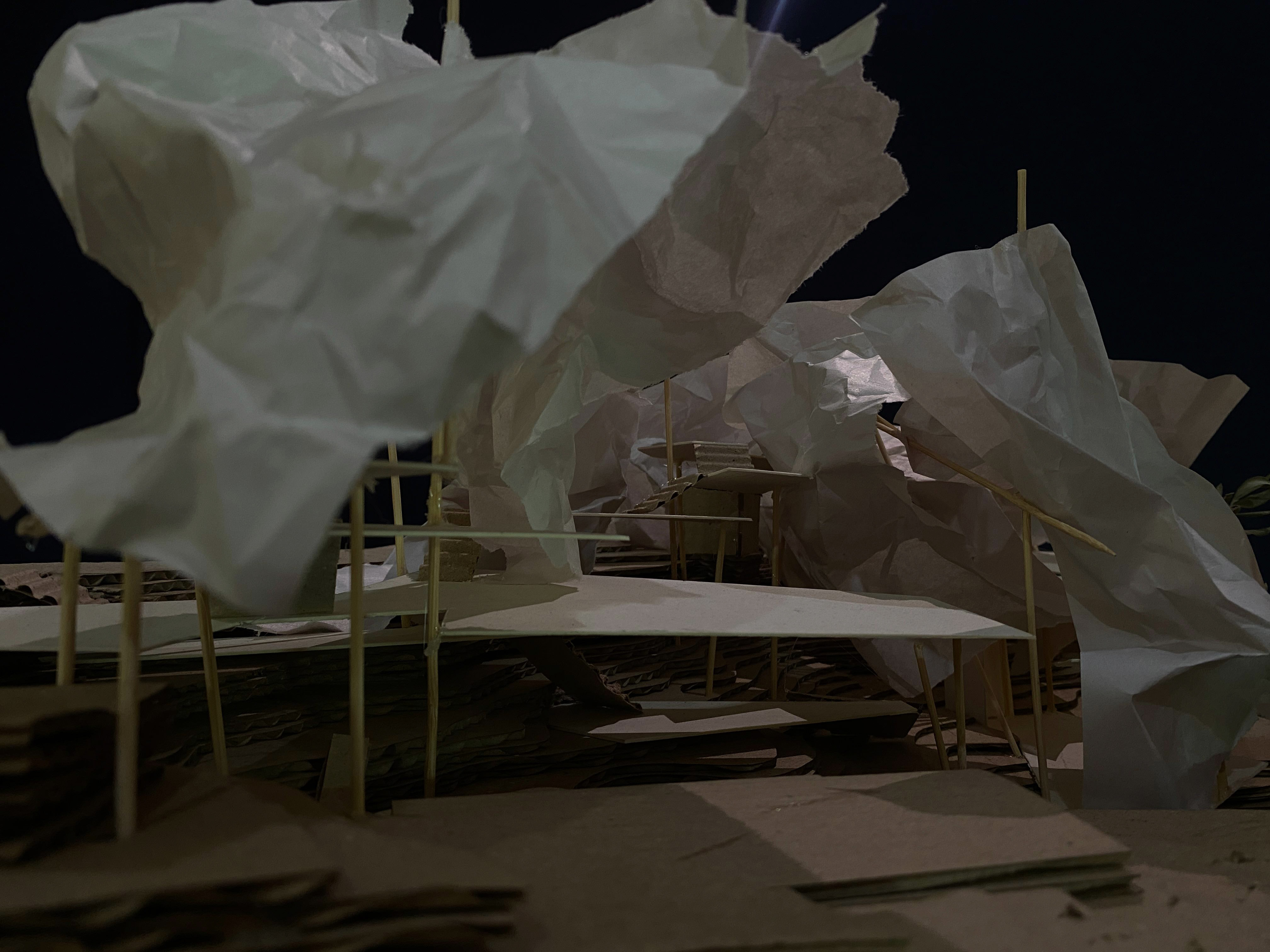
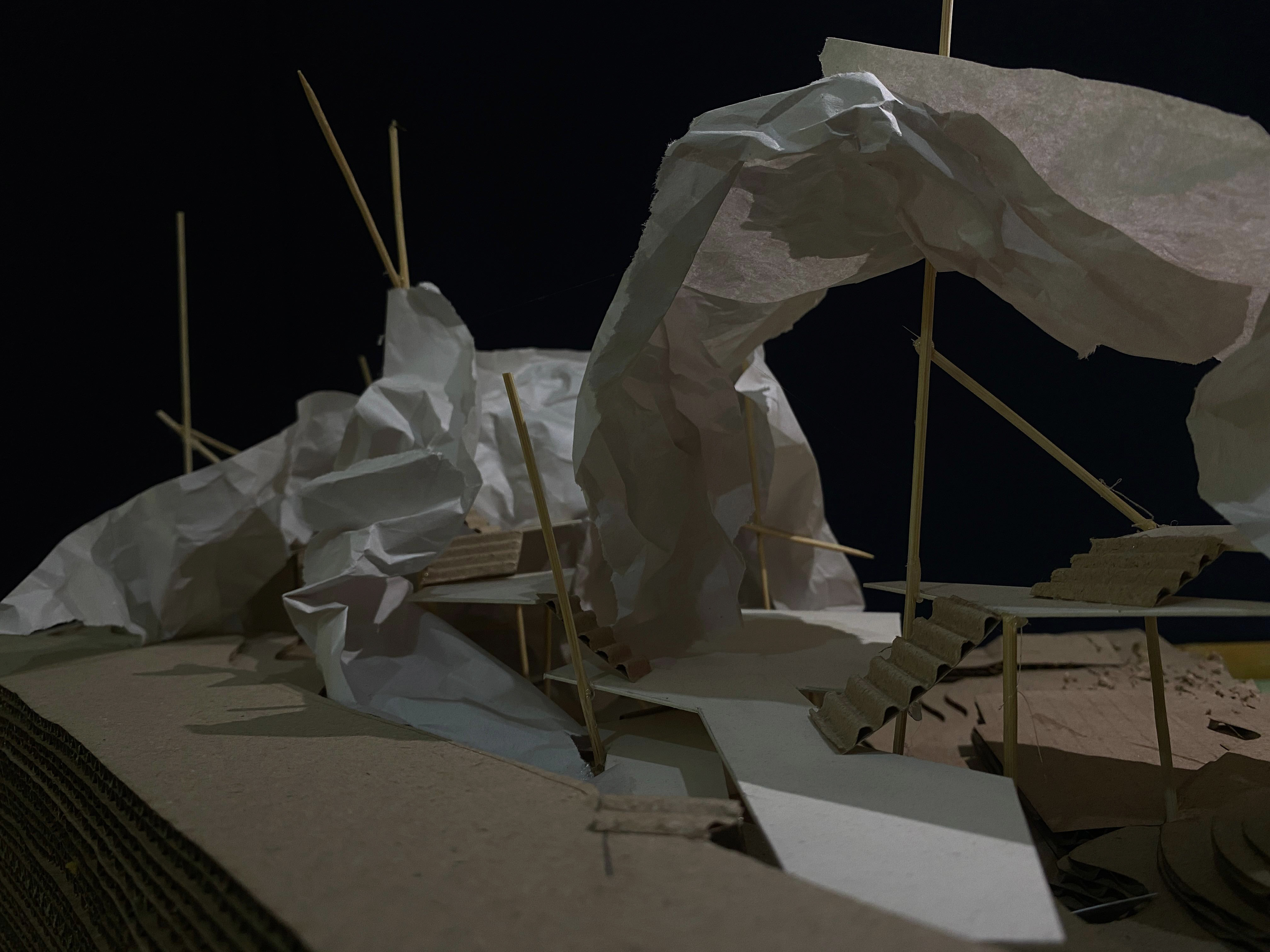
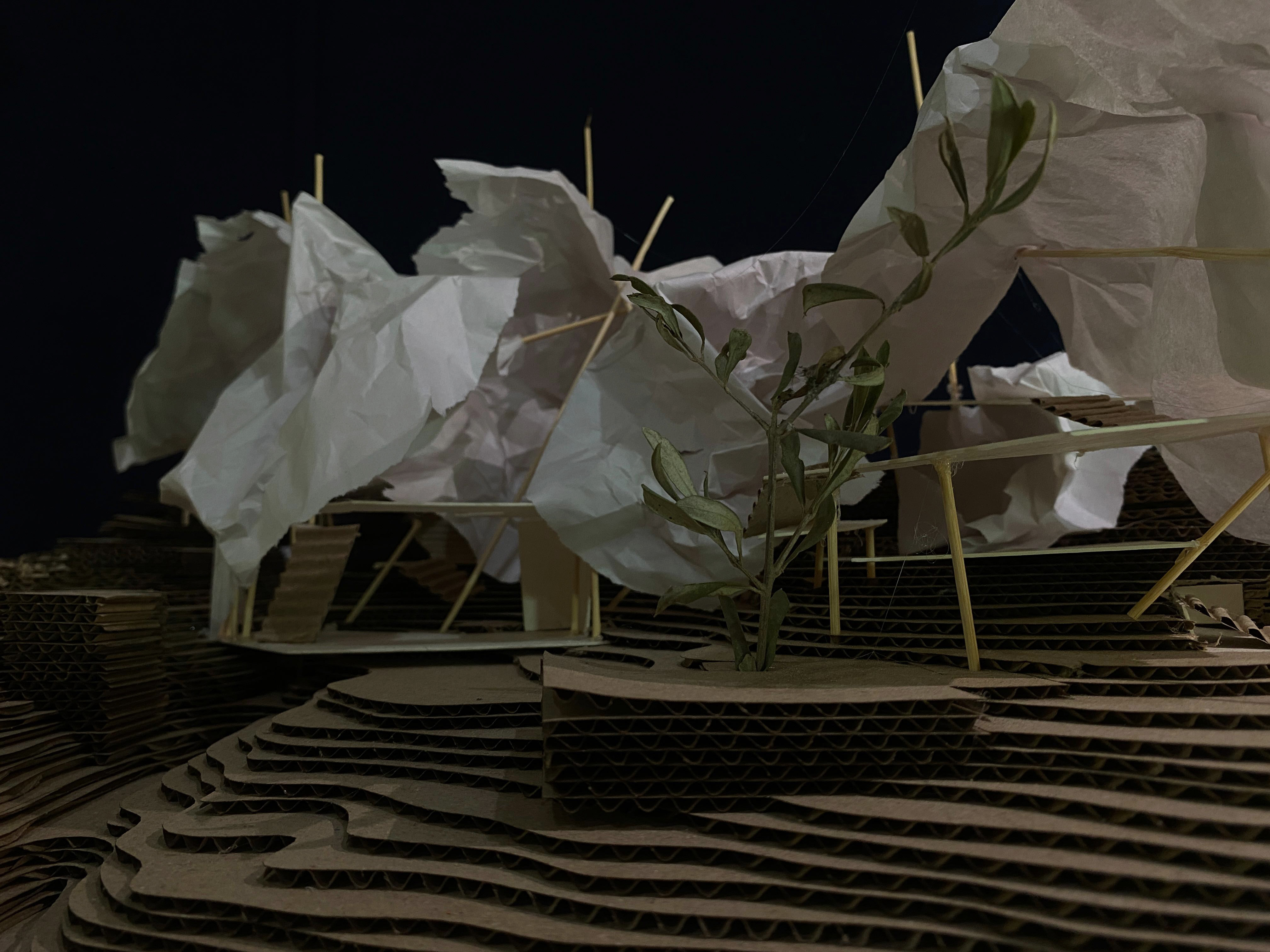
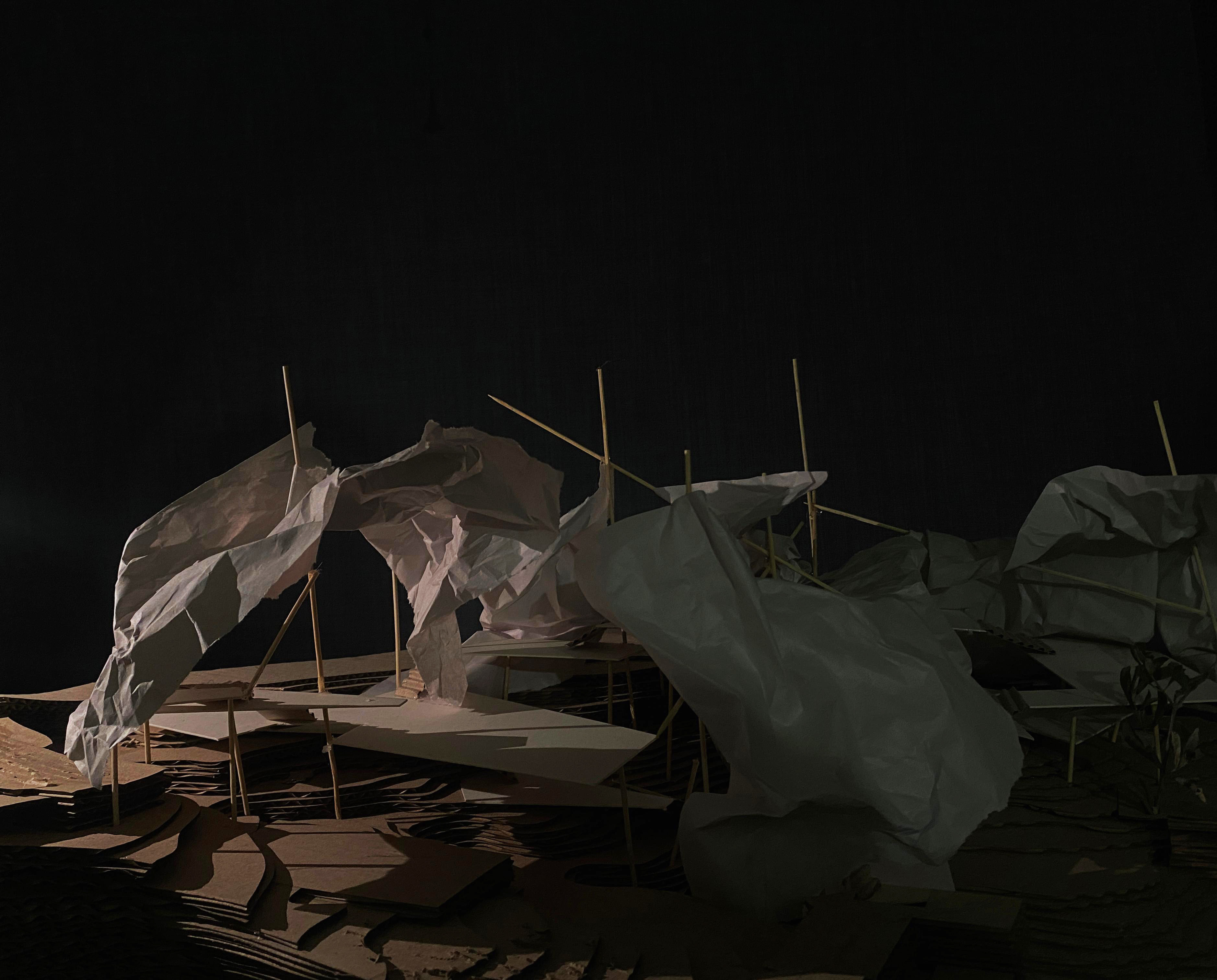
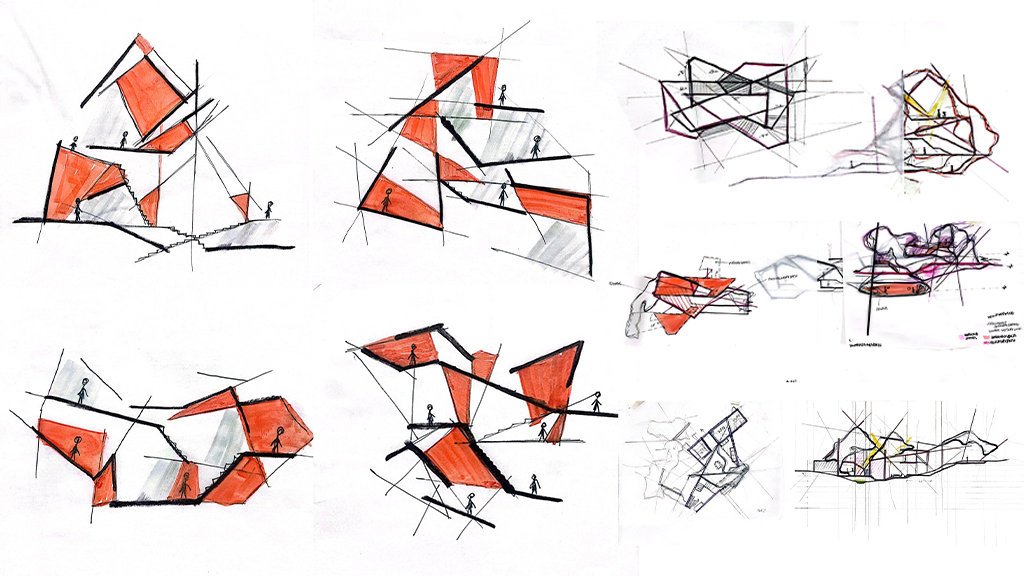
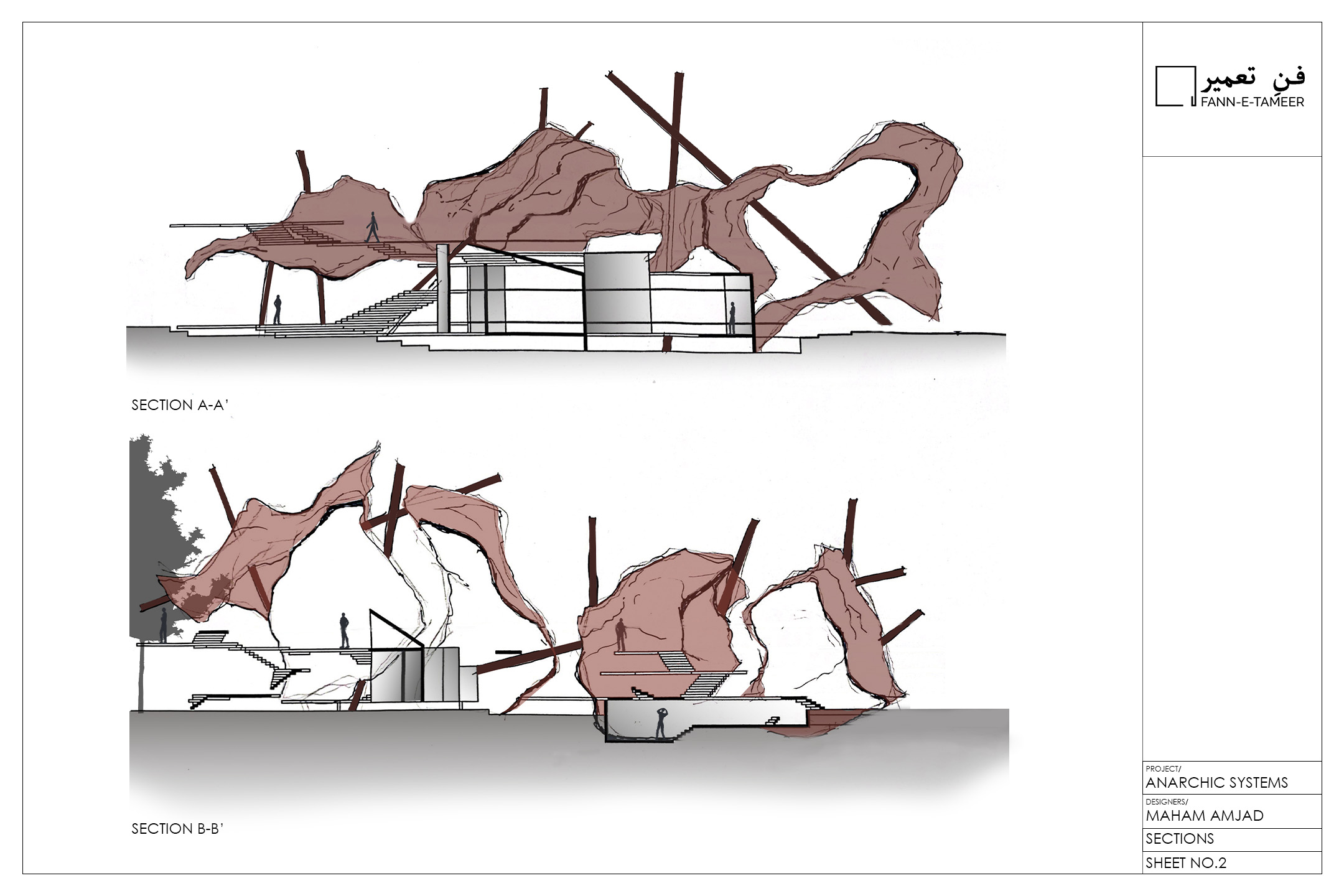
Key zones within the site reveal distinct spatial dynamics. Peripheral areas are marked by erasure and abandonment, while the central zone, dominated by the Sawals and Syeds, retains cultural resilience. The Syeds, with their religious influence, and the Sawals, through tightly-knit community structures, shape the village’s social rhythm. The Awans, skilled woodworkers, add another layer of interdependence. This intervention introduces an artist residency as an active disruptor, transforming interactions and creating an evolving, uncertain spatial condition. The decentralized program rejects conventional structures in favor of modular, adaptive spaces for woodworkers and clothmakers. Abandoned sites are reactivated through suspended platforms supported by wooden columns, blurring spatial boundaries. A steel shell wraps around these platforms, mimicking fabric and symbolizing the fluidity of artistic expression. Rather than impose order, the intervention amplifies existing conditions, encouraging spontaneous, self-organizing interactions. By weaving together past and present, stability and disruption, this project reimagines the village as a living, breathing system of creative exploration.