Hasaas Hawaas
An architectural ode to sensory integration, this multi-faceted center is designed for visually impaired individuals, emphasizing haptic, auditory, & olfactory experiences to create inclusive spaces.
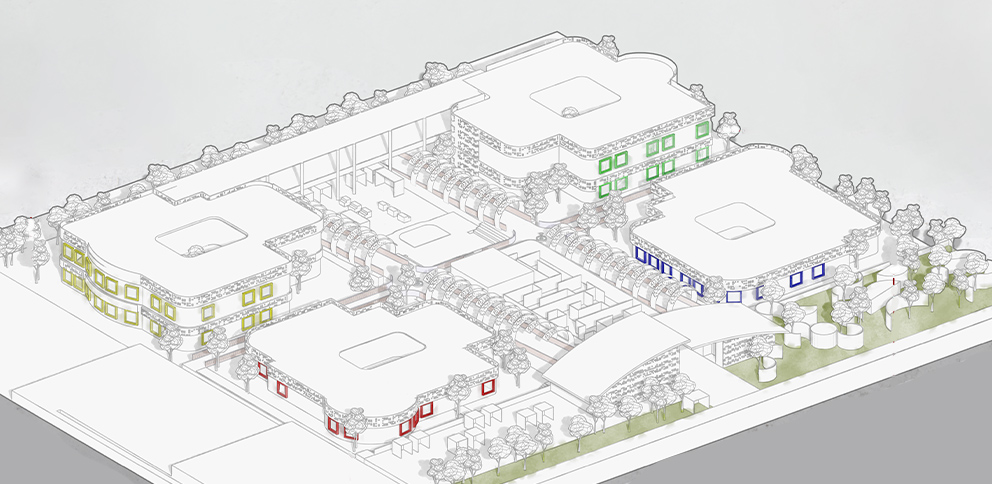
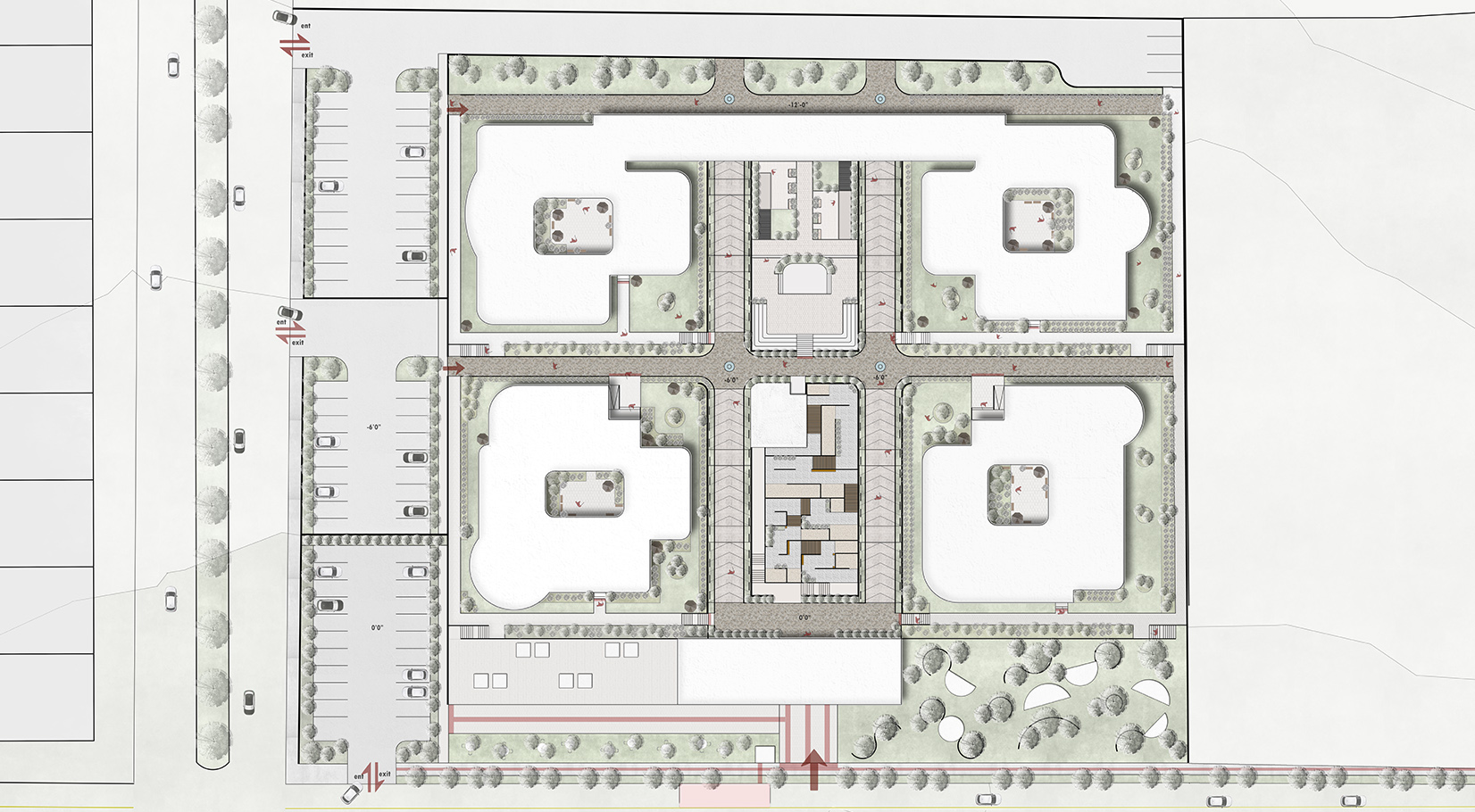
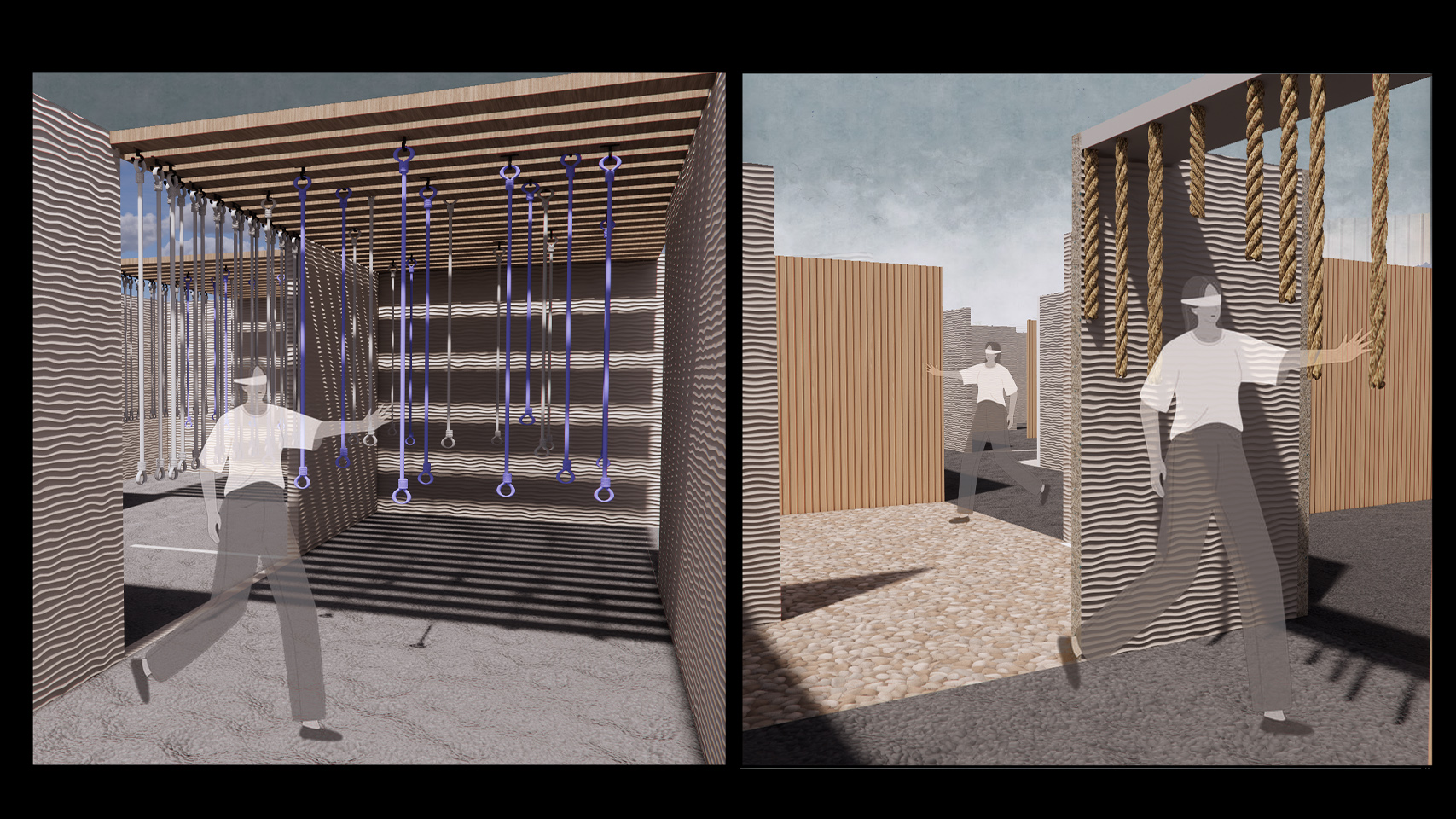
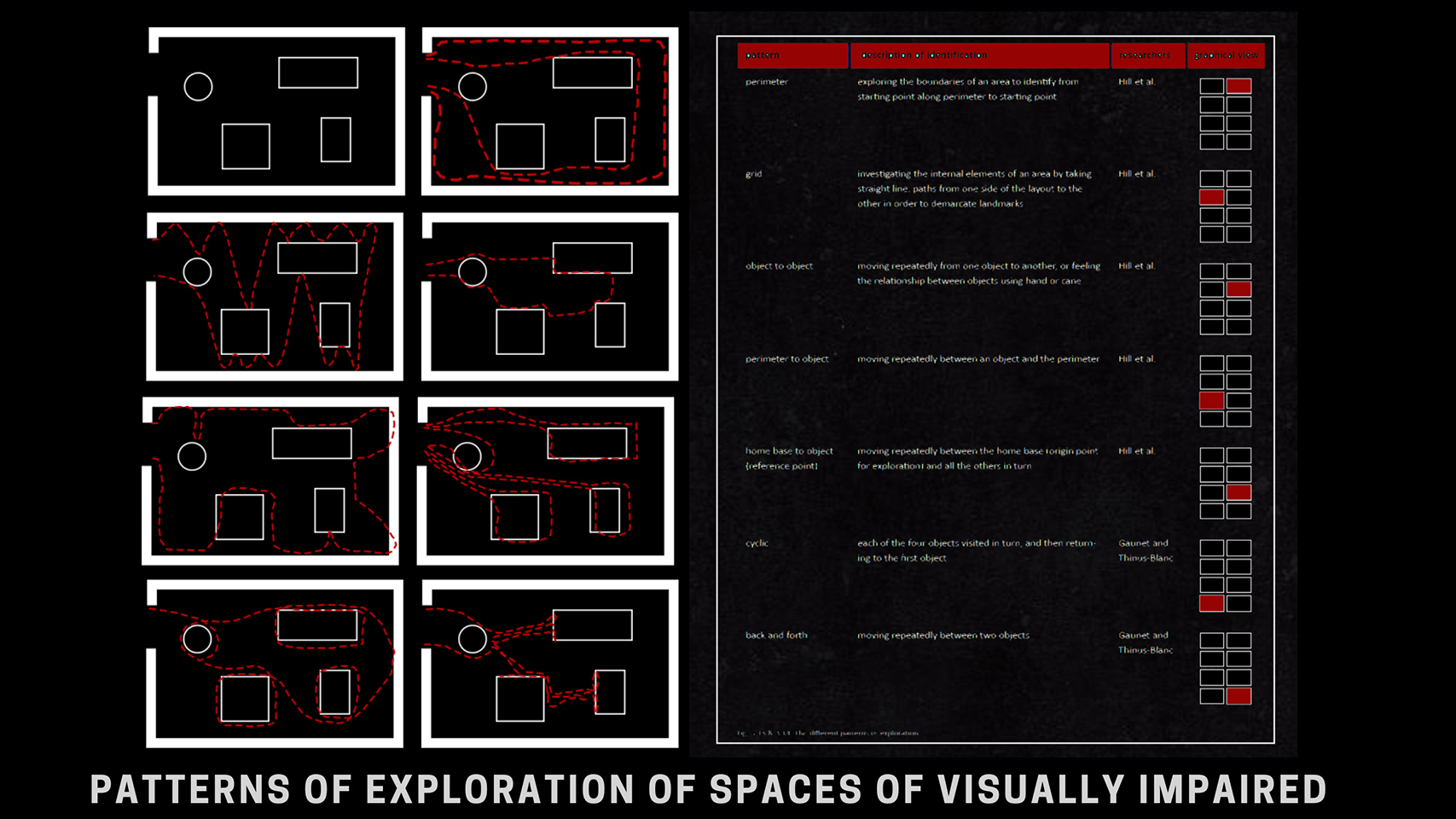
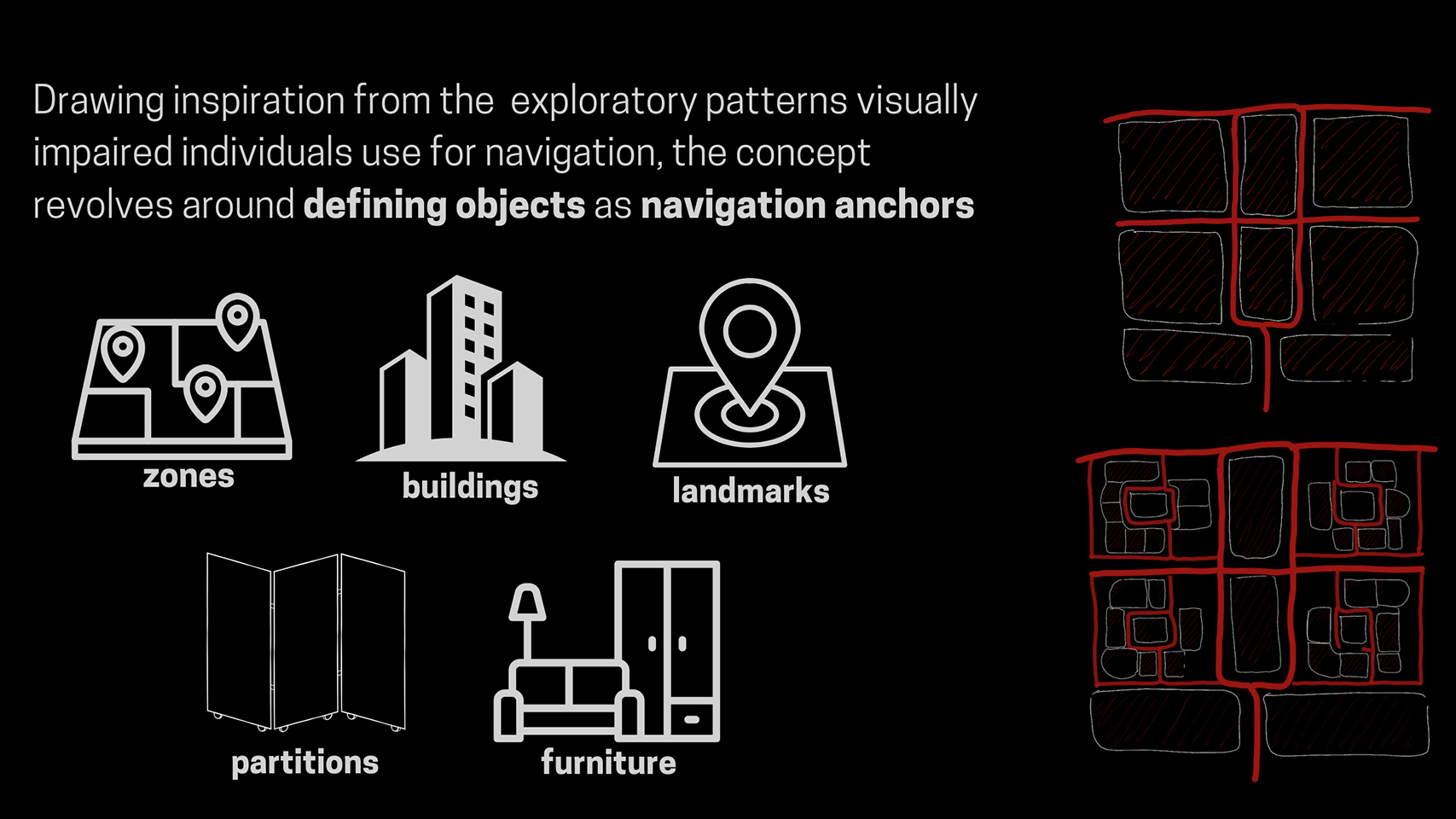
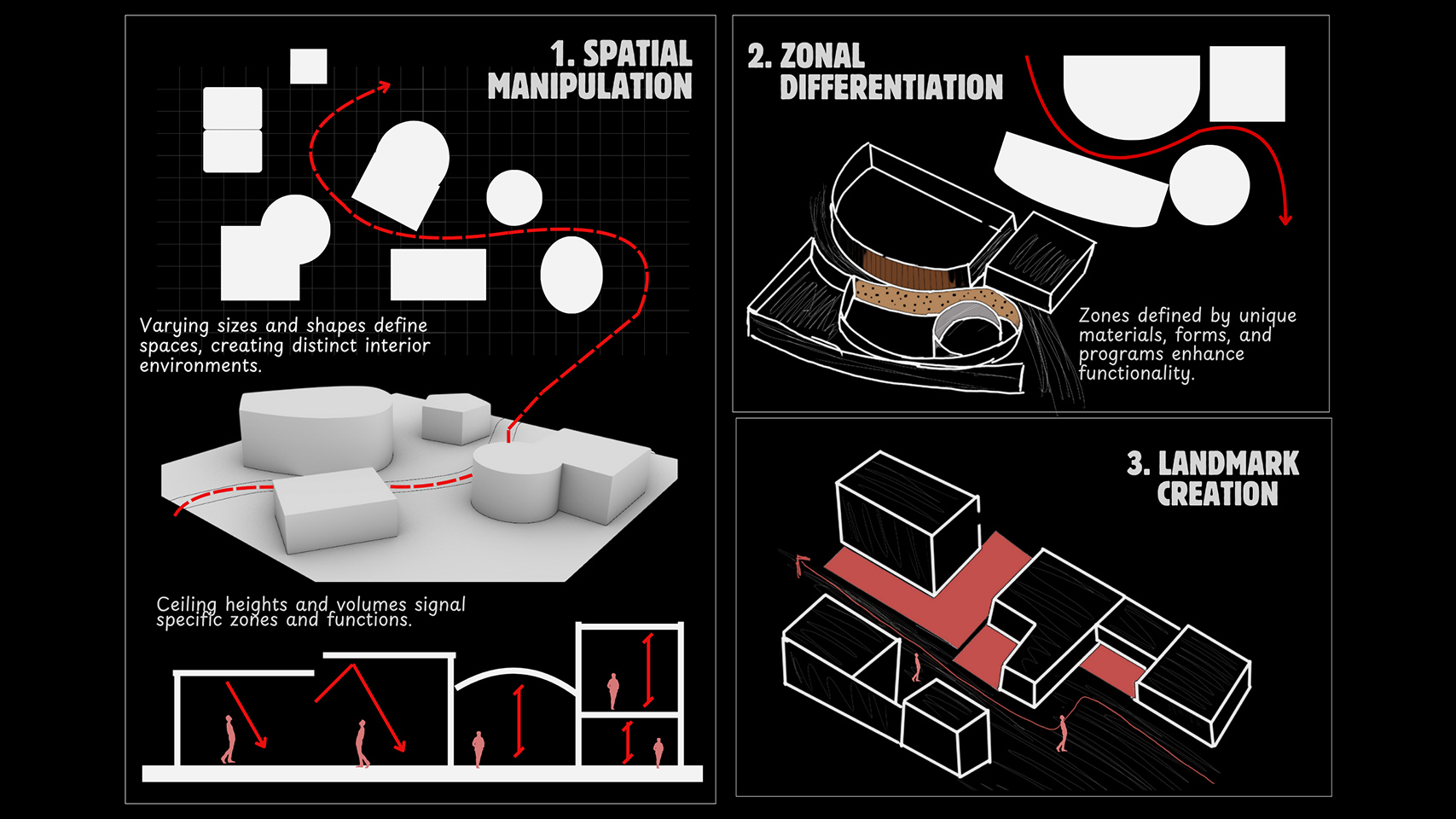
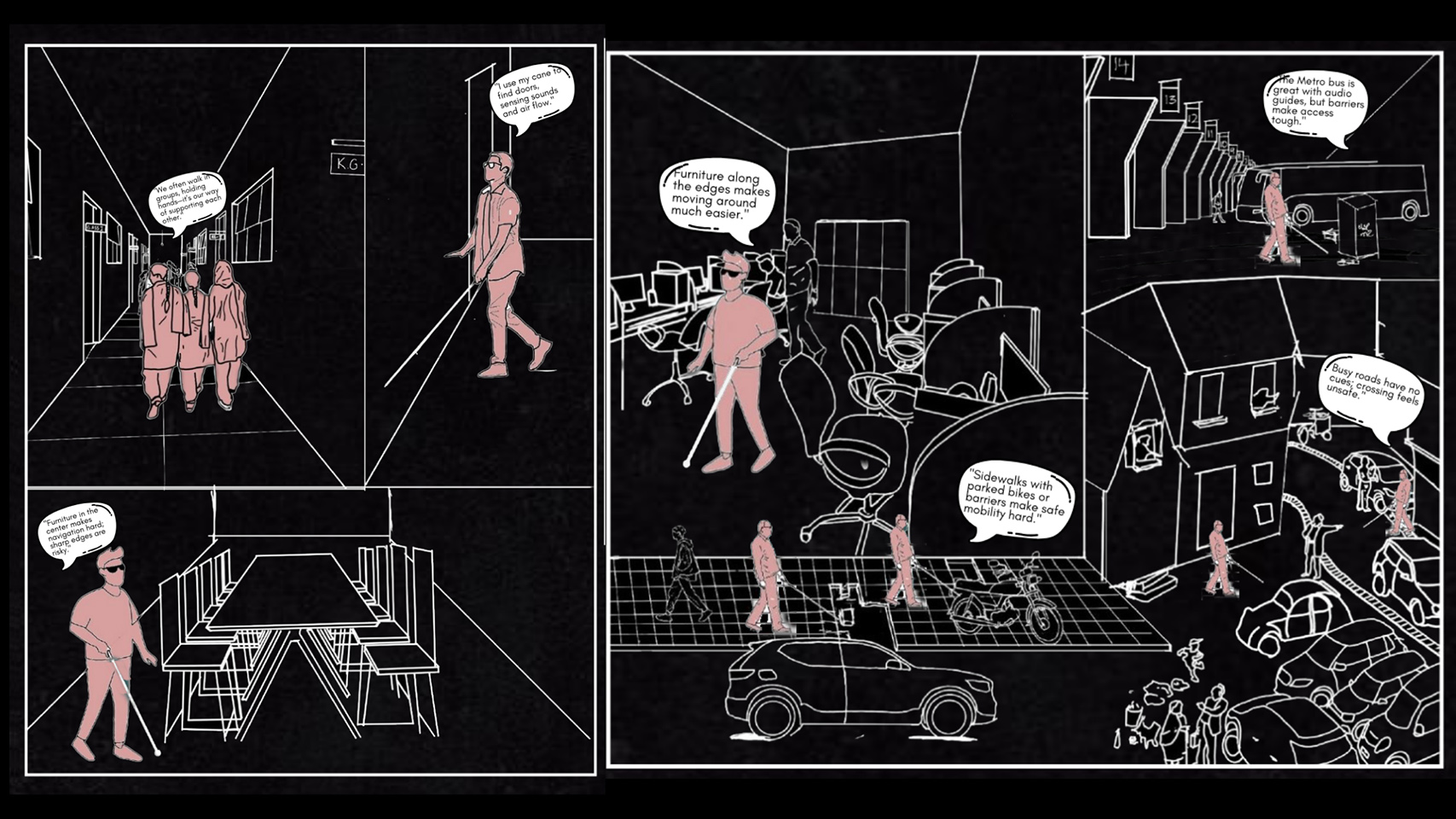
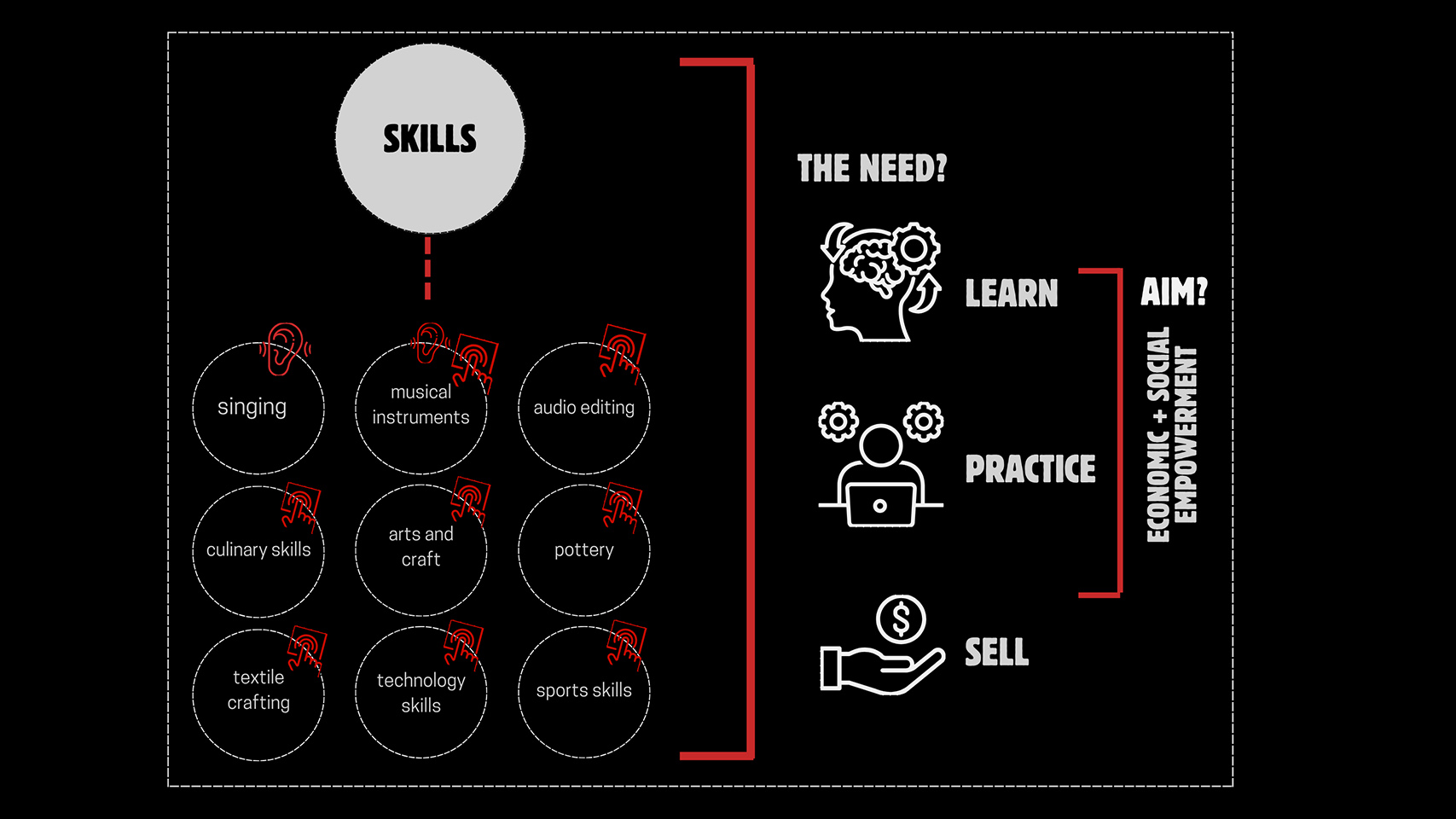
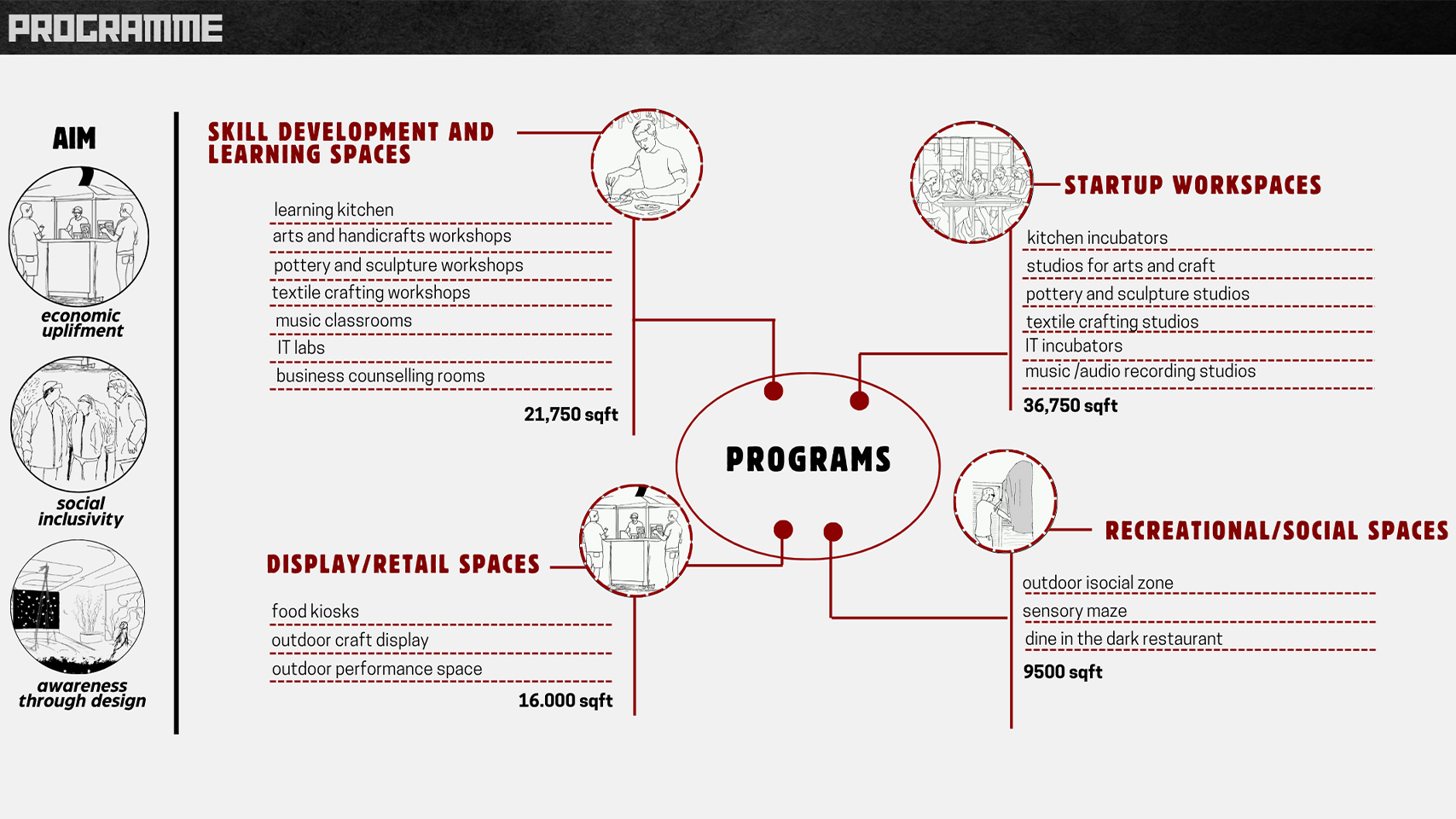
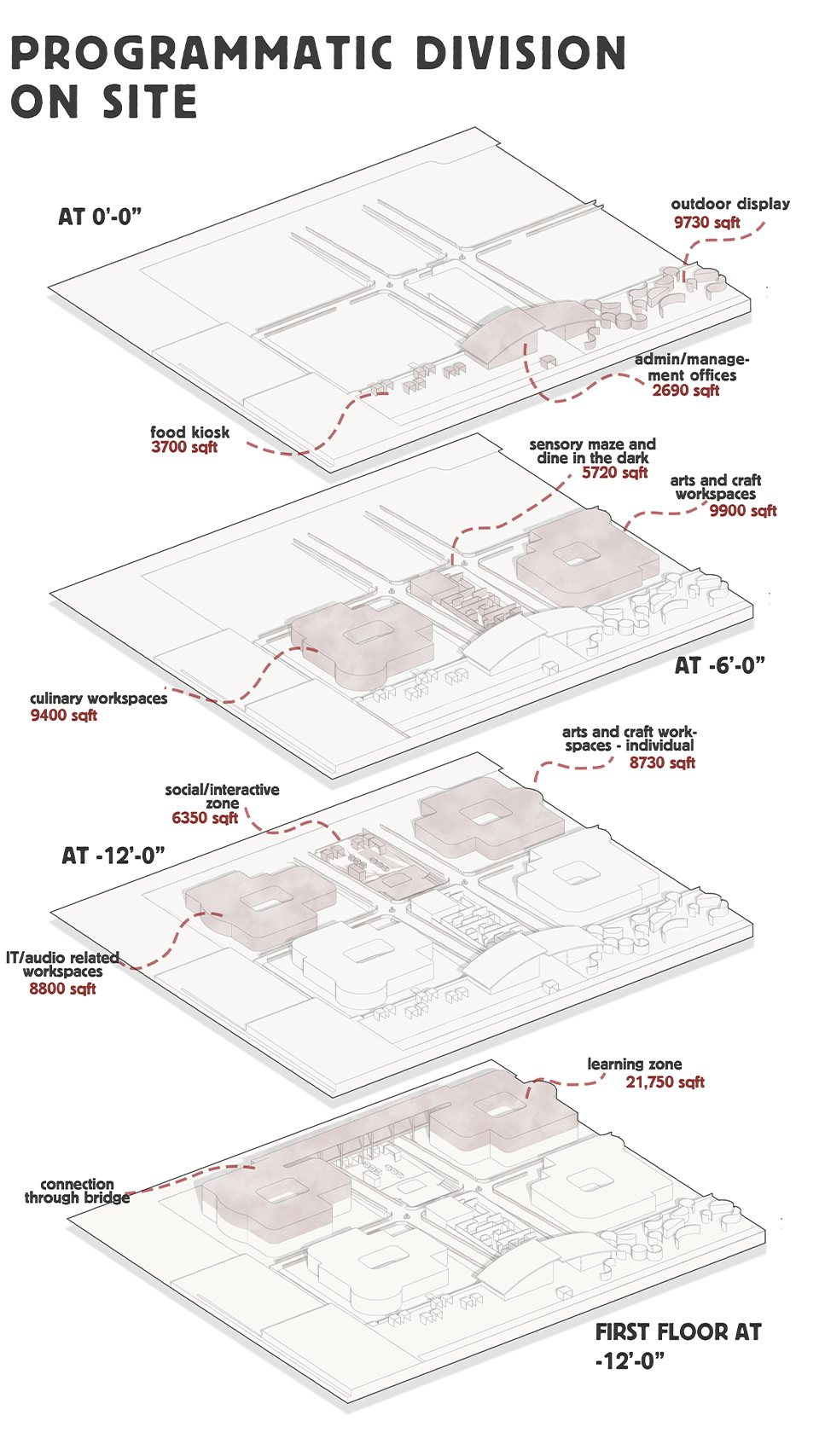
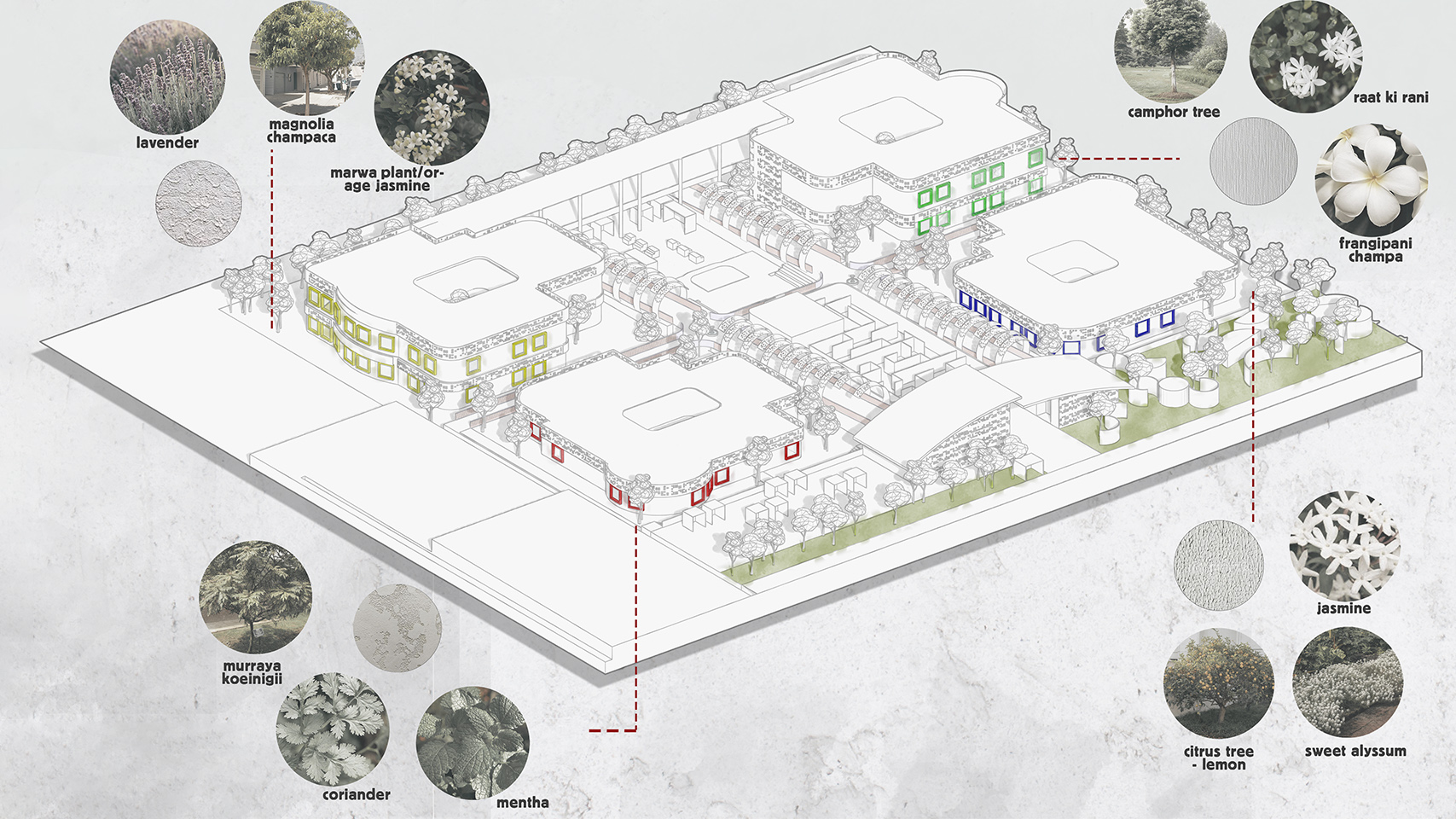
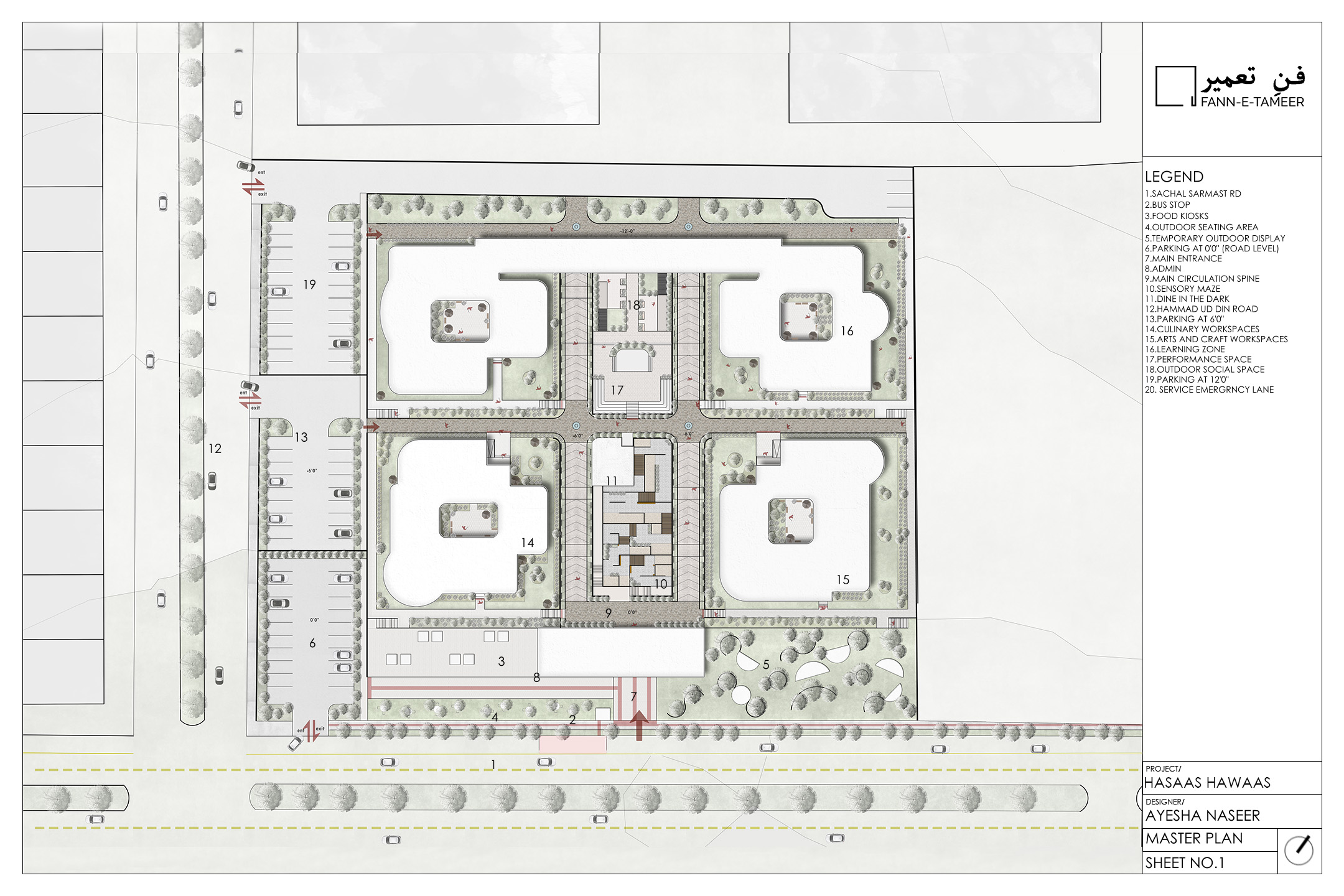
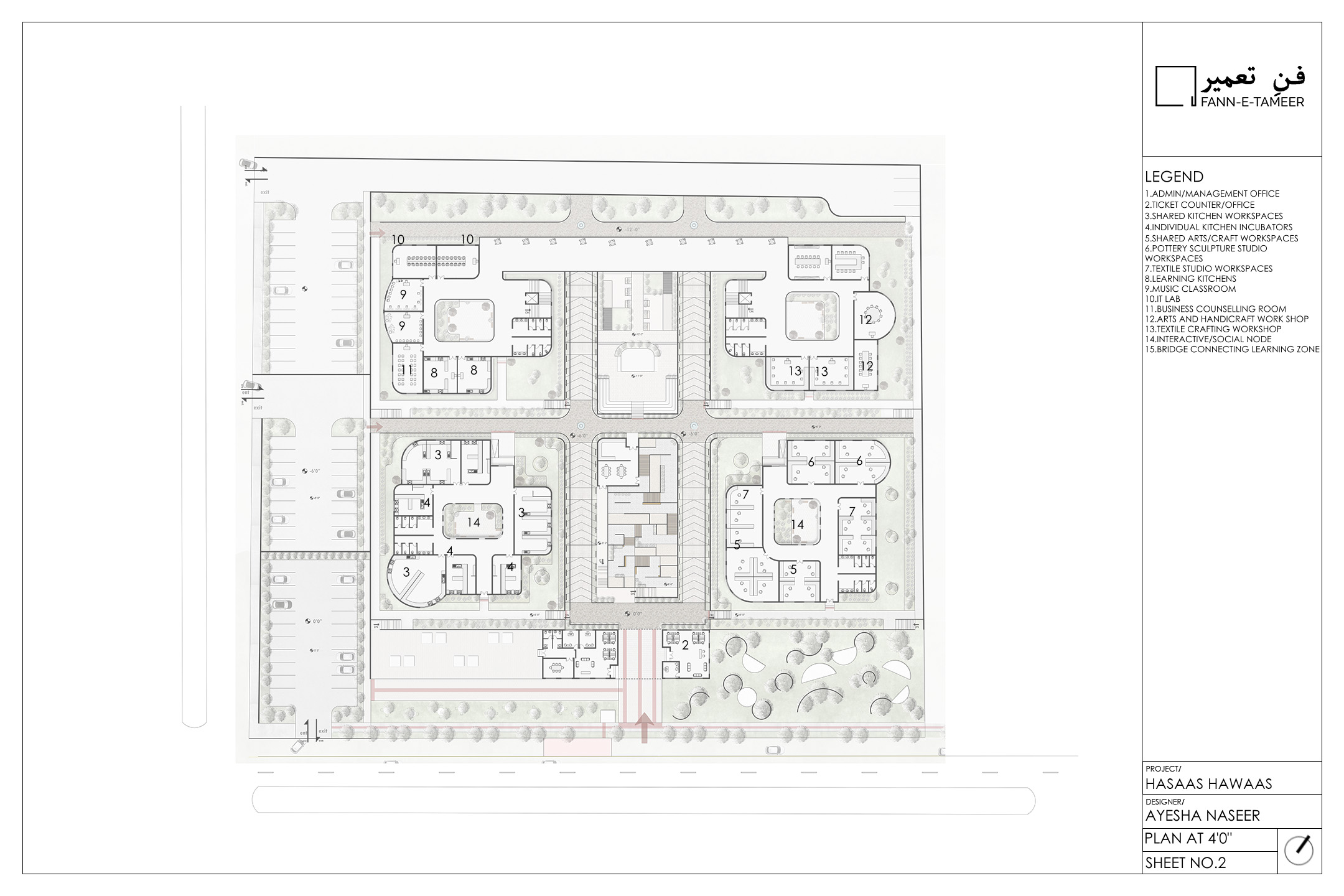
Ayesha Naseer’s undergraduate thesis aims to embrace the sensory experience in architecture. The title, Hasaas Hawaas in urdu, translates to sensitivity and consciousness, it serves as an ode towards the integration of senses in architectural design, focusing on the specific needs of visually impaired individuals. Visual impairment is one of the most prevalent disabilities globally, and ocular-centric architecture often excludes the visually impaired from meaningful participation in society. Through principles of accessibility, navigation and stimulation, this thesis proposes spaces that address the haptic, auditory, and olfactory needs of the visually impaired, promoting skill development, economic independence, and social integration. Situated in G-11, Hasaas Hawaas proposes a multifaceted center which acts as a training facility and an entrepreneurial space. The design concept draws inspiration from two pillars - objects as spatial cues and navigation as a layered experience. Objects, in this context, are interpreted at multiple scales, from large-scale programmatic zones and buildings to landmarks, spatial edges, interior partitions, and even the layout of furniture. These objects become anchors for orientation, memory, and wayfinding.
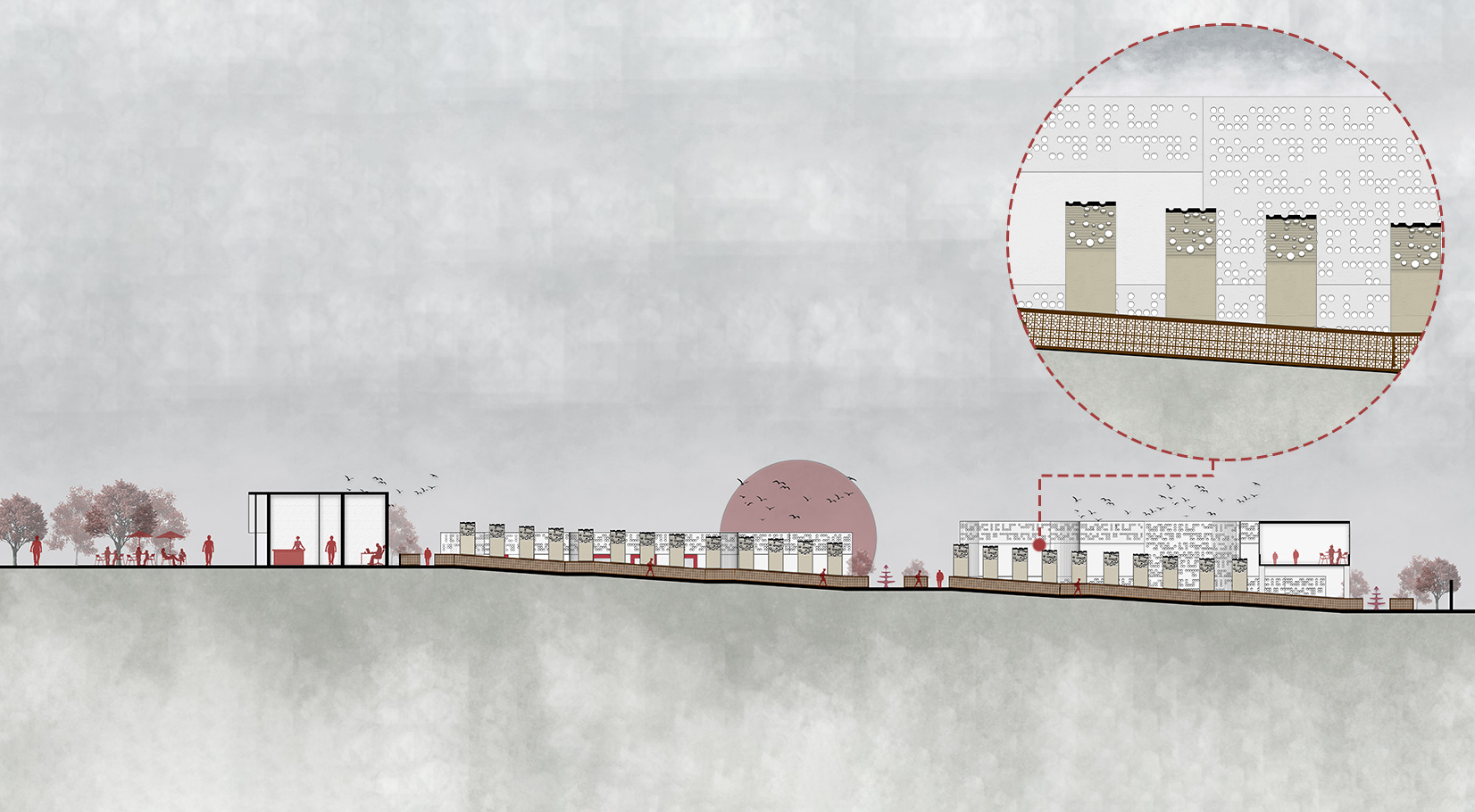
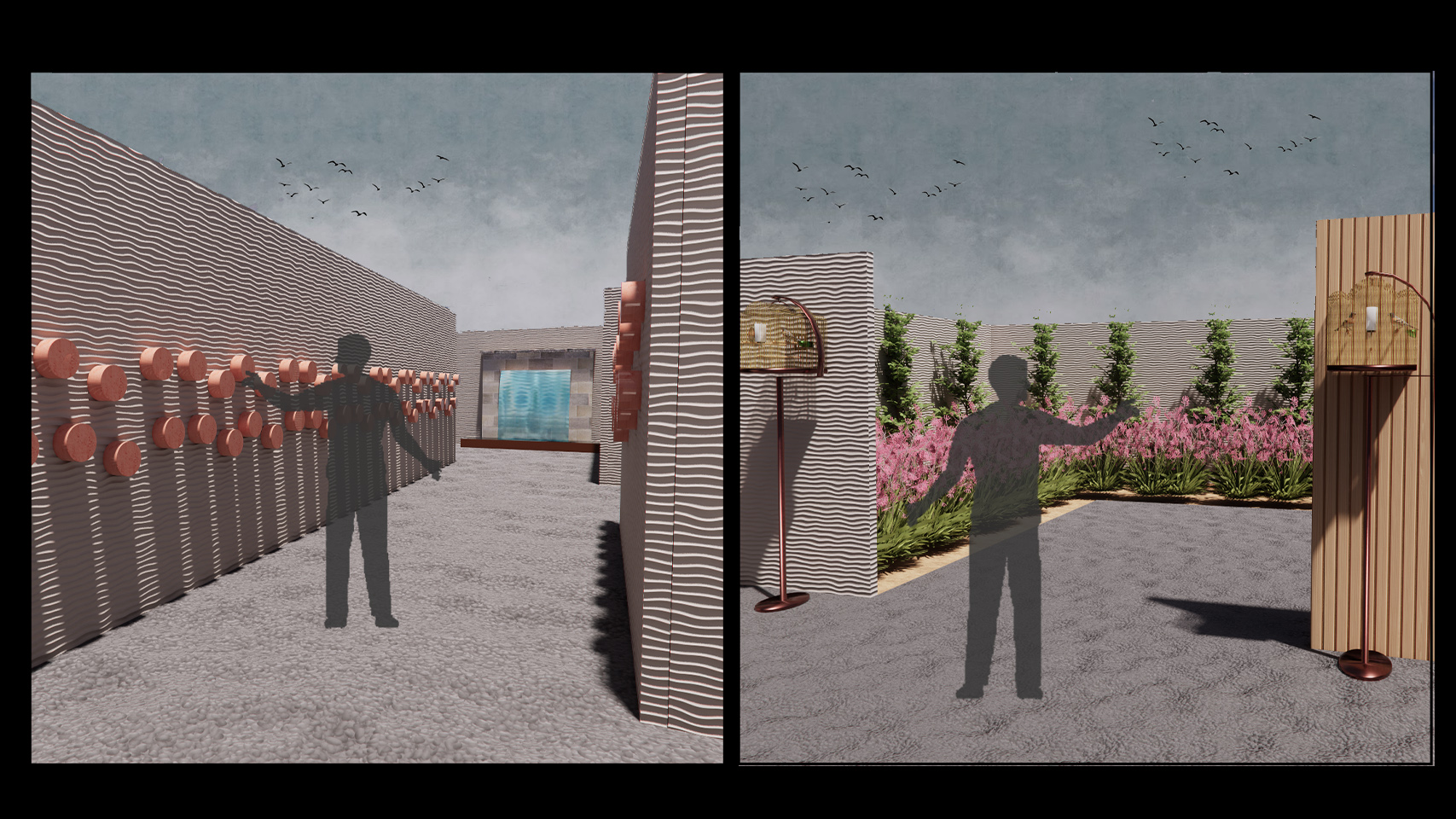
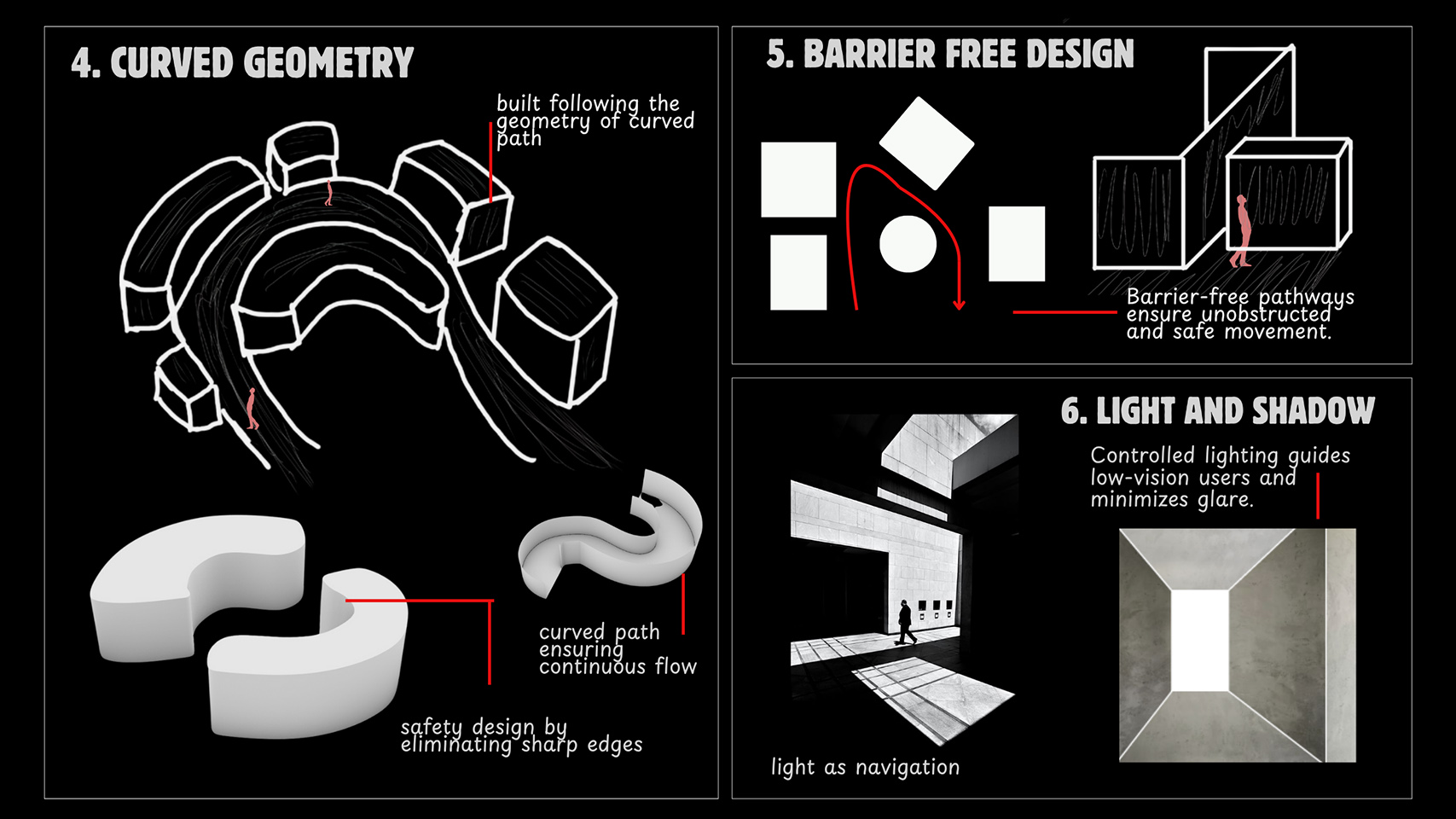
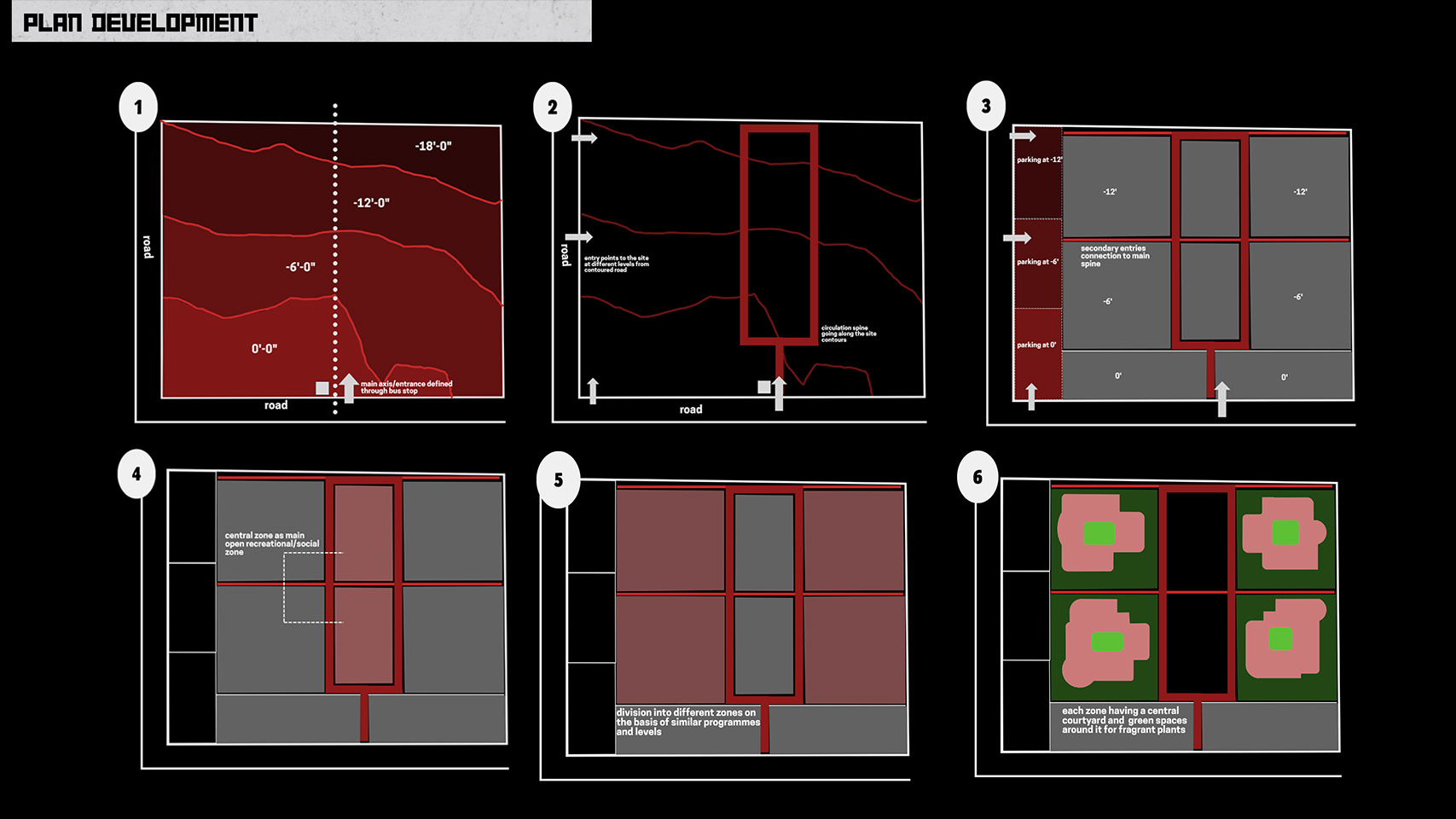
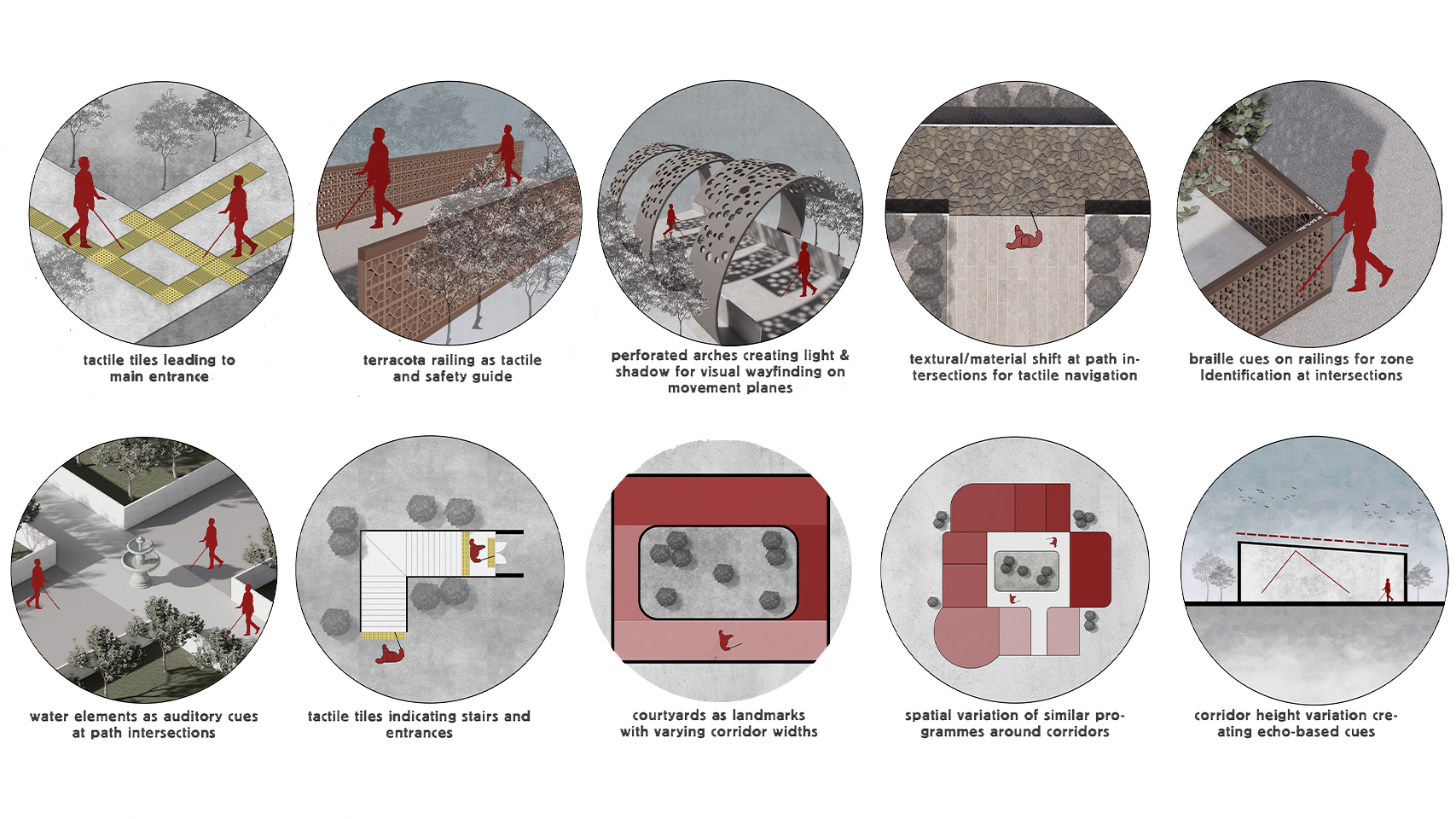
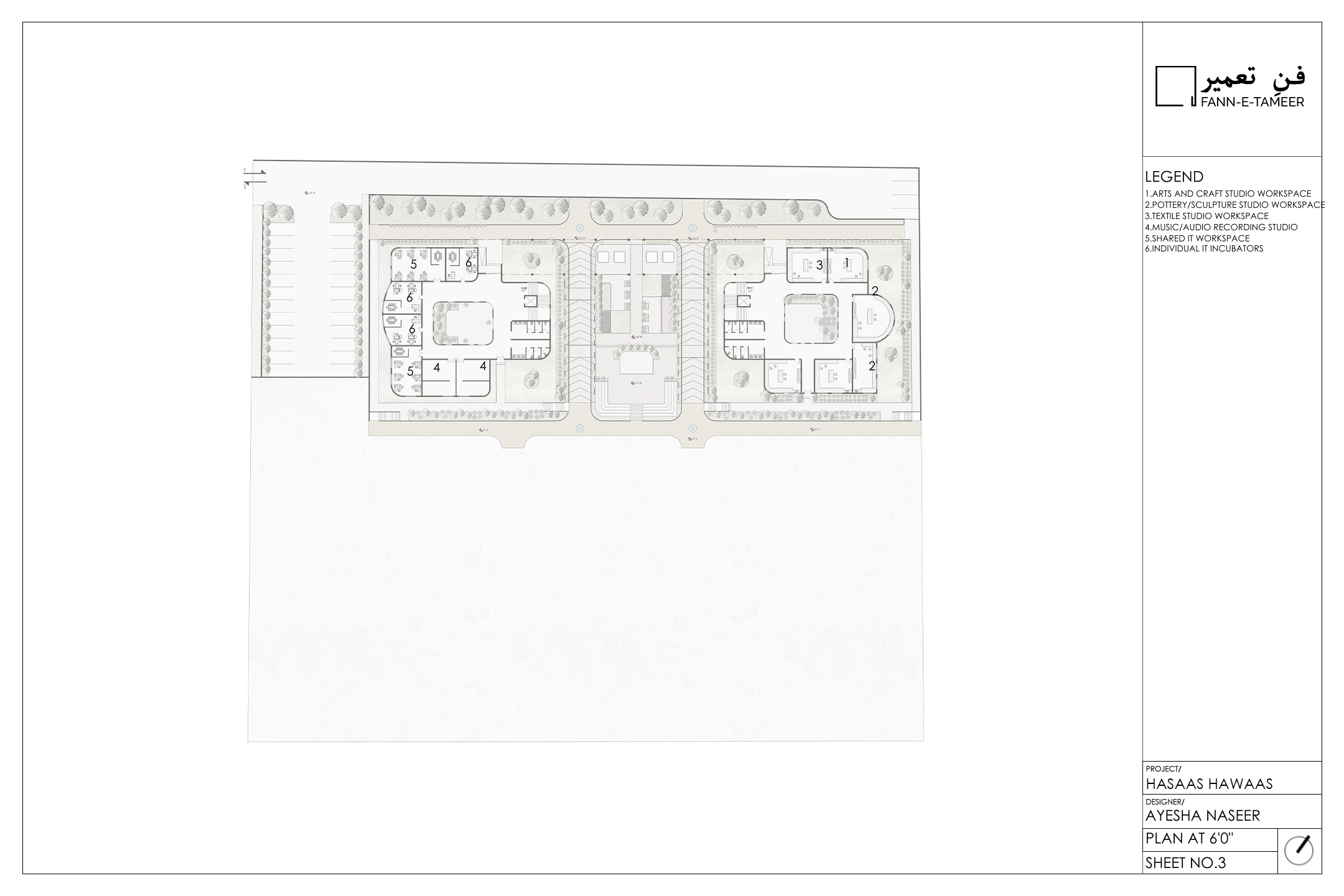
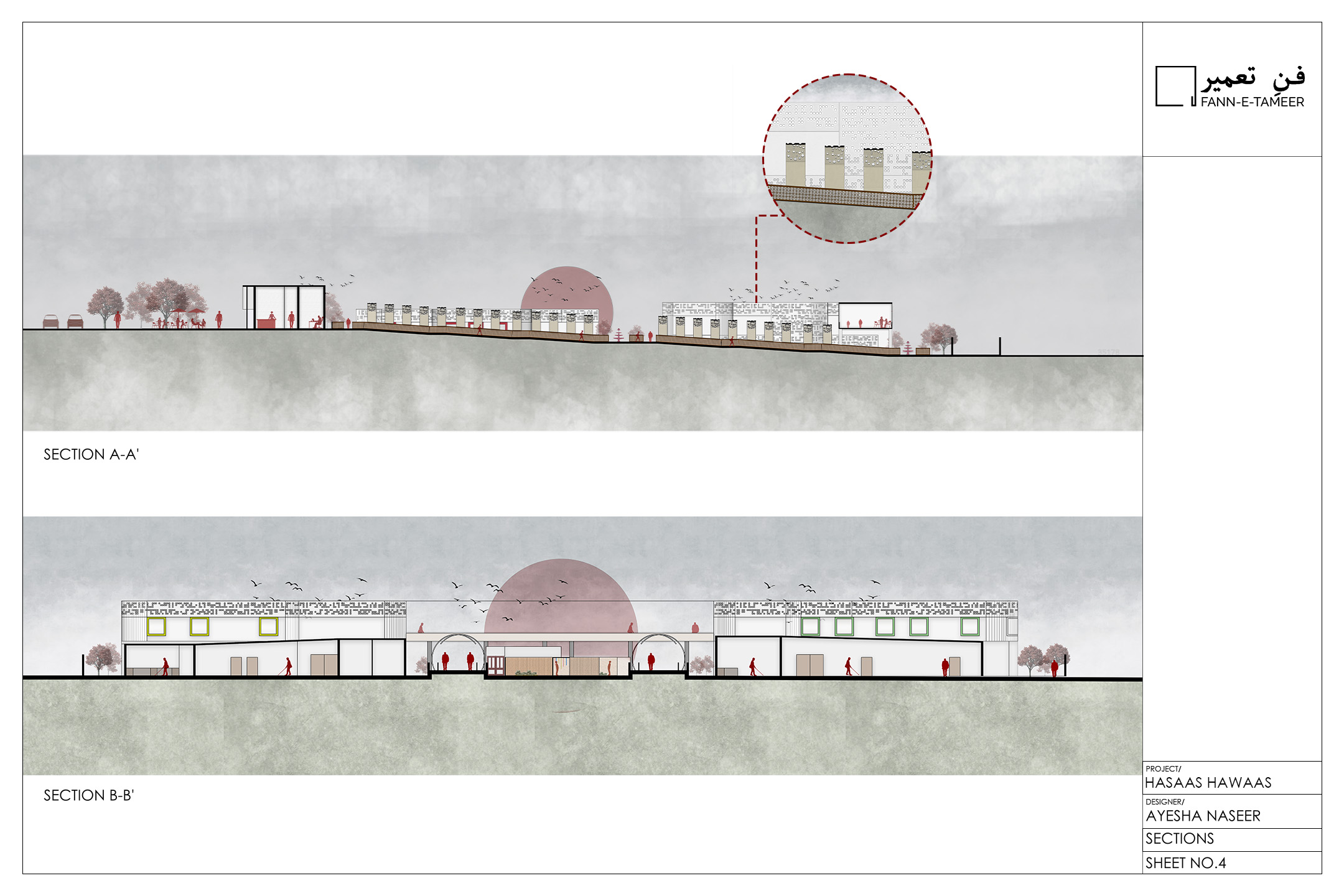
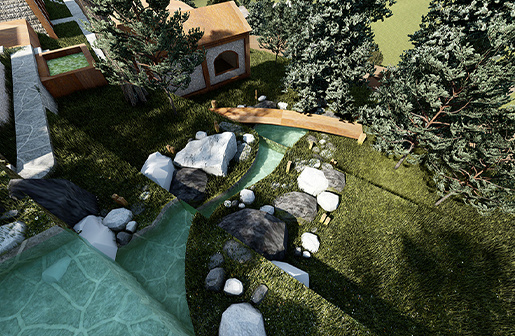
The spatial organization of the center is envisioned as a system of interconnected zones and navigable objects, where each space becomes a tactile and sensory cue in itself. Tactile tiles play a crucial role in orientations - directional tiles guide linear movement, while warning tiles are strategically placed at points of transition such as turns, entrances, and staircases. The central circulation loop, which connects all major zones, incorporates multiple layers of sensory cues. Material shifts at intersections provide haptic differentiation underfoot. The railing system, constructed from interlocking terracotta blocks, serves both safety and informational functions. Its continuous, gap-free design ensures secure guidance, and integrated Braille panels are placed at key intersections to indicate nearby zones. At junctions where multiple pathways diverge from the main circulation spine, water features are introduced to provide auditory cues, alerting users to directional options. These design interventions collectively establish a multisensory navigation framework that supports spatial understanding and autonomous movement for the visually impaired.
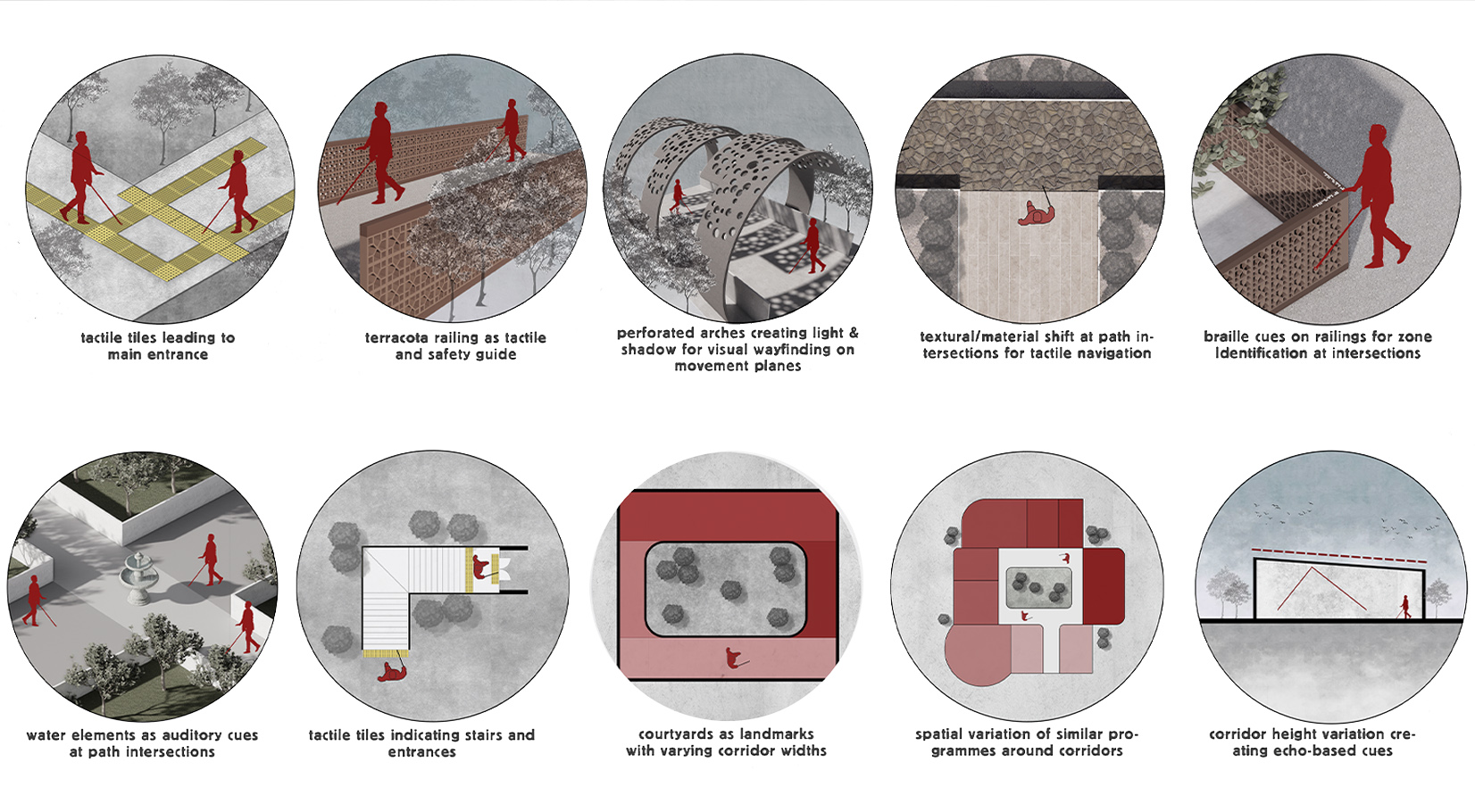
Internally, each building is organized around a central courtyard that serves as a landmark and orientation anchor. Corridors wrapping around this courtyard vary in width and height, creating distinct spatial experiences. Openings towards the courtyard are designed differently in each corridor, contributing to unique light and shadow conditions that reinforce spatial differentiation. The functional spaces around these corridors, although programmatically similar, are further diversified through variations in room sizes, shapes, and internal furniture layouts. “The dominance of the eye and the suppression of the other senses tend to push us into detachment, isolation, and exteriority.” - Juhani Pallasmaa in “The Eyes of the Skin”