The Suburban Woman and the Chaar Dewaari
A thesis reimagining suburban housing in Islamabad through a gender-responsive lens, transforming the “chaar dewari” into inclusive spaces of care, community, and cultural continuity.
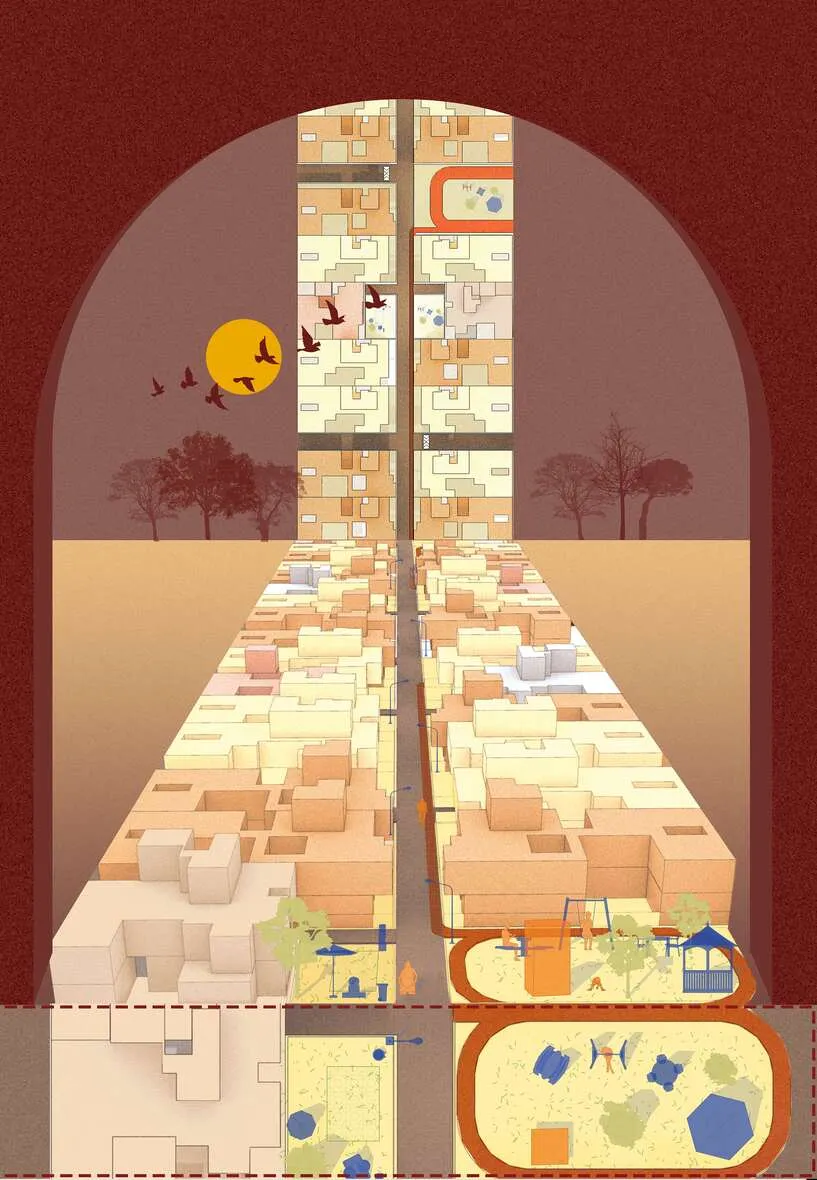
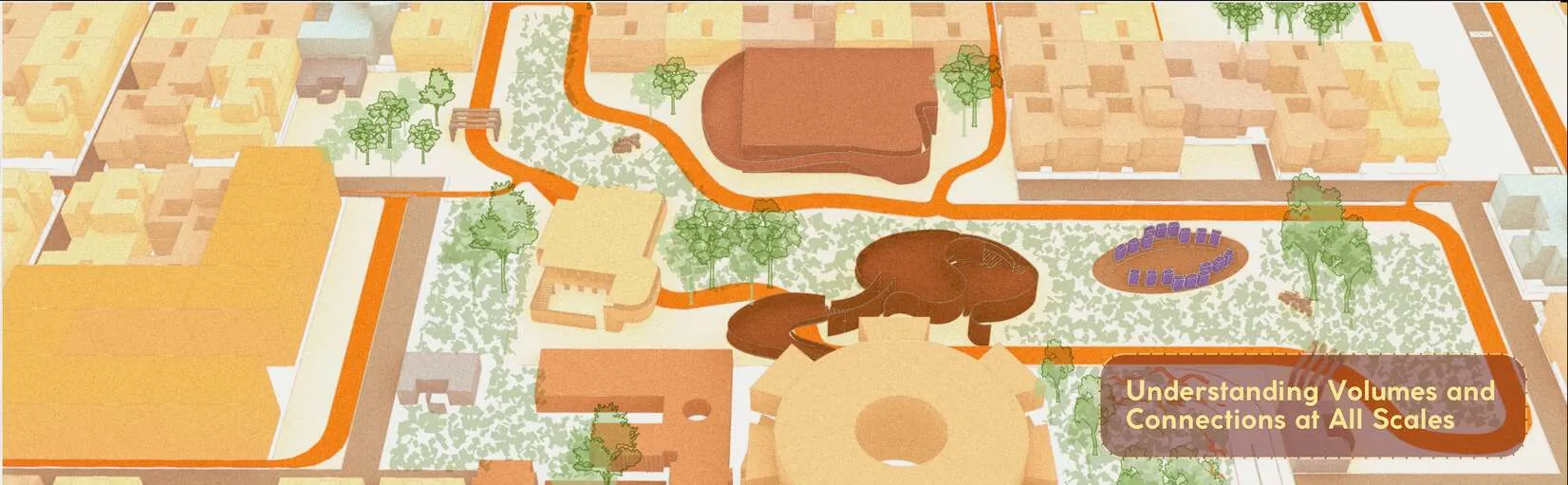

The Suburban Woman and the Chaar Dewari investigates the socio-spatial confinement of women in Islamabad’s suburban gated communities. These communities are products of imported American models that neglect the gendered realities of domestic labor and public life in Pakistan. Through her undergraduate thesis, Jaisha Mubashir challenges the isolated “chaar dewari” of conventional suburban homes and proposes a gender-responsive reimagination of suburban housing and planning. The chosen site, River Gardens in Zone 5 of Islamabad (10.6 acres), exemplifies the issues at stake: car dependency, single-use zoning, fragmented public infrastructure, and the spatial erasure of homemaking women. Through fieldwork, interviews, and lived narratives, the project frames women not just as inhabitants of domestic space but as active users of the urban realm whose needs have long been excluded from suburban planning.
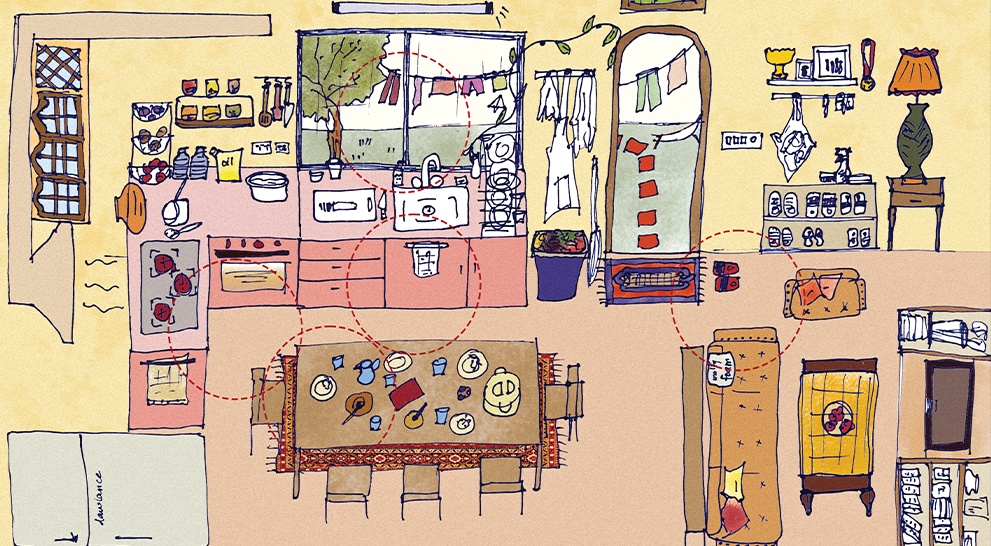
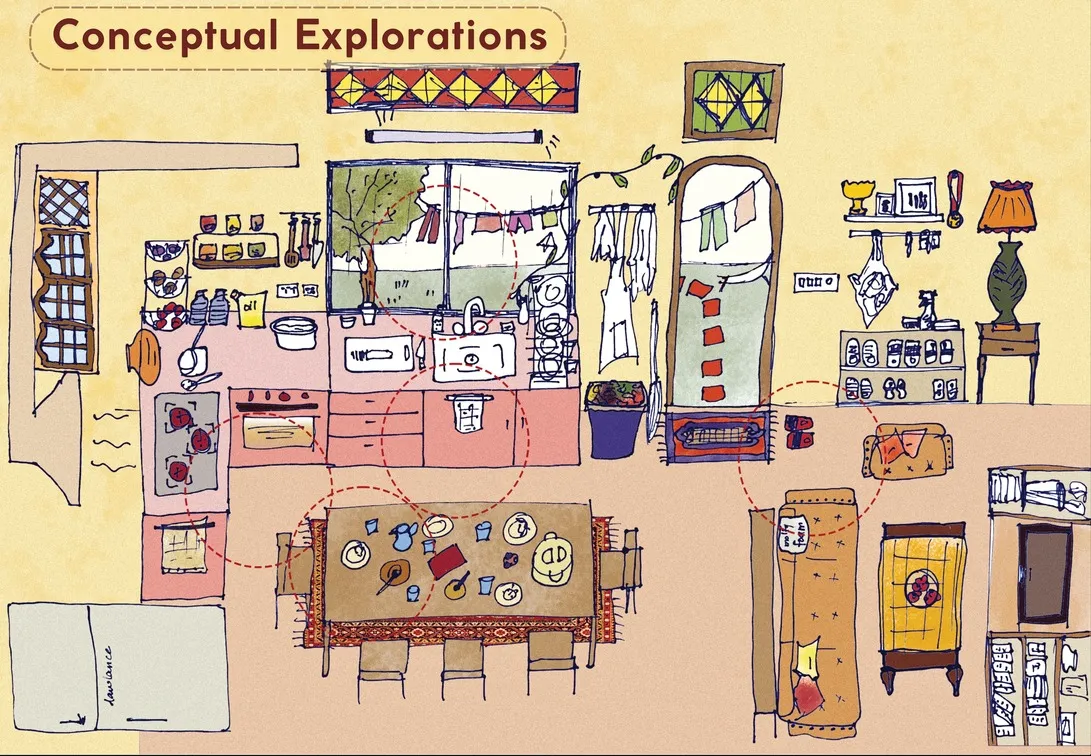
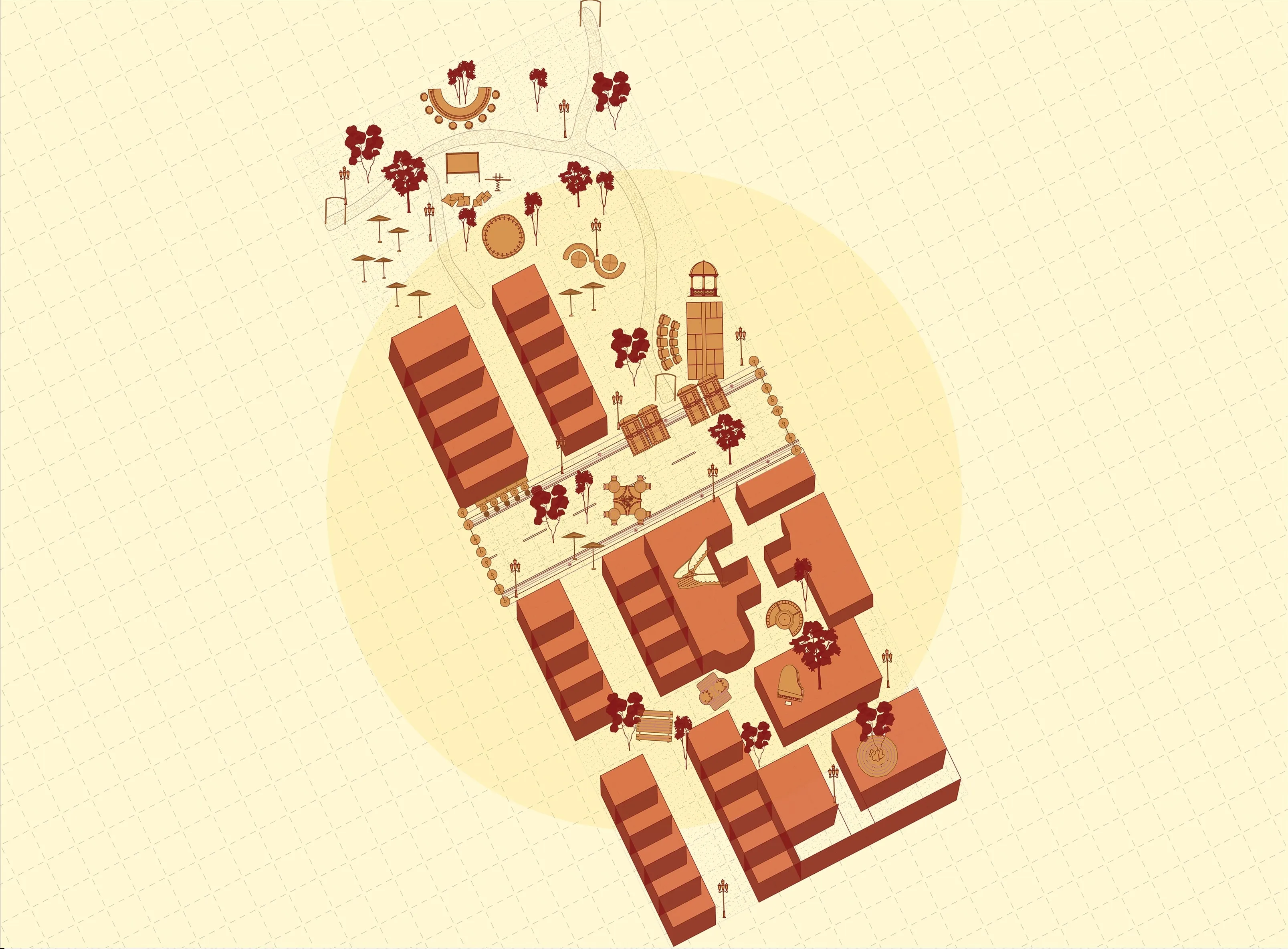
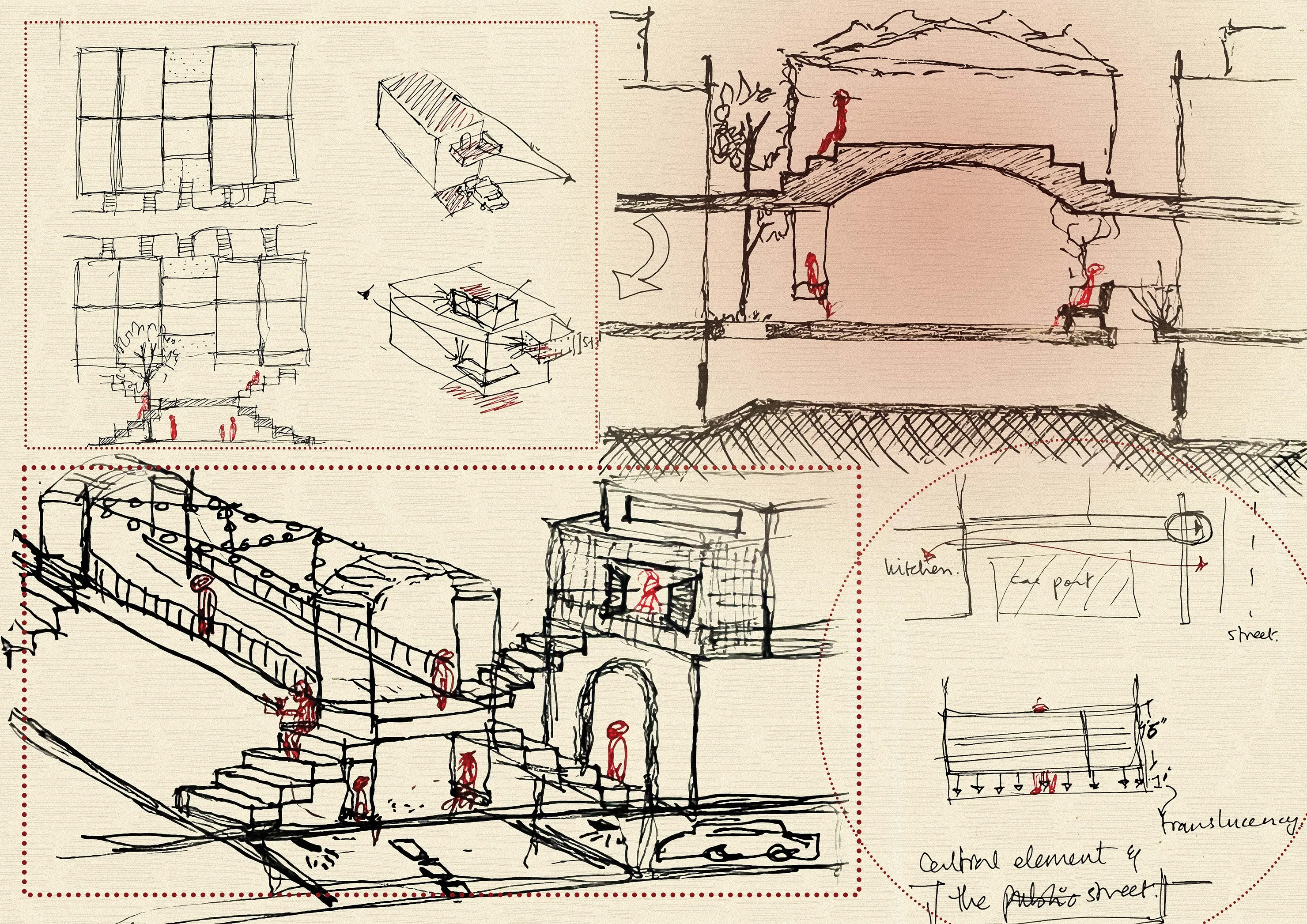
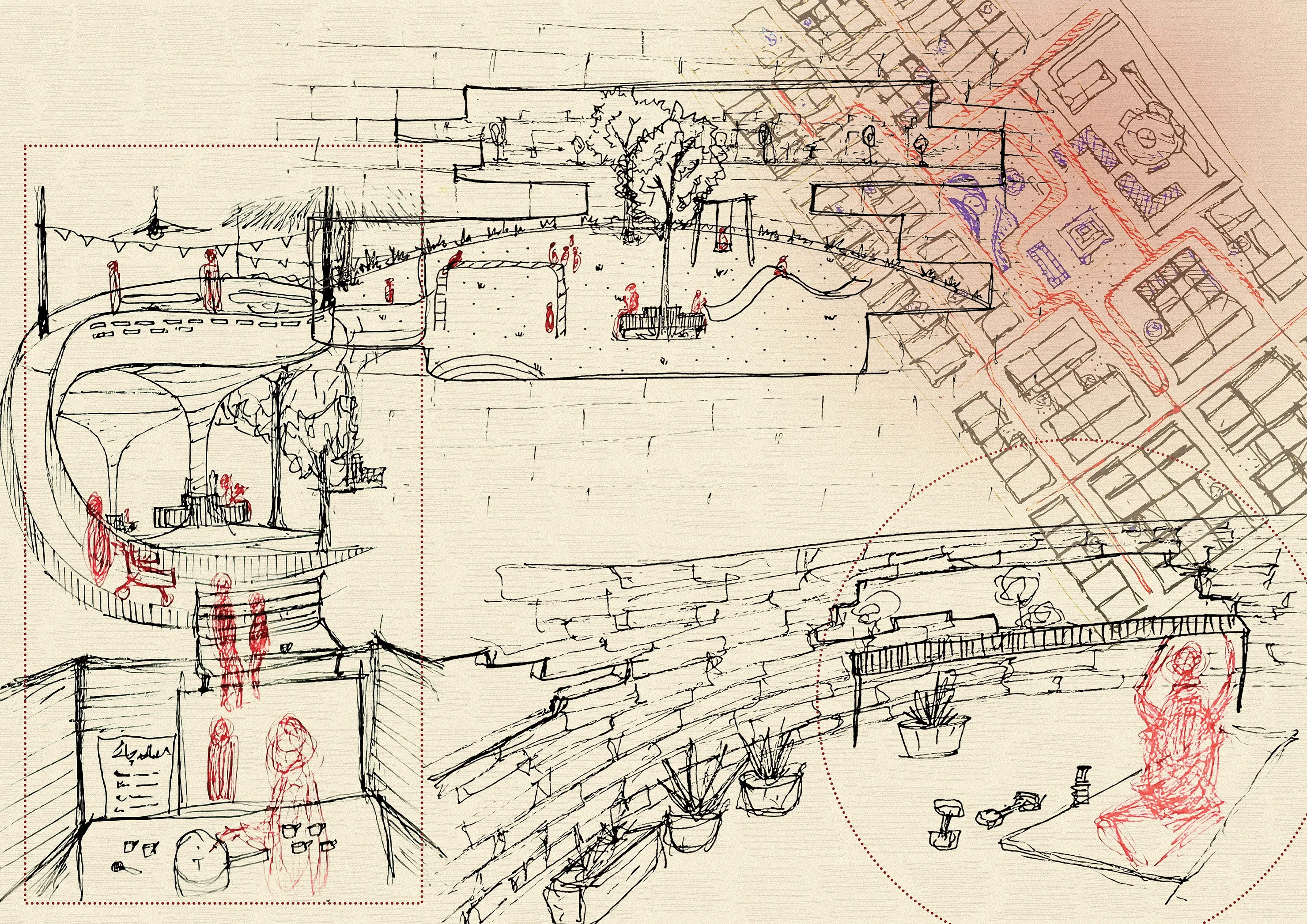
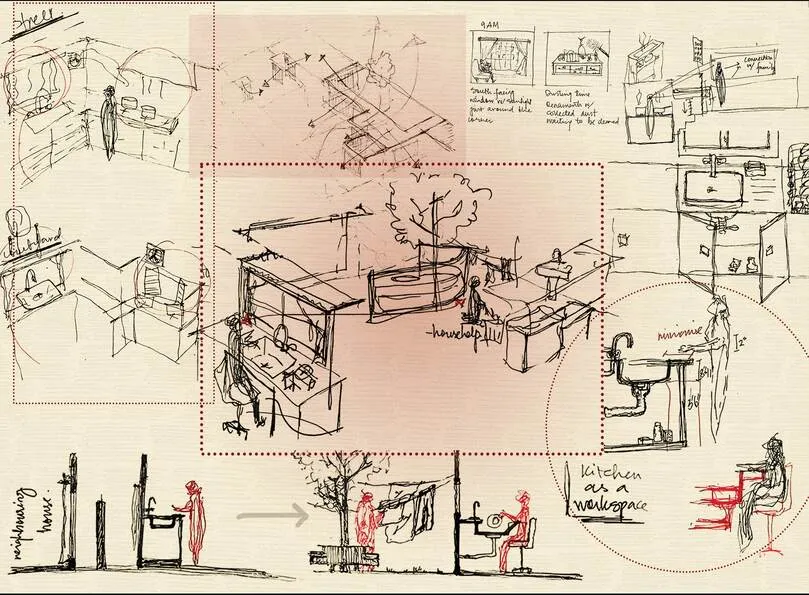





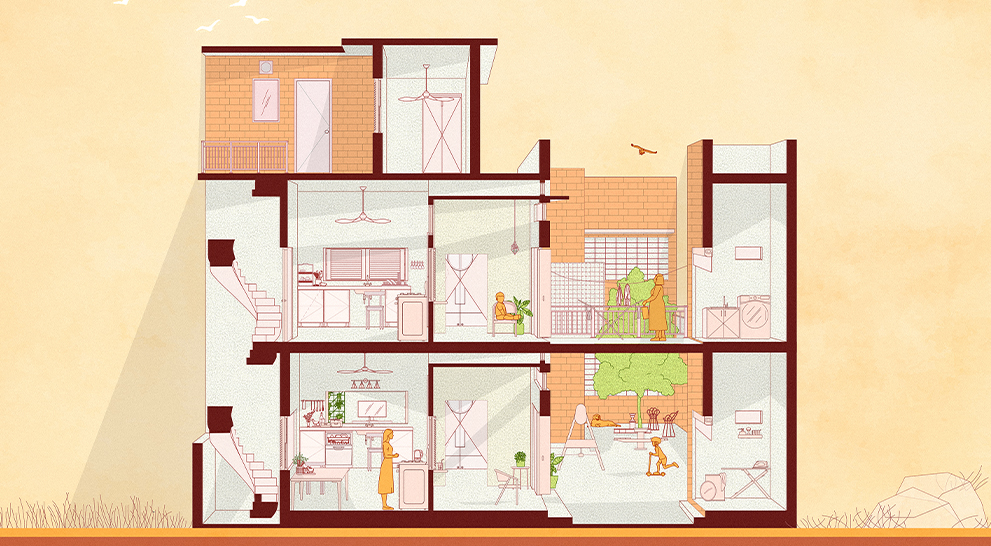
In the reimagined design, a central courtyard becomes the heart of the home, bringing in light, airflow, and visibility. The kitchen now opens into this space, allowing the homemaker to cook while keeping an eye on her child or dependents. A shaded laundry nook sits nearby, enabling seamless movement from cooking to cleaning. Clerestory windows improve ventilation and reduce heat buildup, and the kitchen layout follows a clockwise logic that minimizes physical strain. The house no longer fragments labor; it supports it. At the meso scale, the cluster becomes a shared landscape of routine, care, and community. Each group of nine homes surrounds a communal courtyard planted with a neem tree, low benches, a play area, and a small kiosk for everyday needs. The residential streets around the cluster are narrowed to reduce vehicular speeds, making movement safer for children, elders, and homemakers. The courtyard offers shade, visibility, and moments of communal interaction. It is no longer just empty space between homes but a street that can be lived in.
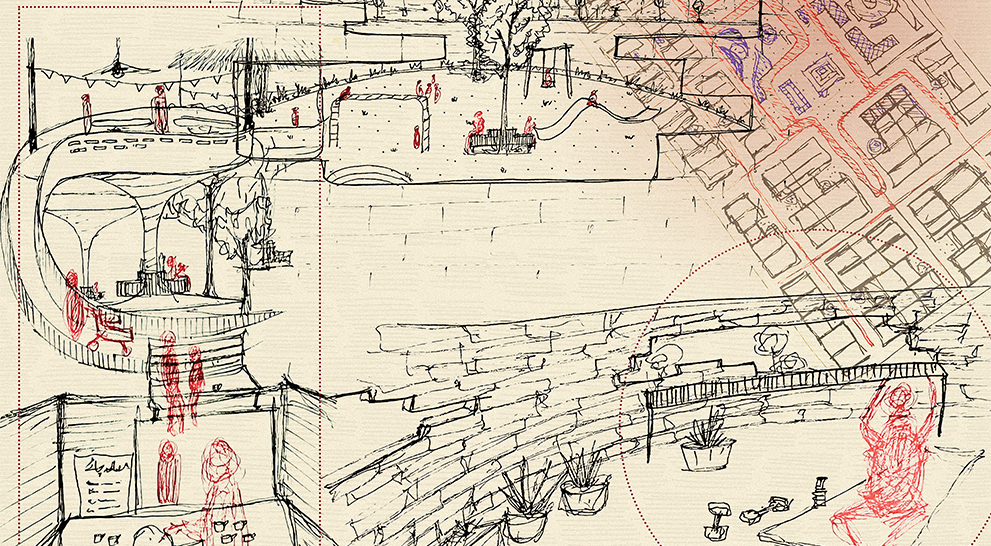
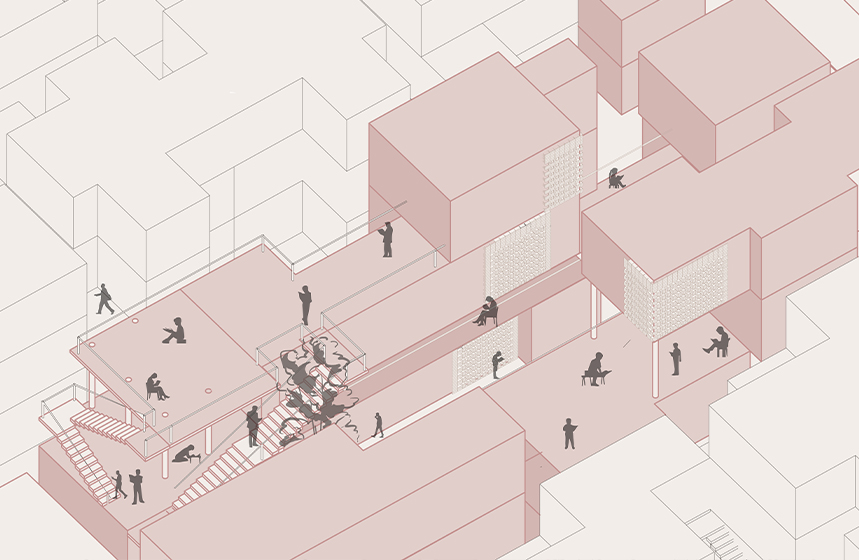
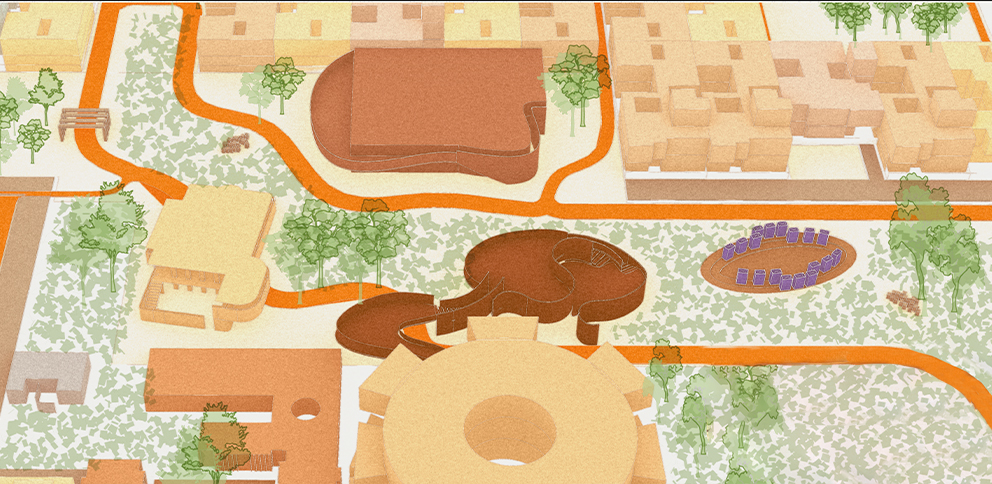
At the macro scale, the neighborhood becomes a network of care-oriented public spaces. A central walking loop connects homes to parks, markets, and gathering spaces without needing a vehicle. Shaded seating, libraries, workshops, and chai corners are placed within reach. Elderly daycare and jali-screen gyms overlook child play areas, encouraging intergenerational presence. Weekly bazaars and visible, walkable amenities reduce dependence on male mobility. The design distributes care work across the neighborhood, allowing homemakers to participate, rest, and belong in everyday public life. By working across scales, this thesis proposes a replicable model of suburban development rooted in care, collectivity, and cultural continuity. It reframes the “chaar dewari” not as a wall of confinement, but as a boundary that can be reimagined for inclusion.