Bazm-e-Safar
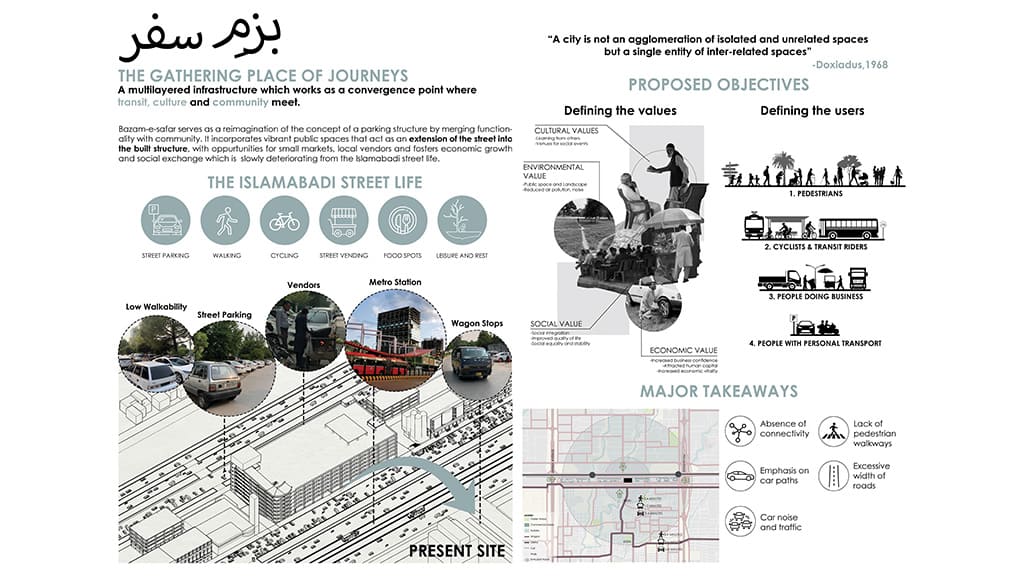
Bazm-e-Safar reimagines a parking structure in Islamabad’s Blue Area, integrating transport, green spaces, and public areas to enhance pedestrian life, connectivity, and sustainable urban living.
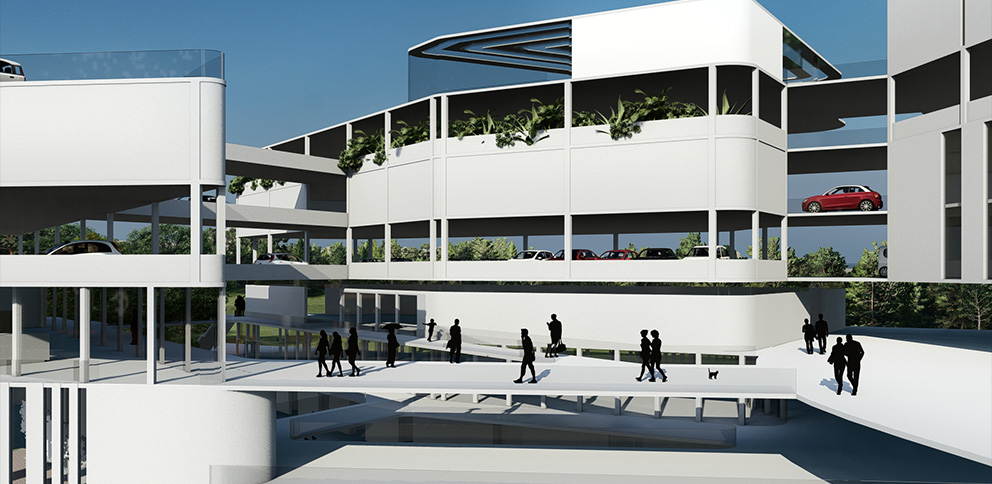
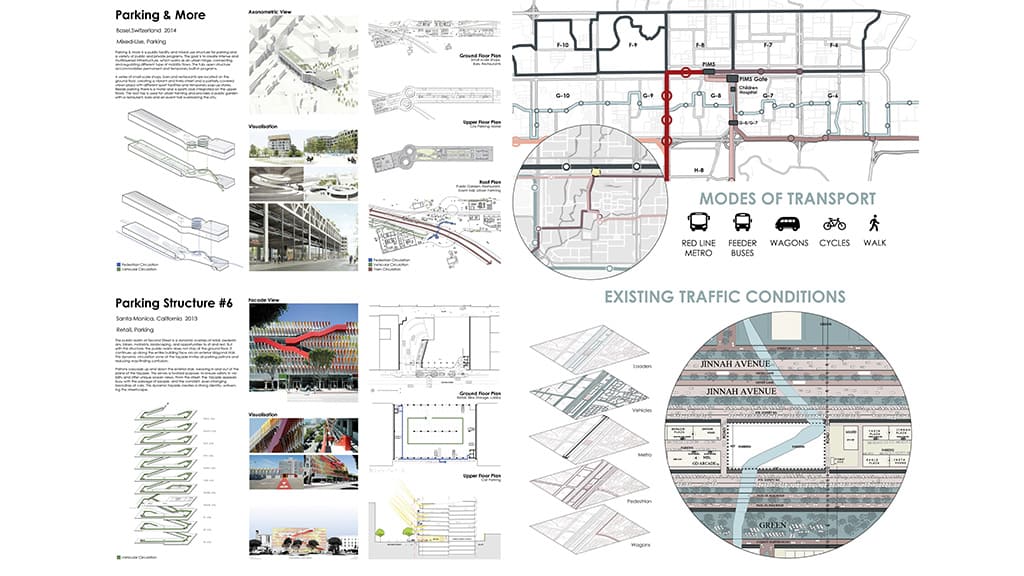
Since its inception in the 1960s, Islamabad was designed as a well-organized capital, with green belts, wide roads, and a strong zoning framework. Over time, however, rapid population growth and lifestyle changes shifted the city toward an auto-centric model. The dependence on personal vehicles led to increased street parking congestion, traffic build-up, and a decline in pedestrian-friendly spaces. These changes diminished the quality of the public realm, reducing opportunities for community interaction and making streets less inviting for people on foot. Addressing these issues goes beyond traffic management—it is about reclaiming spaces for social connection, greenery, and active mobility. The proposed site for Bazm-e-Safar is in Blue Area, Islamabad, within an existing parking structure under development. Positioned in a dense commercial hub near key public transport nodes, the site faces challenges of noise, congestion, pedestrian obstruction, and inadequate infrastructure for connecting different modes of transport.
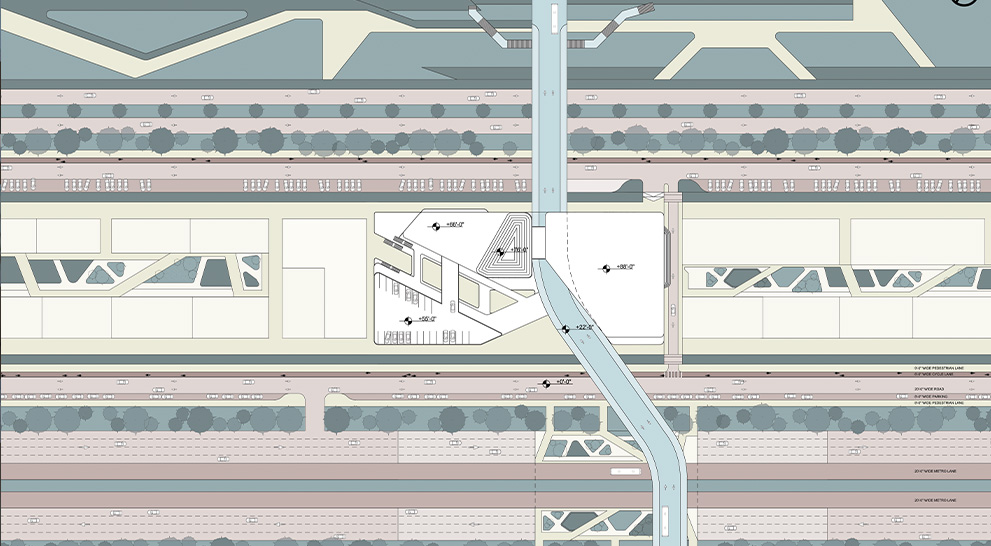
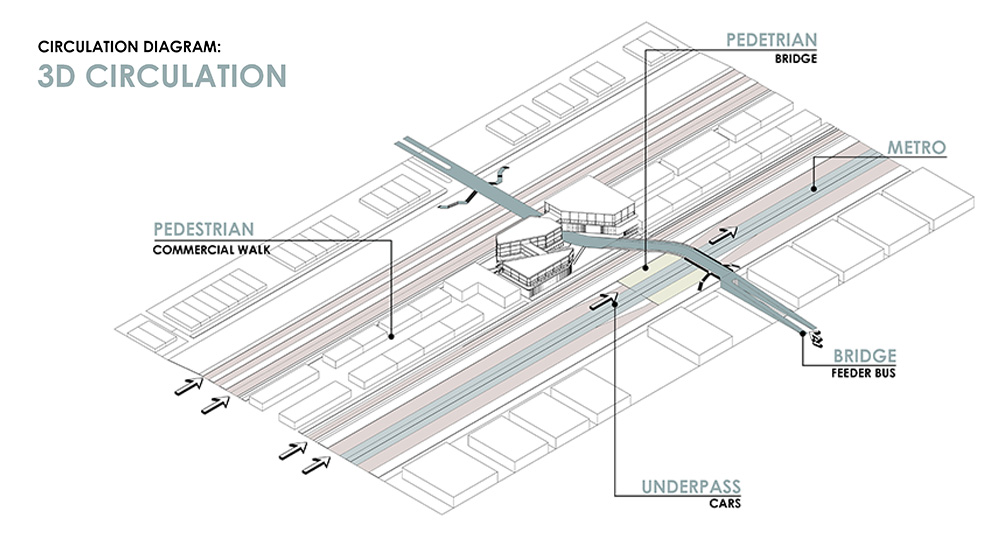
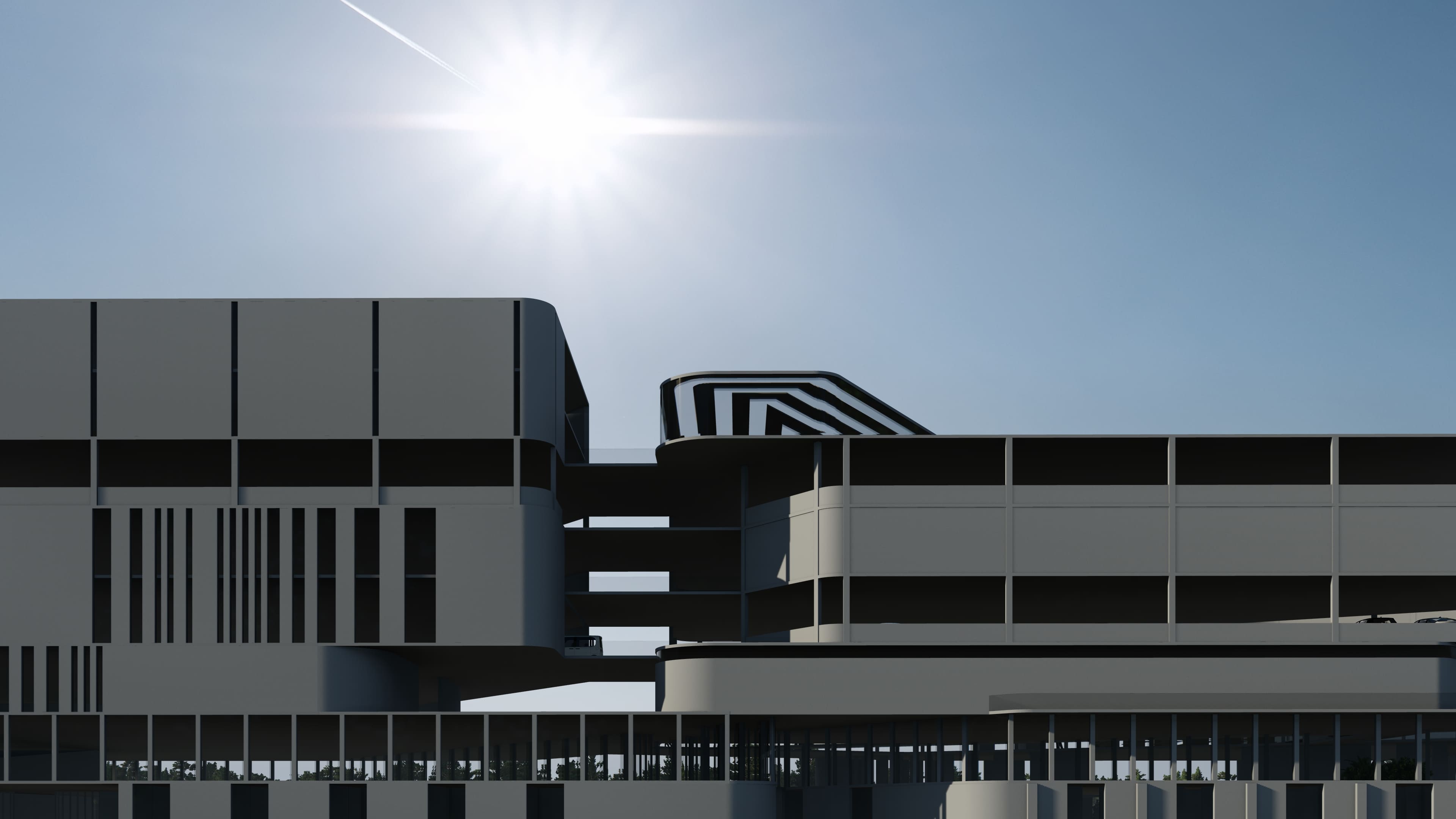
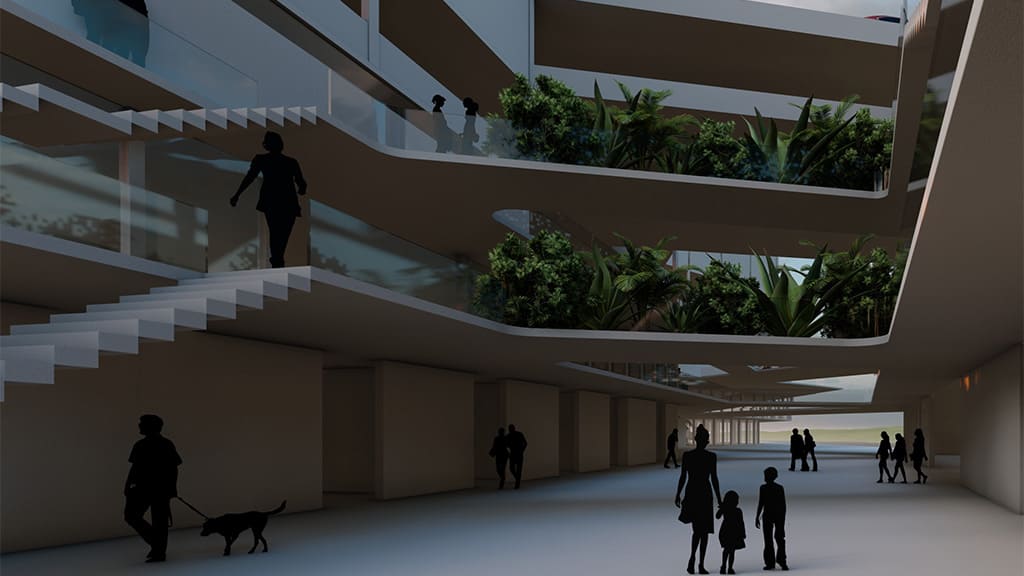
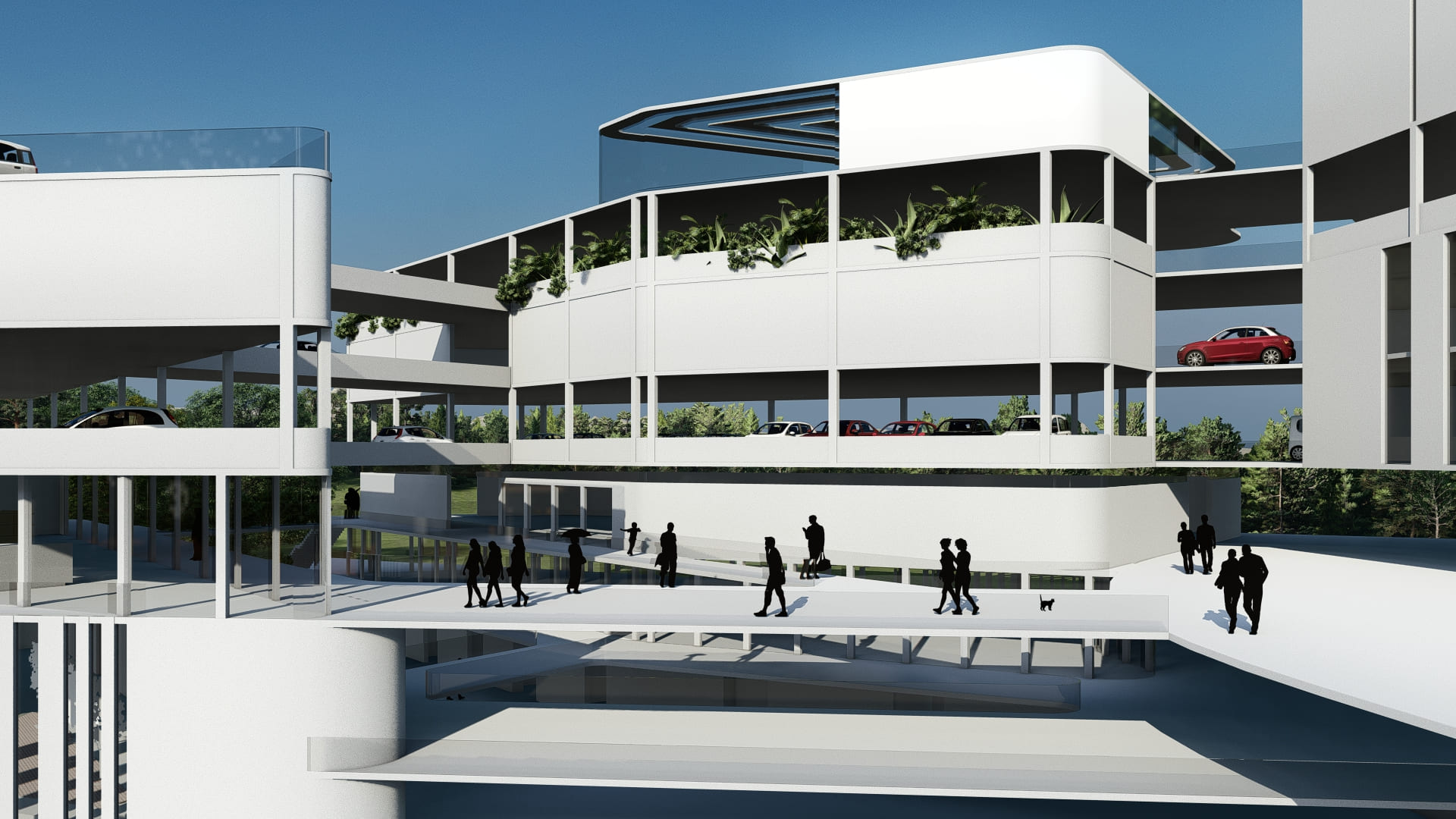
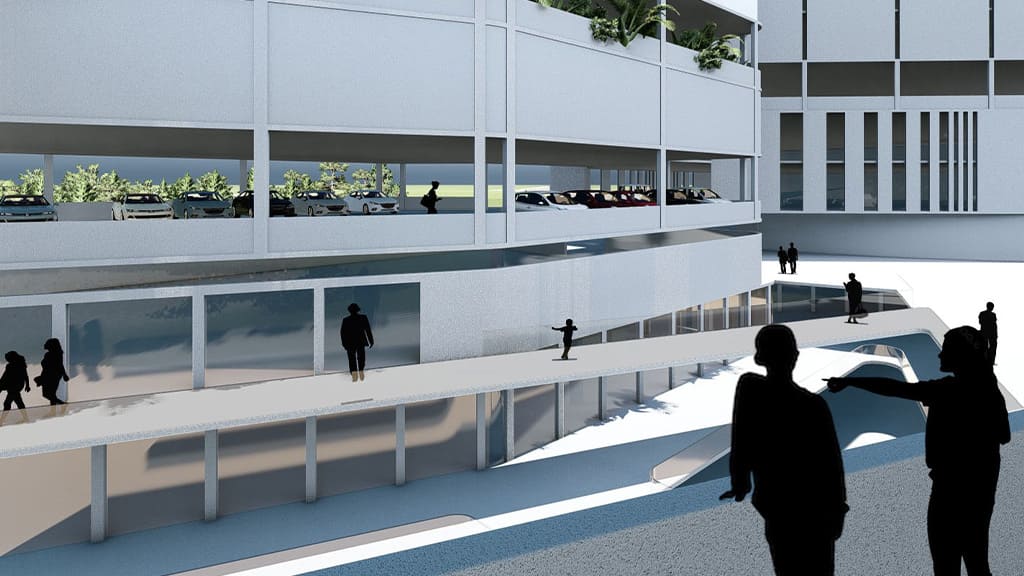
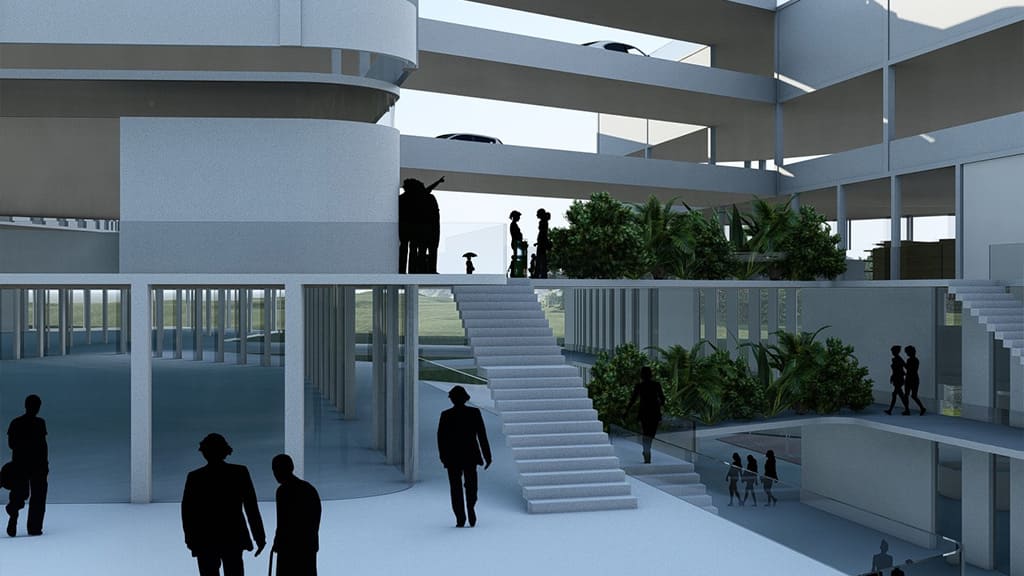
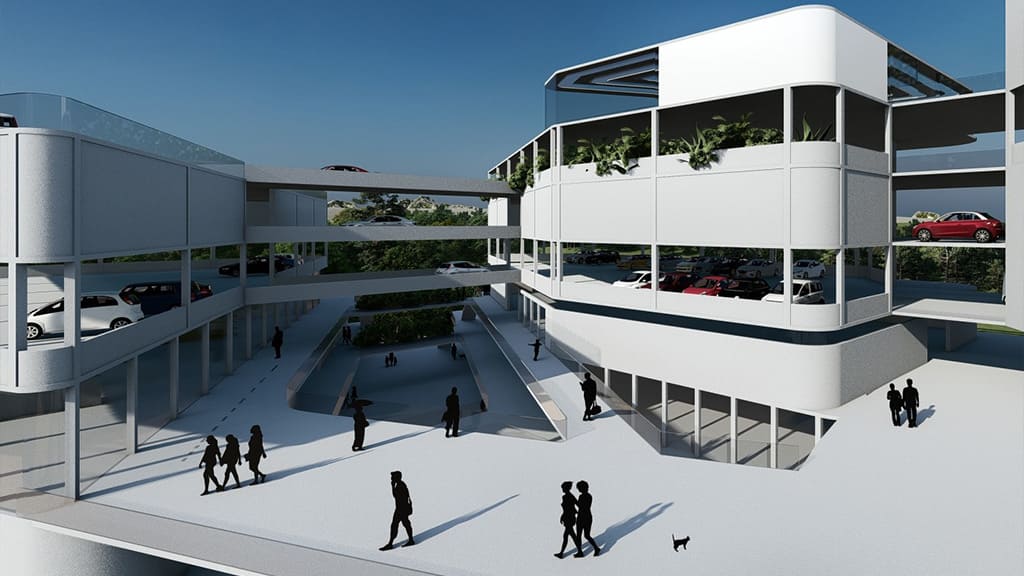
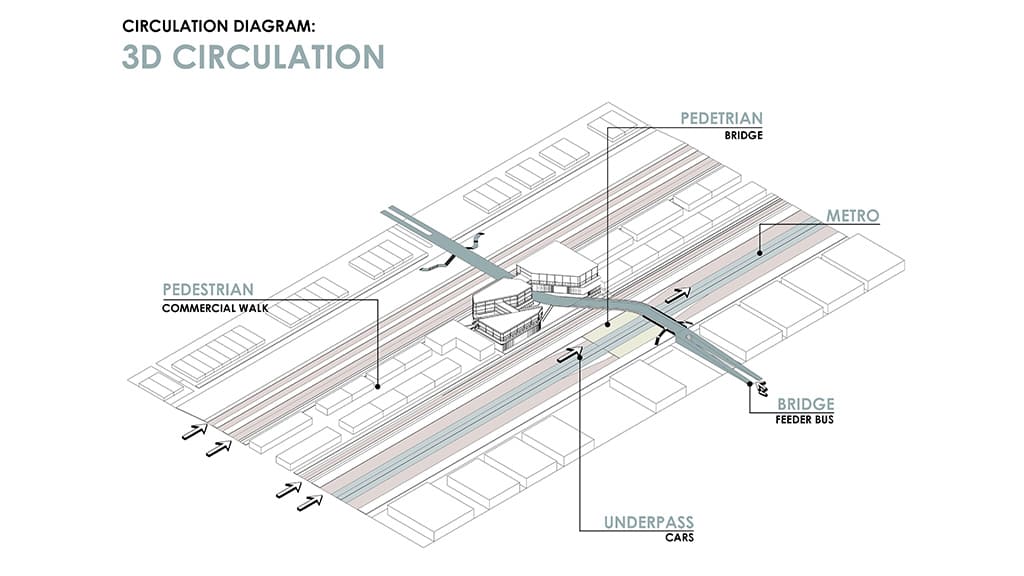
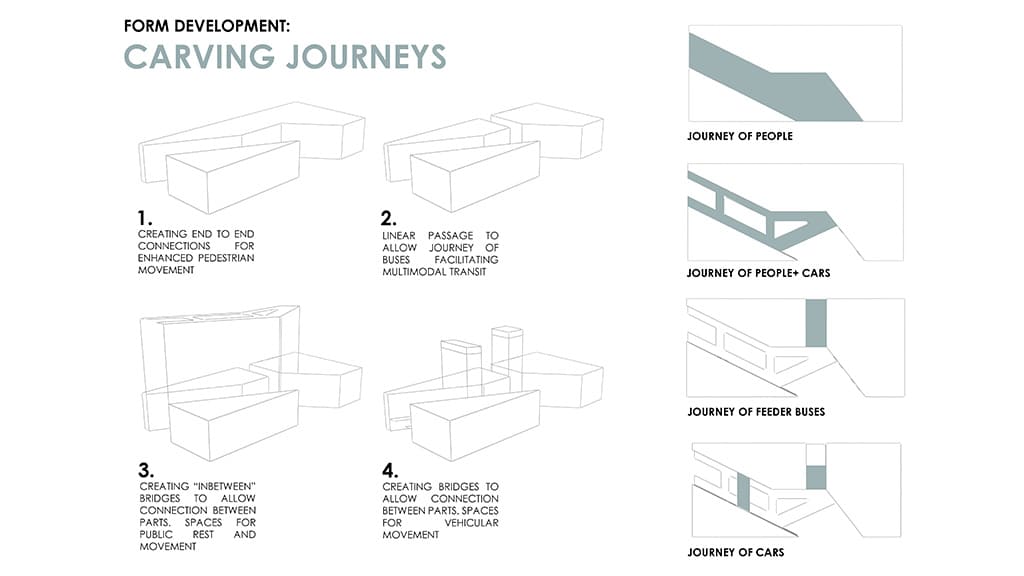
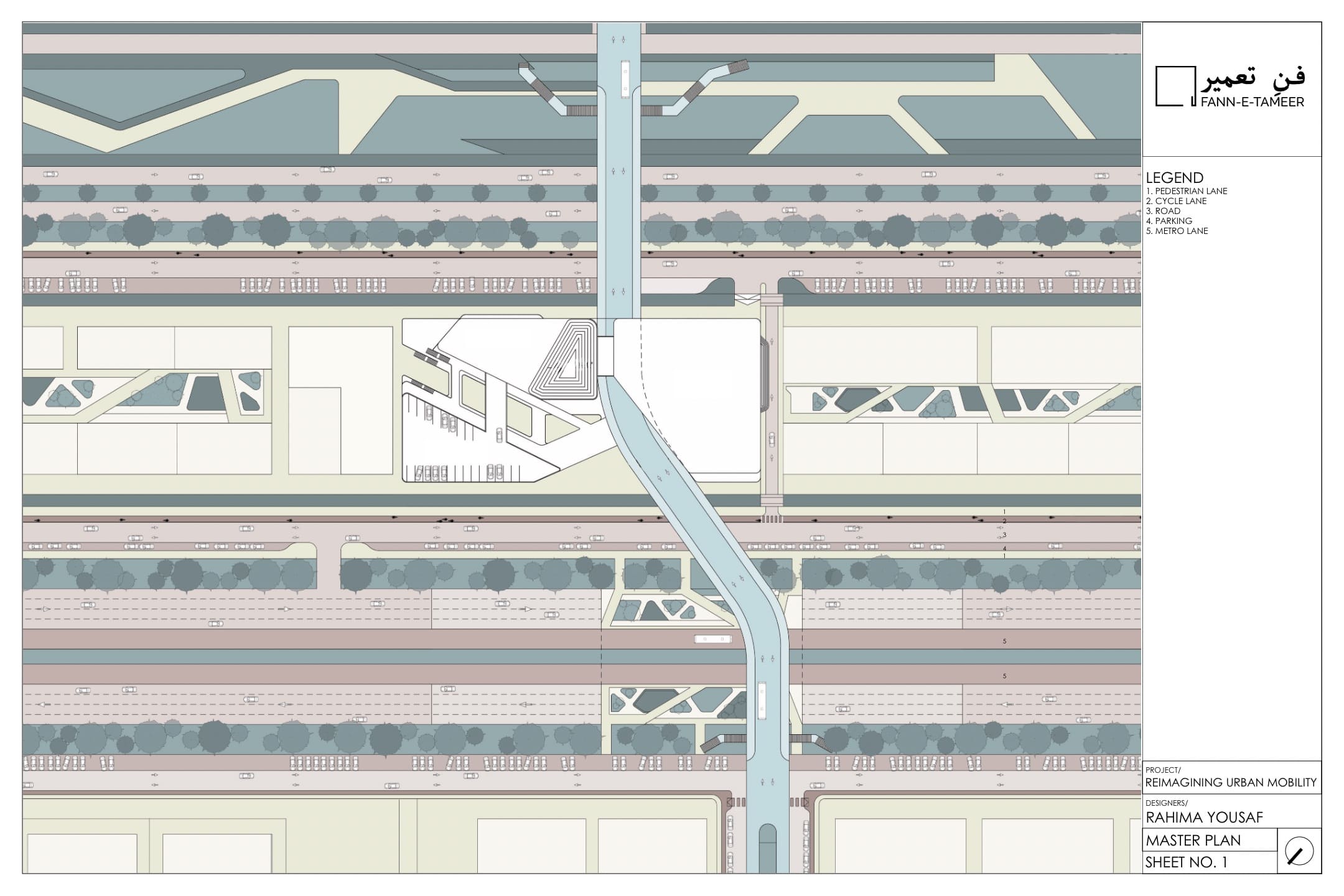
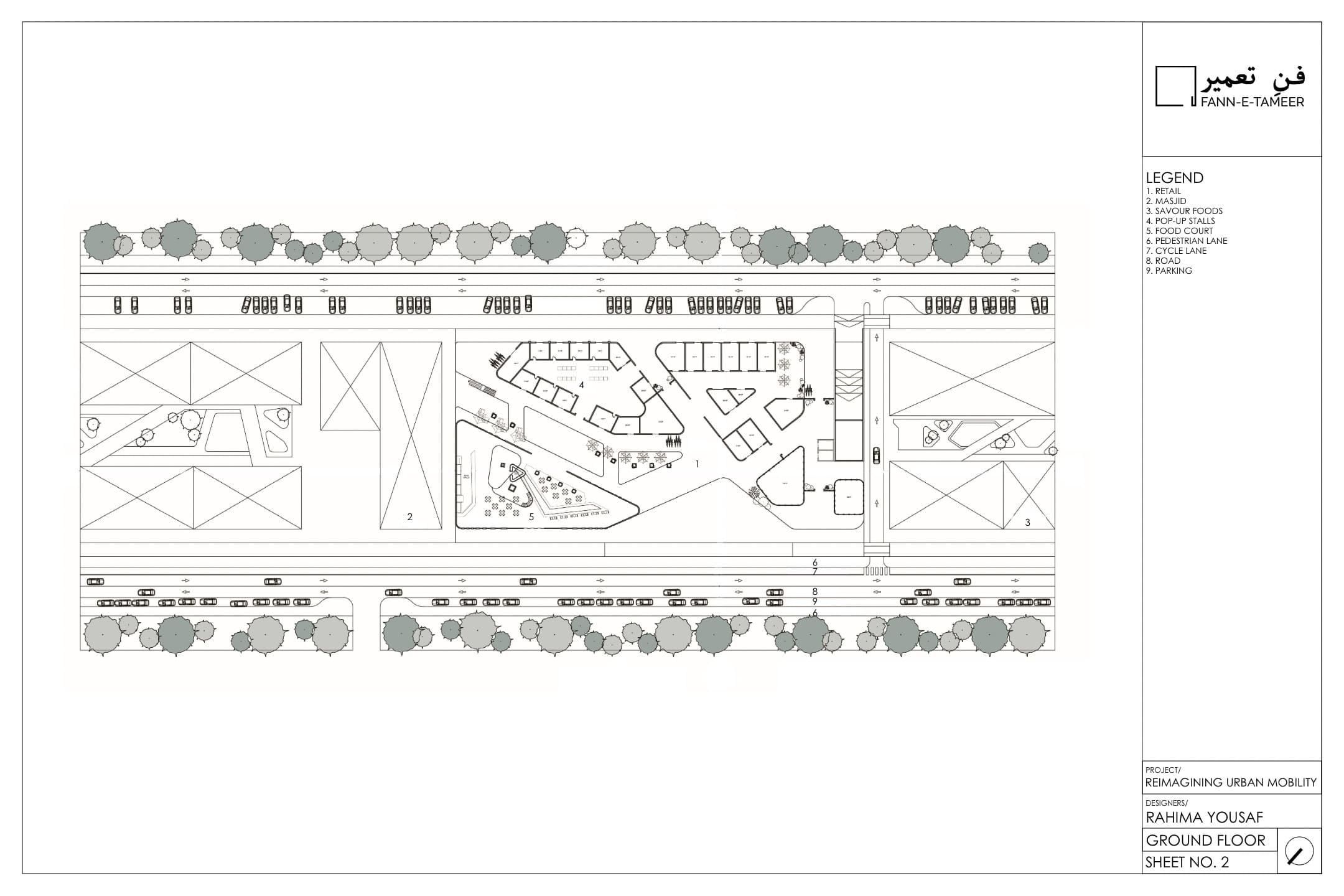
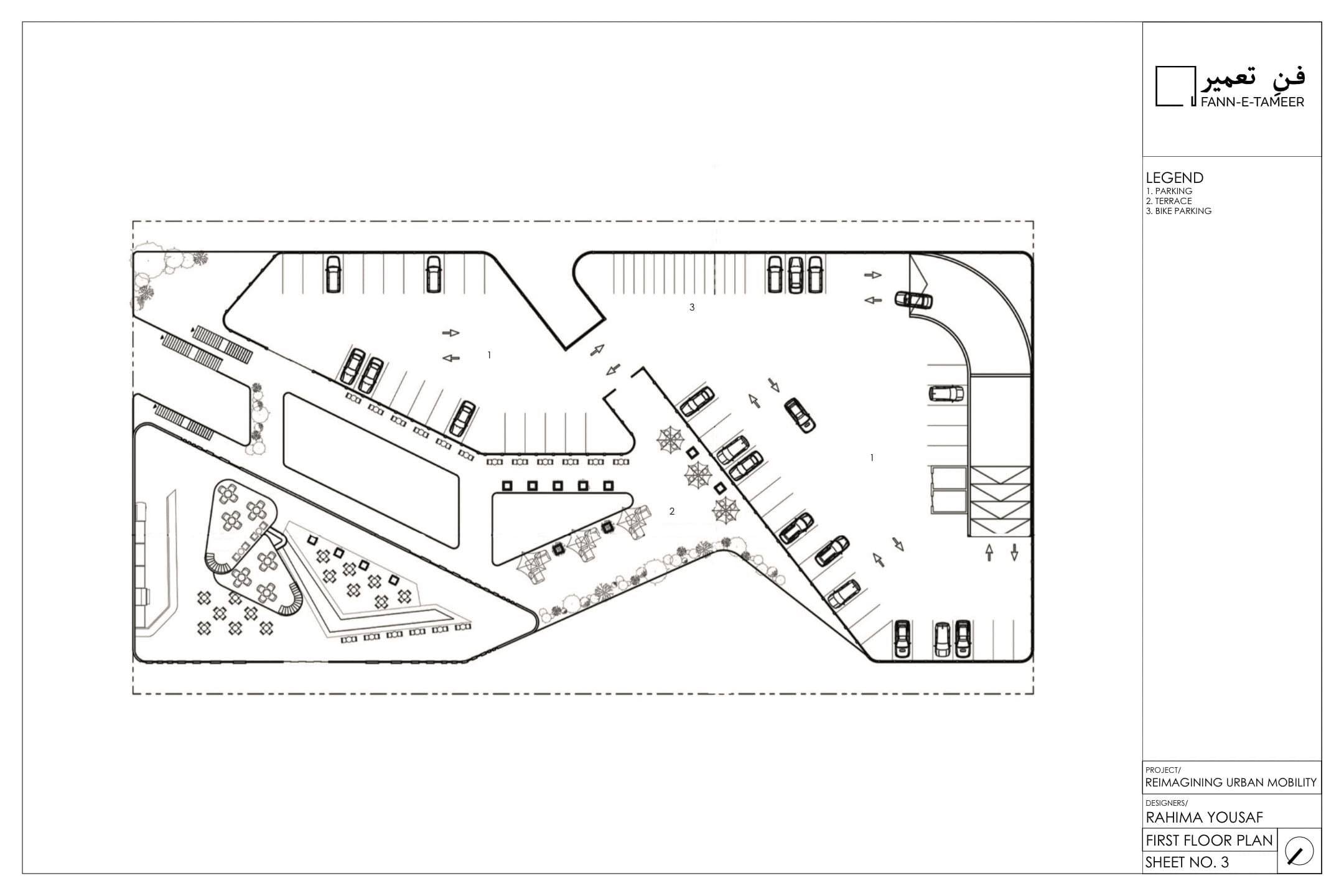
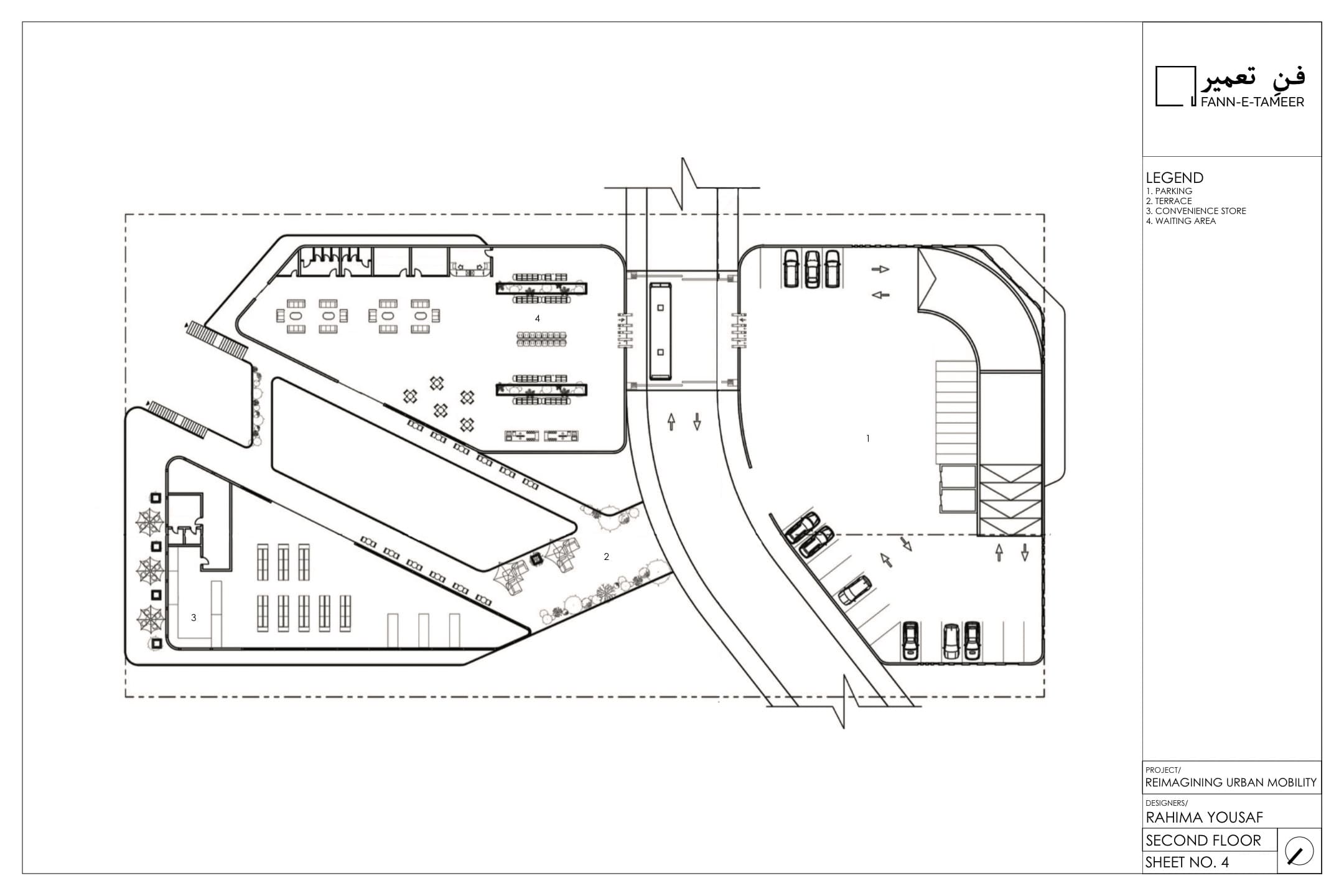
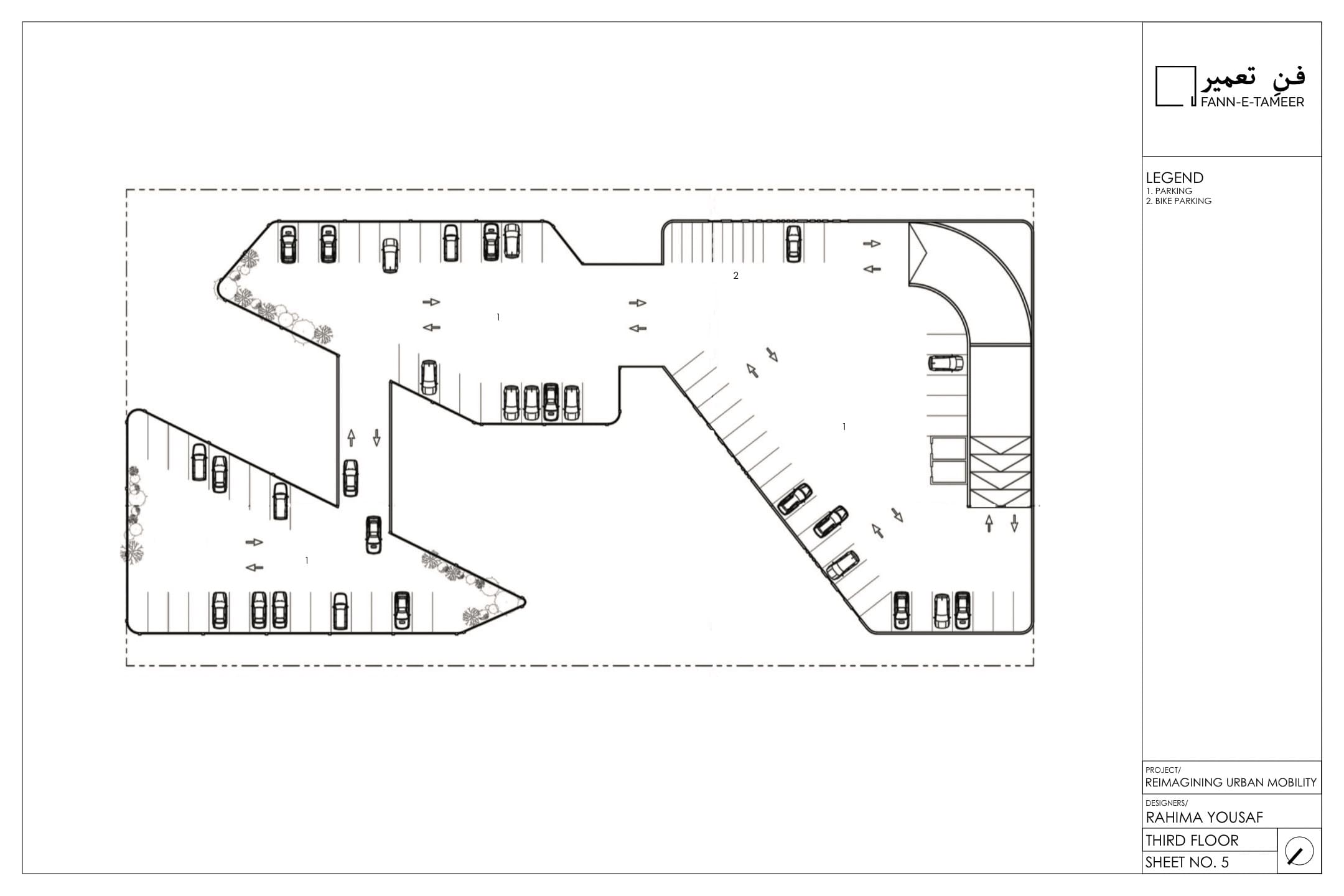
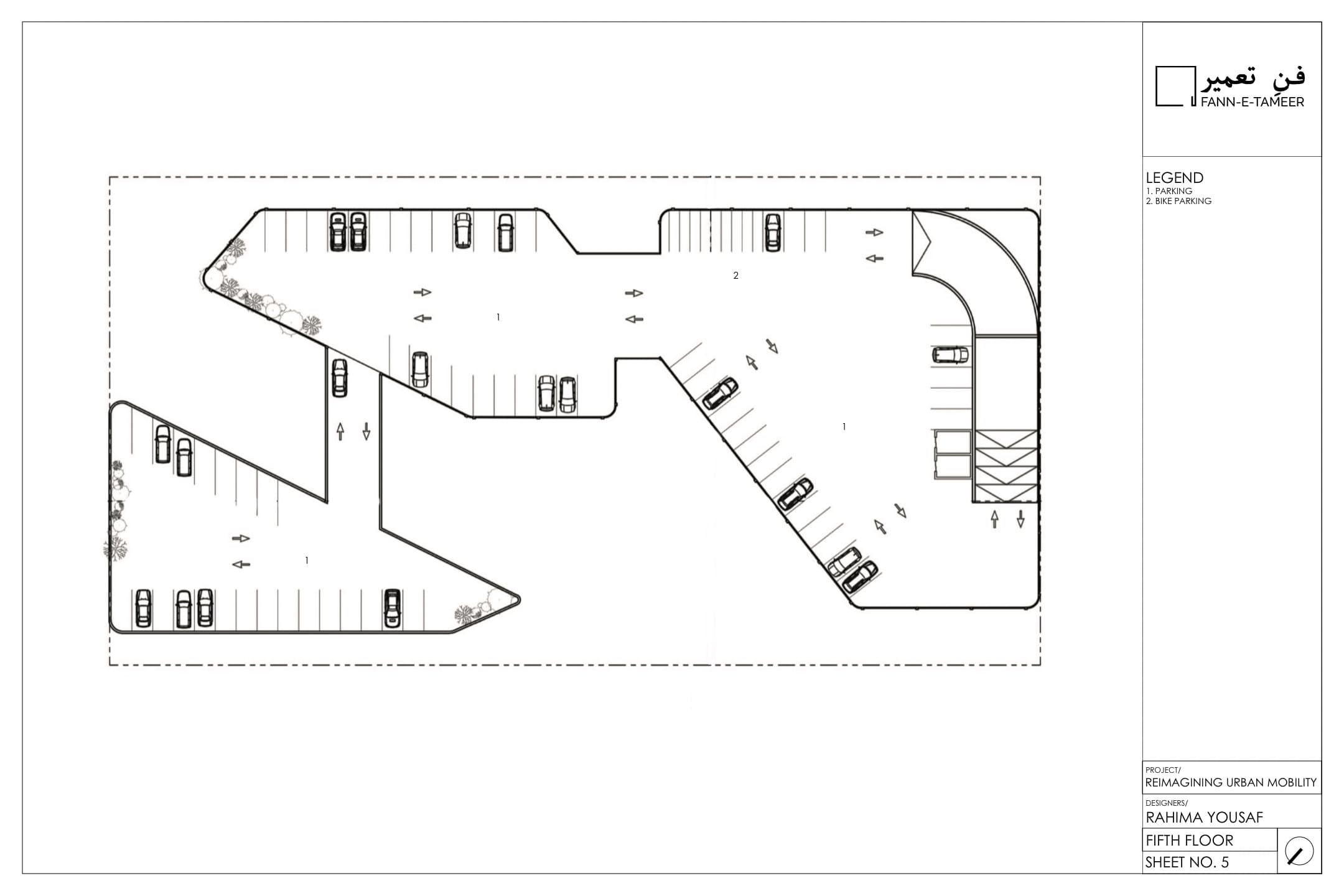
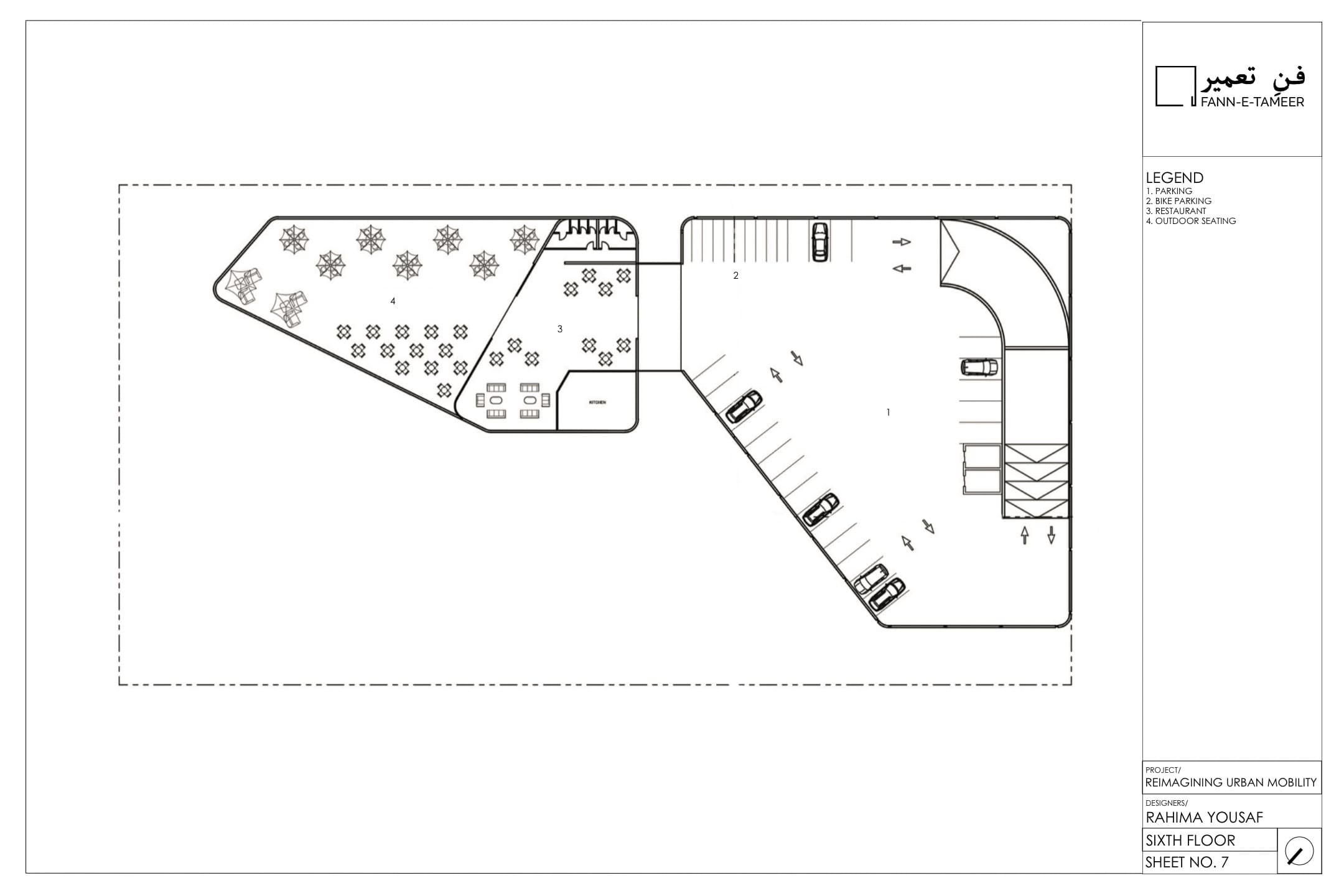
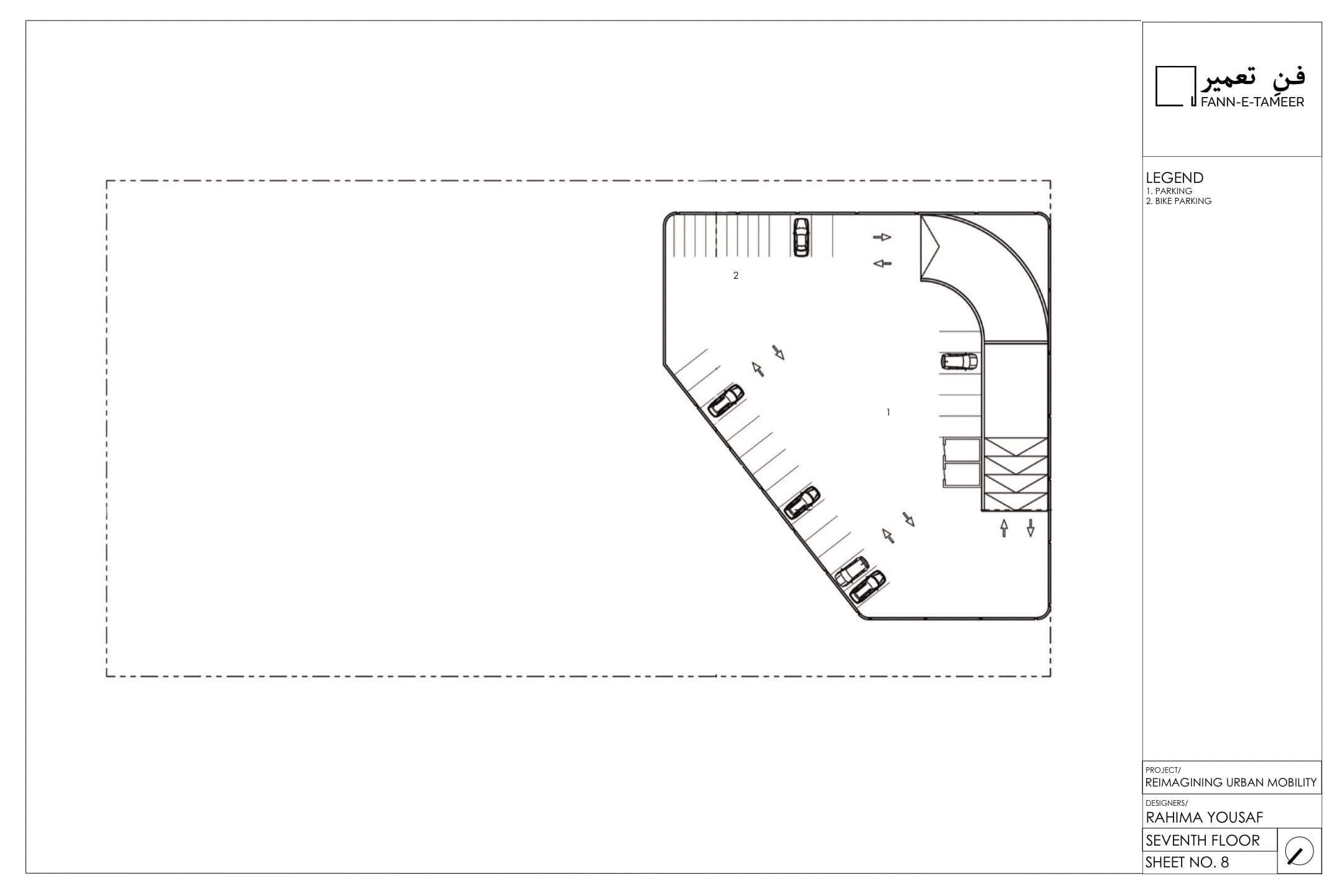
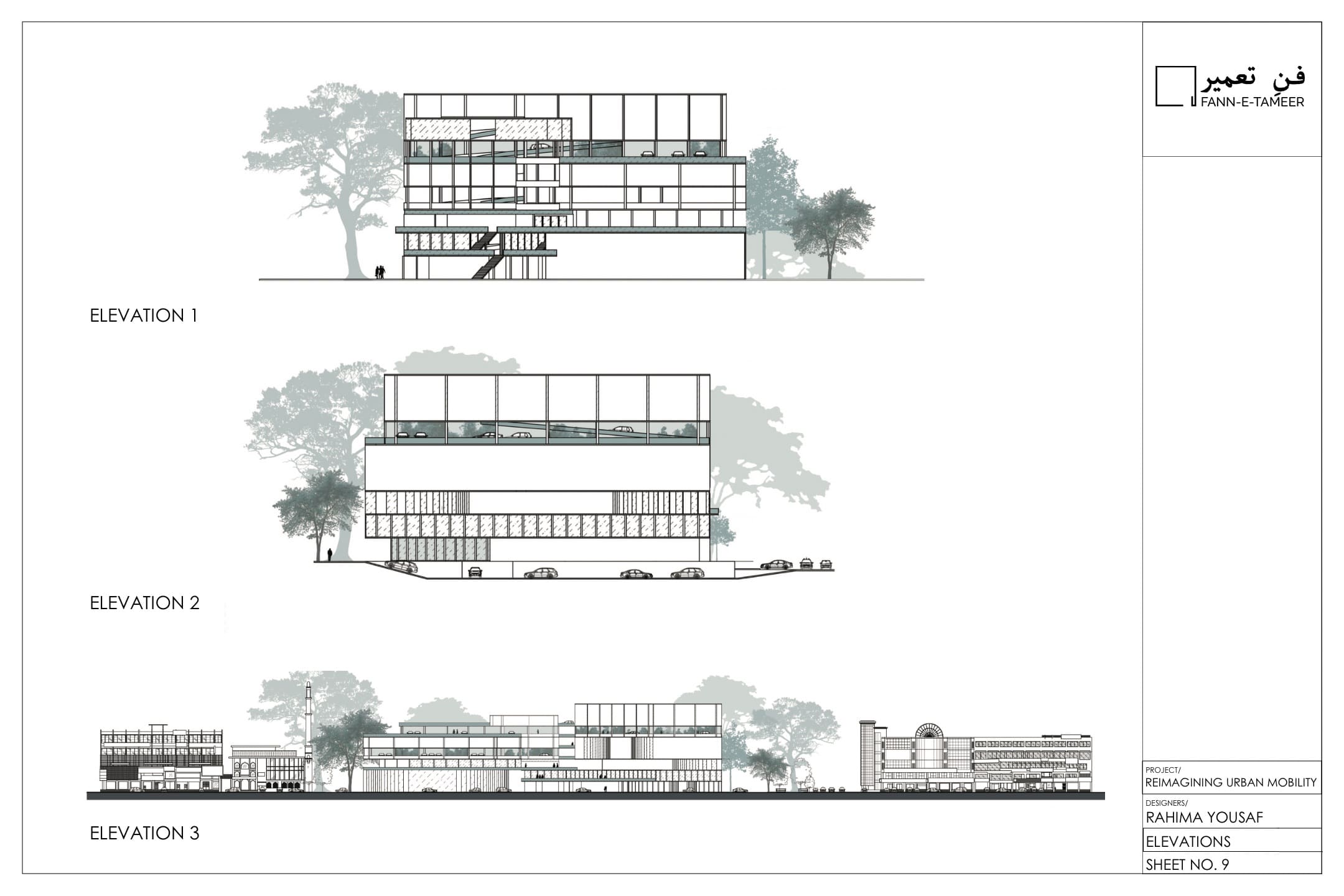
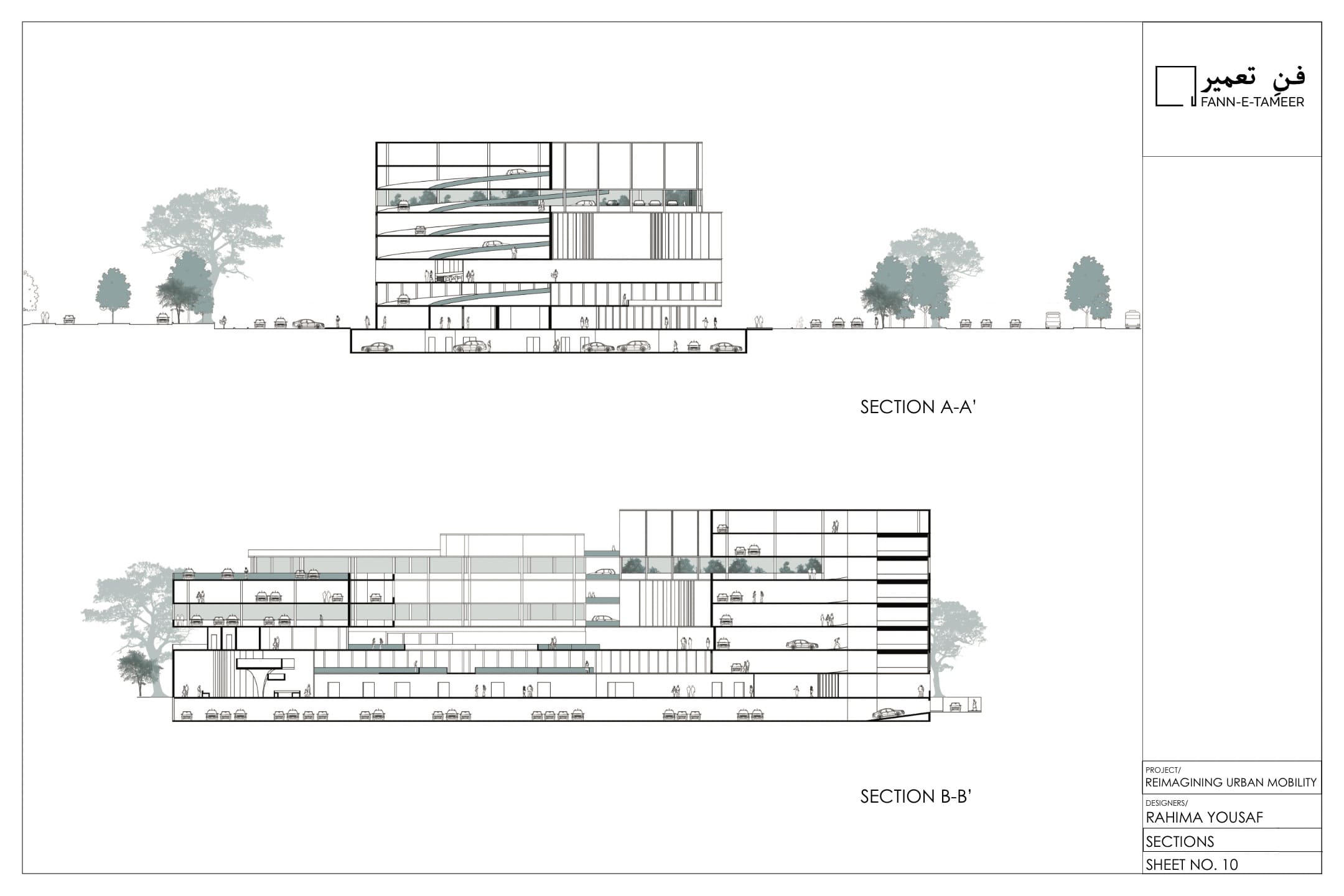
Bazm-e-Safar transforms the traditional parking structure into a dynamic hub for both movement and community engagement. Its name, meaning “the gathering place of journeys,” reflects its role as a connector for pedestrians, metro users, feeder buses, and private cars. The building’s form is shaped by pathways carved through its floors, creating bridges and atriums that enhance visual and spatial connectivity. The lower floors are activated with a food court and retail areas, encouraging economic activity and social interaction. The second floor hosts a dedicated feeder bus stop, ensuring smooth integration with public transport. A distinctive bridge cuts through the building, doubling as a pedestrian walkway and a feeder bus route. By reclaiming vehicular-dominated areas for people, the design prioritizes pedestrian activity while promoting ease of movement and accessibility for all users, making the space both functional and inviting.
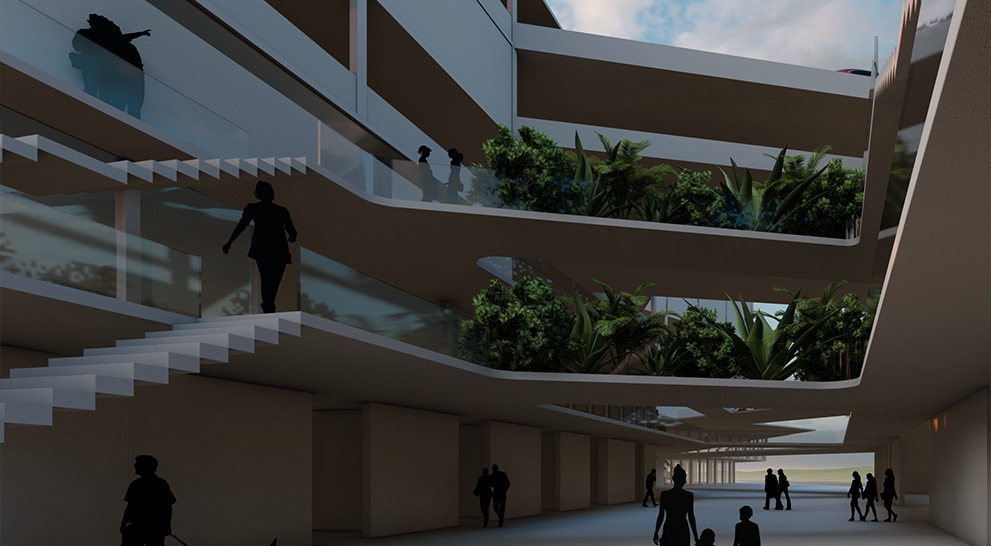
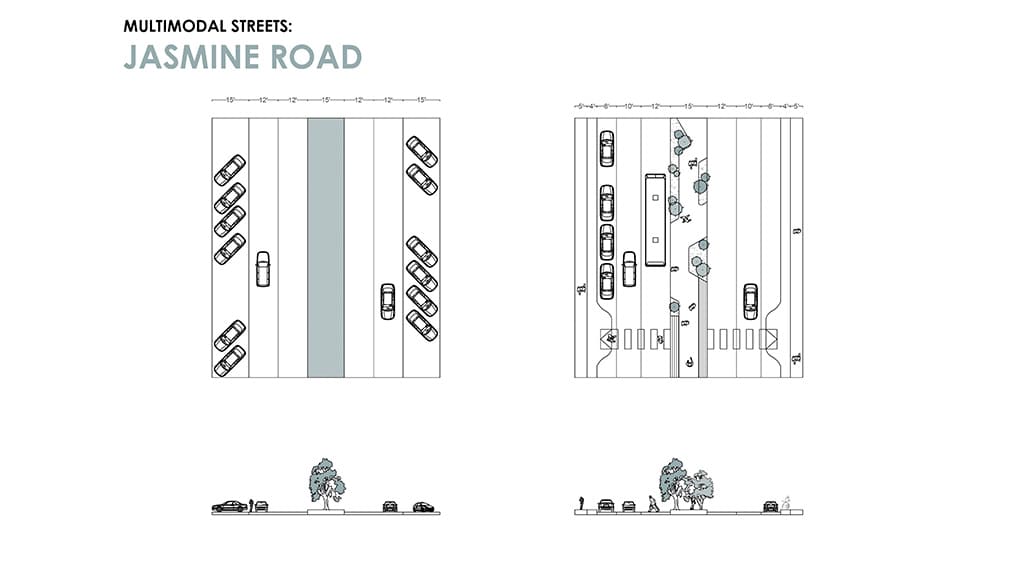
To ease congestion on Jinnah Avenue, cars are routed underground through an underpass, freeing the surface for a green pedestrian bridge. This bridge strengthens neighborhood-to-neighborhood connectivity, countering the growing fragmentation in the city’s urban fabric. Bazm-e-Safar’s approach goes beyond solving immediate transportation challenges; it redefines the relationship between mobility and public life. Integrating green spaces, cultural design elements, and vibrant public areas, the project promotes interaction, accessibility, and a sense of unity. It reclaims the street as a shared space, aligning with Islamabad’s original vision of balanced urbanism. More than an infrastructure solution, Bazm-e-Safar serves as a model for cities facing similar challenges, showing how mobility systems can coexist with lively, inclusive, and sustainable public environments where people and communities can thrive.
Contact Designers || Portfolio
You Might Find These Interesting
 DESIGNED BY: Zainab Waqas
Placeness of Space
Purana Qila Water Filtration Plant, Rawalpindi DESIGNED BY: Uswa Naseer
Rhythms in Motion
Skyways Bus Adda, Chungi No. 26, Zone I, Islamabad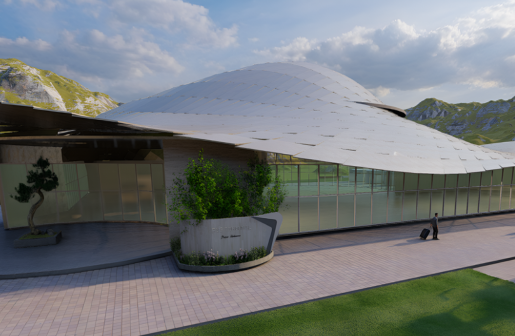 DESIGNED BY: Faiza Rehman
A Transit Hub, Reimagined
Chungi No 26 Bus Stop, Homes Road, Islamabad