Rhythms in Motion
Redesigning the Skyways bus terminal that blends functionality, sustainability, and fluid design, transforming transit into an urban landmark inspired by the rhythm of motion.
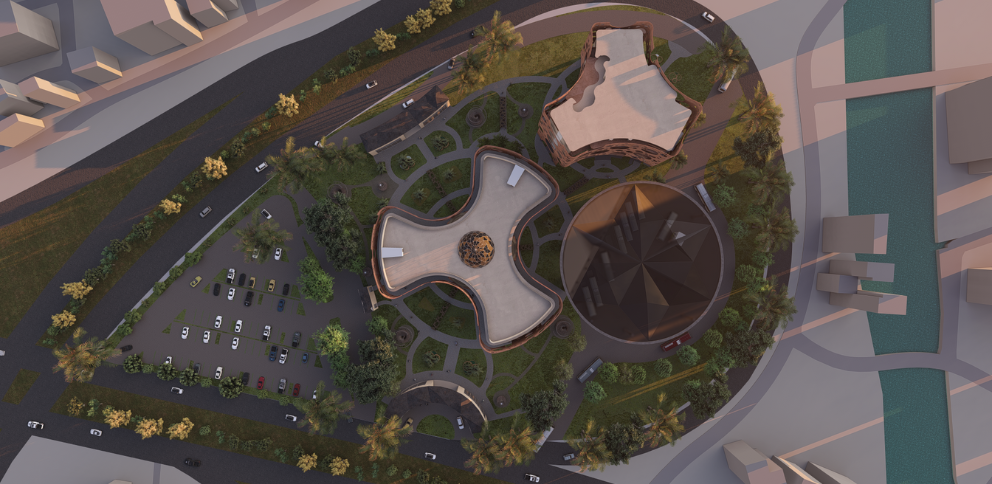
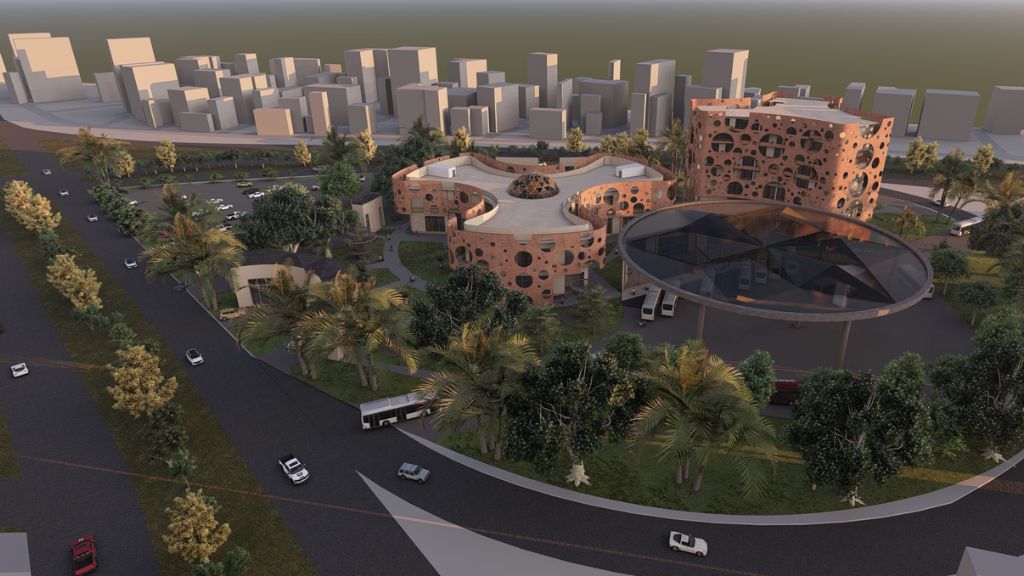
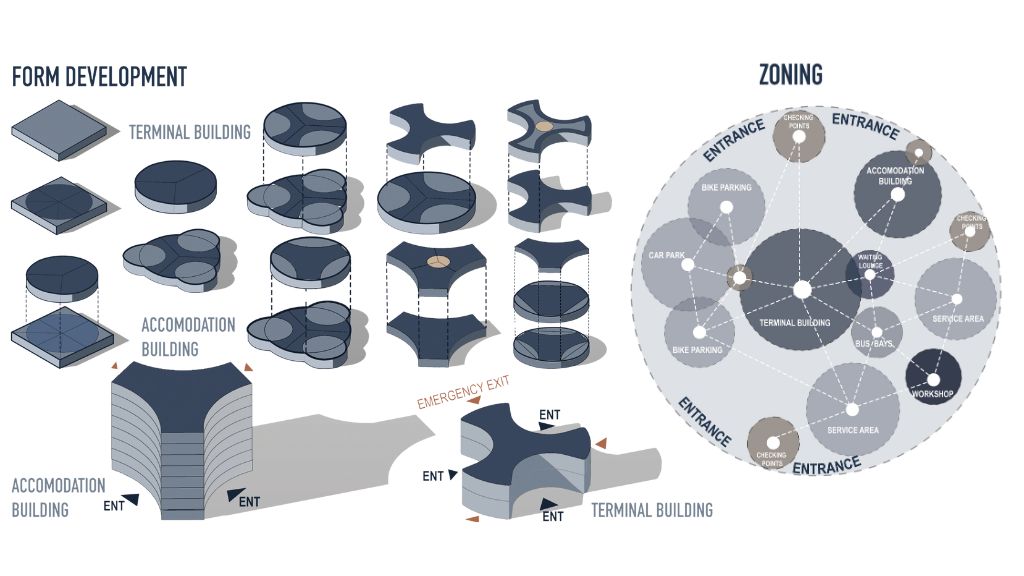
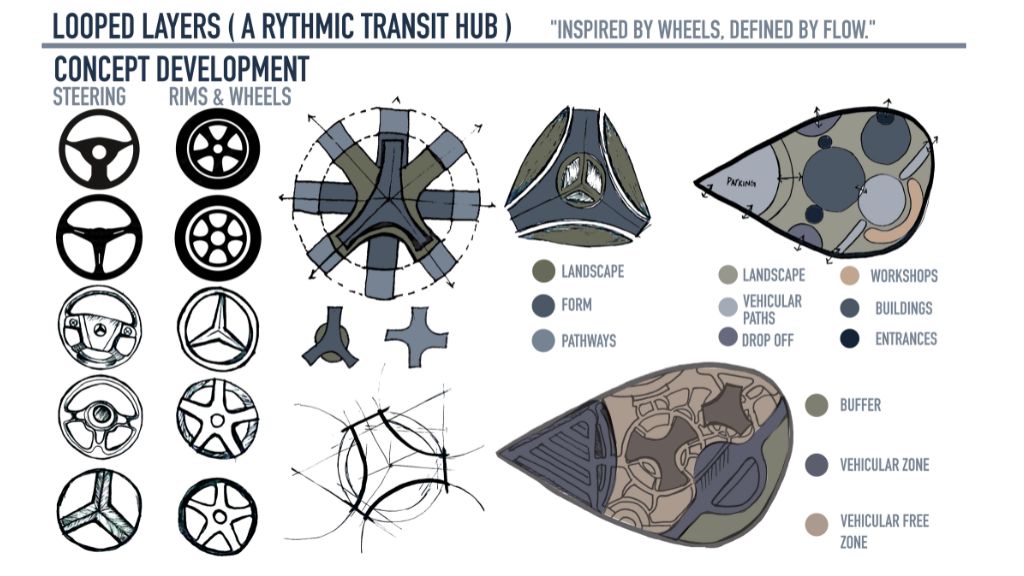
This project reimagines the Skyways Bus Terminal at Chungi No. 26 into a future-oriented urban transit hub that is both functional and fluid. With the tagline “Looped Layers, Rhythmic Flow,” the design untangles the typical chaos of bus terminals by creating a clear separation between pedestrian and vehicular movement, allowing both to coexist safely and intuitively. The architectural concept draws inspiration from the circular motion of tires, rims, and other vehicular components, using their mechanical rhythm as a design language. This influence creates a spatial arrangement that loops, rotates, and flows, much like the transport systems it serves. The terminal is envisioned not only as a transport facility but also as an urban landmark that embodies the poetry of motion, ensuring safety, efficiency, and an engaging civic experience for travelers.
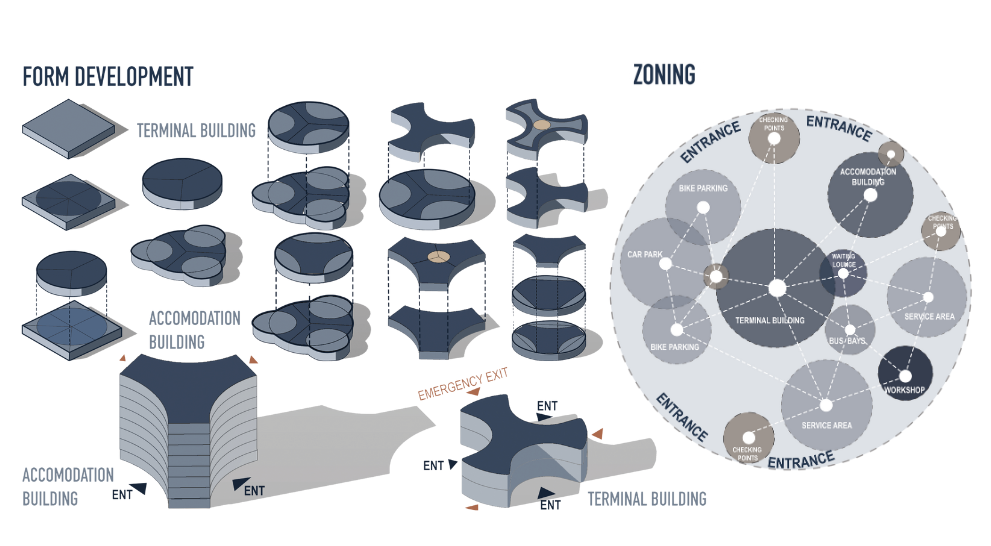
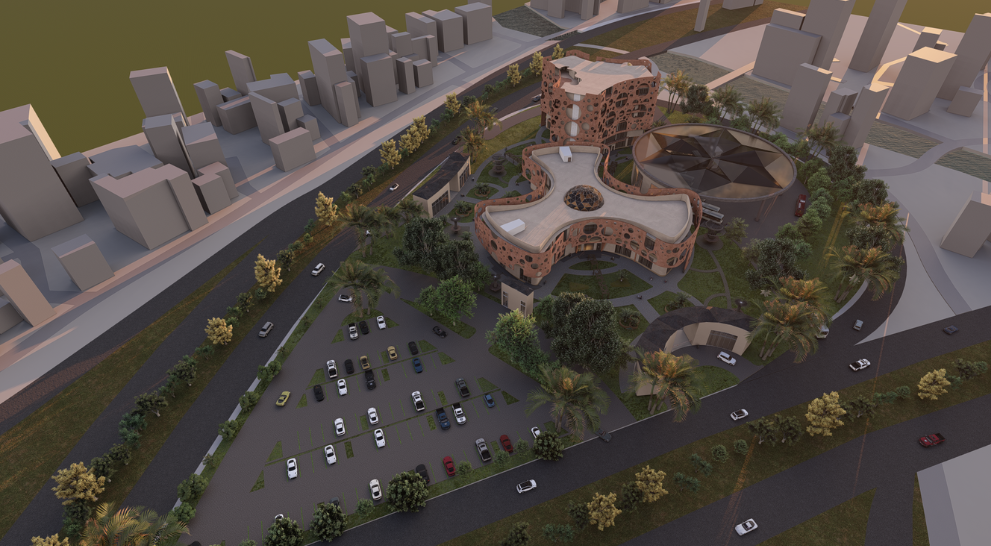
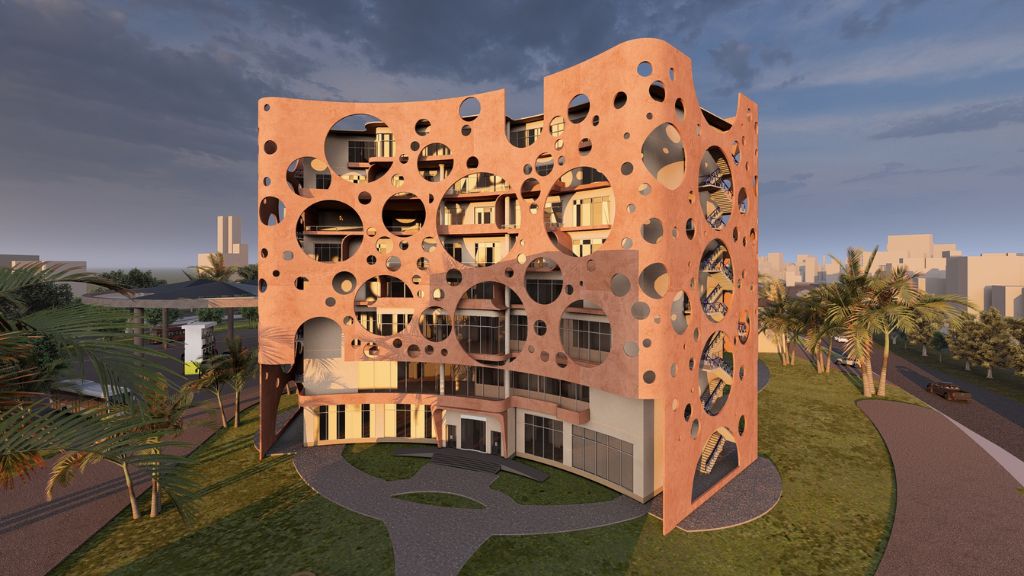
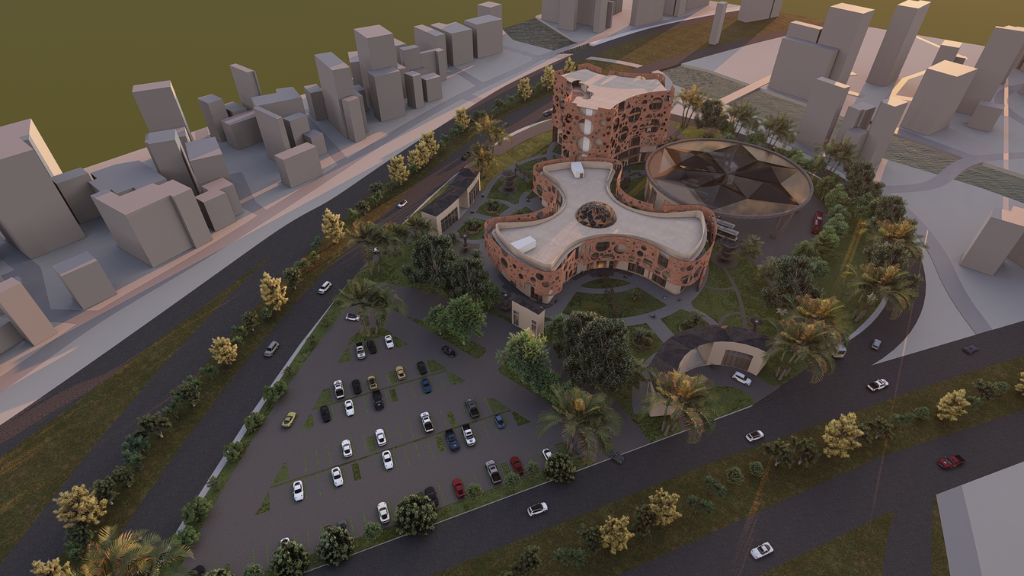
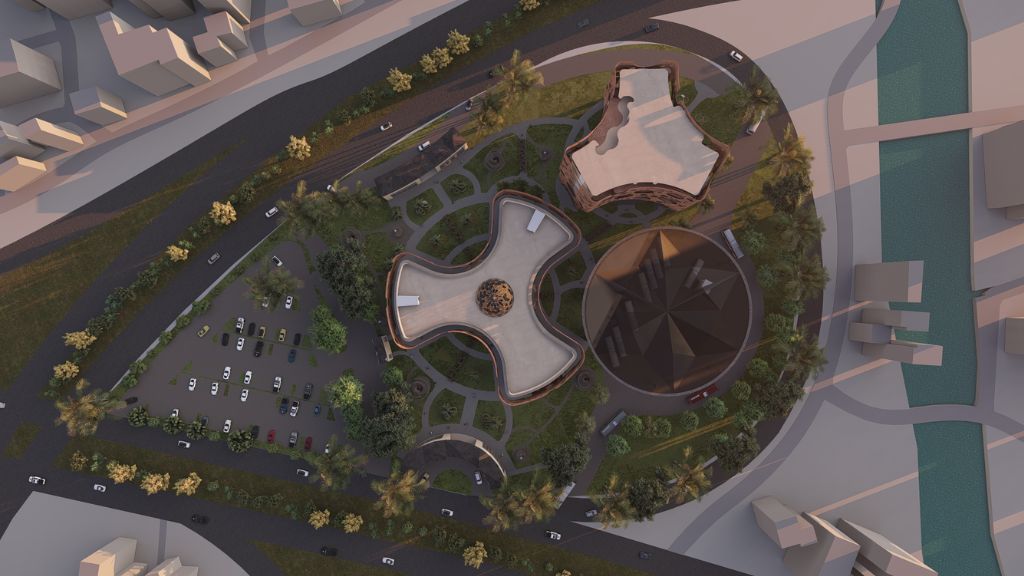
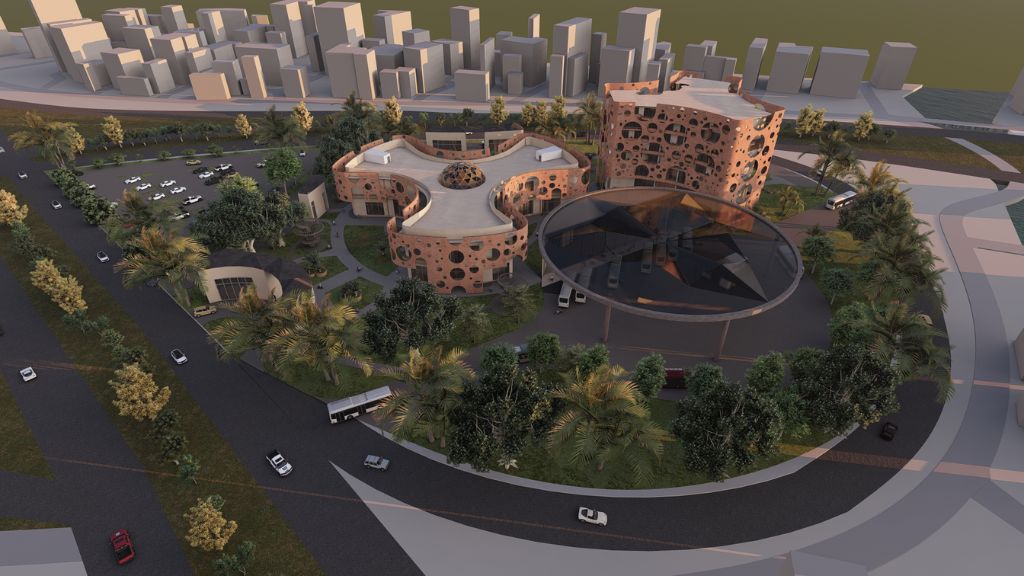
The project is organized into two key structures: the Terminal Block (Transit Core) and the Mixed-Use Block. The Terminal Block, positioned near the main vehicular approach, houses the essential transport functions—ticketing counters, passenger waiting zones, bus administration, and cargo services—while maintaining a one-directional bus flow to minimize congestion. Pedestrian circulation is safeguarded through grade separation and buffering, enhancing ease of movement. The Mixed-Use Block extends beyond transport by merging retail and residential facilities into a vertical arrangement. Public-facing functions like retail shops, food courts, and essential traveler services occupy the ground to third floors, while residential units ranging from studios to two-bedroom apartments are provided on the fourth to eighth floors. This dual-use strategy caters to drivers, short-term guests, and transit users, positioning the terminal as both a service point and a temporary place of residence.
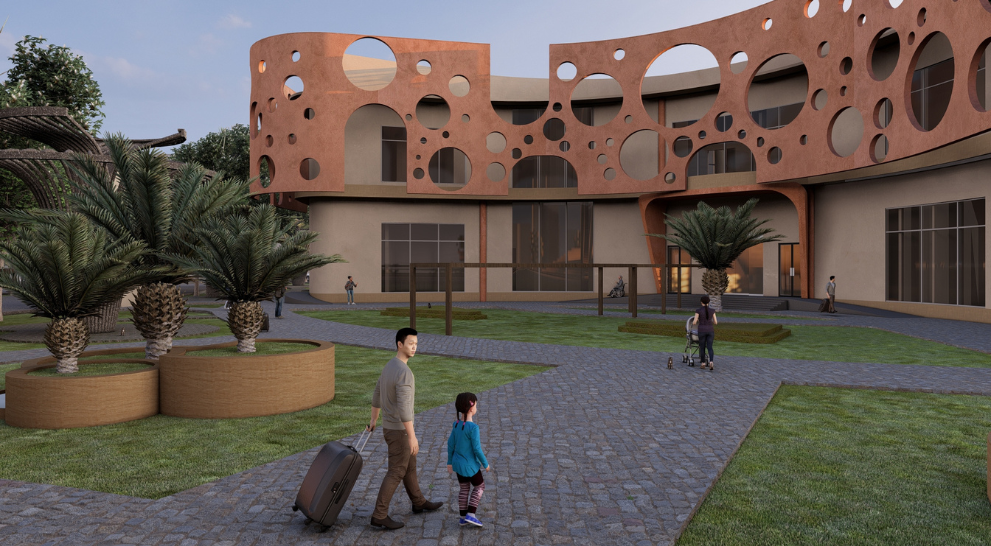
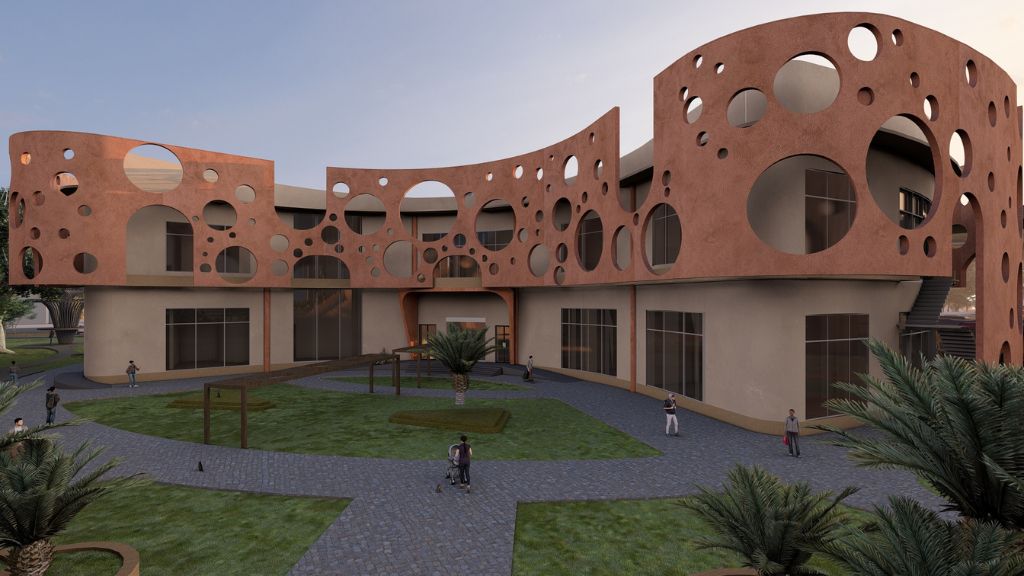
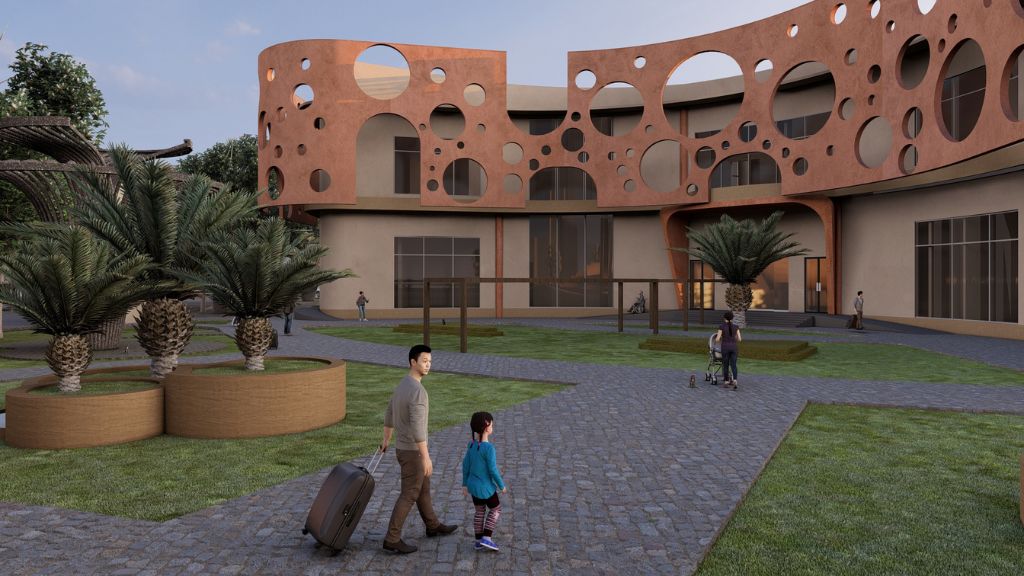
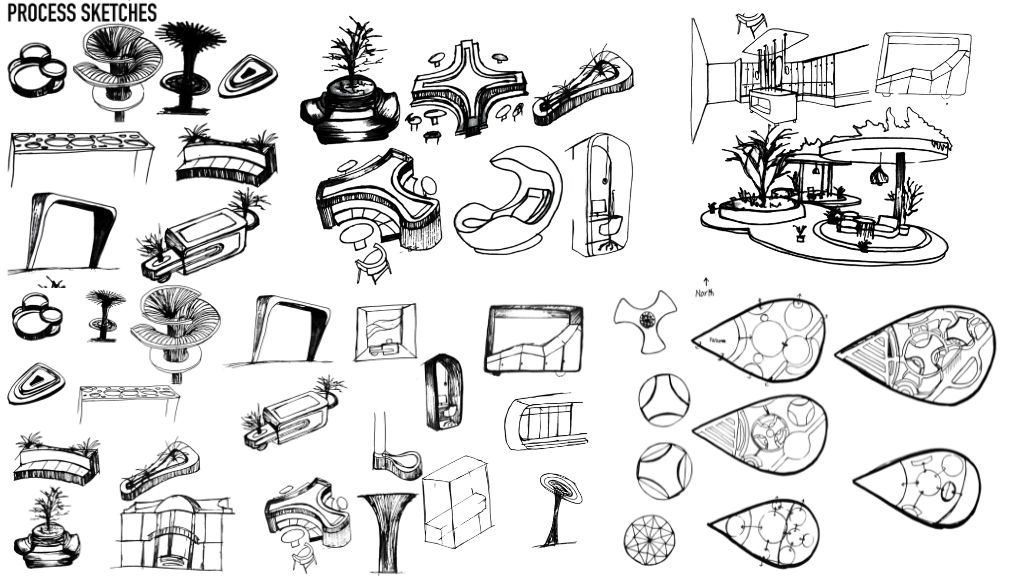
Formally, the design references tyre treads, rim spokes, and the cyclic geometry of mechanical systems, embedding these into circulation paths, zoning, and the façade. Corner windows trace the rim’s linearity while green planters and skins wrap the outer edges, softening the urban edge and ensuring sustainability. Passive strategies respond to Islamabad’s climate and high footfall: green terraces and vertical plantations reduce heat gain, large operable windows optimize ventilation, and shaded seating zones provide comfort. Rainwater channels improve resilience, while clear wayfinding ensures intuitive navigation. Ultimately, the project transcends the definition of a terminal by transforming it into a multifunctional civic landmark. It is not only a transit stop but also a place of interaction and experience, a hub where architecture captures the rhythm of movement and connects people, functions, and flows—one loop at a time.
Contact Designers || Portfolio
You Might Find These Interesting
 DESIGNED BY: Zainab Waqas
Placeness of Space
Purana Qila Water Filtration Plant, Rawalpindi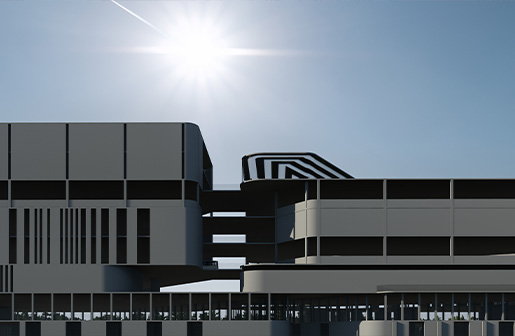
 DESIGNED BY: Faiza Rehman
A Transit Hub, Reimagined
Chungi No 26 Bus Stop, Homes Road, Islamabad